Jeffersonville winery says $50,000 Working Lands grant enabled trellising and production gains
February 05, 2026 | Agriculture, Food Resiliency, & Forestry, HOUSE OF REPRESENTATIVES, Committees, Legislative , Vermont
This article was created by AI summarizing key points discussed. AI makes mistakes, so for full details and context, please refer to the video of the full meeting. Please report any errors so we can fix them. Report an error »
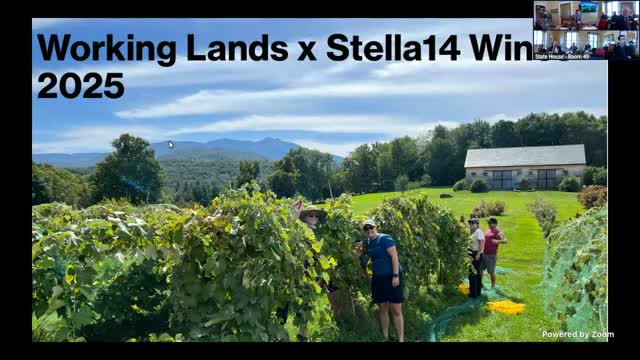
David Keck, owner of Keck Wine Enterprises, told the Working Lands Enterprise Initiative that a $50,000 business-enhancement grant funded most of the trellis materials and installation for a multi‑acre vineyard project that the business said will make the venture financially viable.
Keck said the vineyard operation, which farms at Boyden and at Golden Dog Farm in Jeffersonville, converted to organic practices in 2020 and planted 3,500 bare‑root vines in 2024. A severe May 2023 frost destroyed about 90% of one block’s crop, he said, prompting the company to sign a 10‑year lease at Golden Dog and invest in replanting and infrastructure.
“We received $50,000, which almost covered the trellis,” Keck said during the presentation. He described confirming trellising methods with a contractor (Steven Wilson of VT Vineyards), ordering posts and wire, and staging installation in phases so the business did not leave the contractor carrying large upfront costs.
Keck presented yield and revenue projections tied to the trellising and new plantings. He said pre‑trellis production was roughly 30–50 cases a year (about $15,000 in product value). With trellising and repair of previously feral blocks, he expects 100–120 cases in 2026 (about $36,000), roughly 350 cases in 2027 as new plantings mature, and up to about 600 cases annually at full maturity (roughly $180,000 in product value), not including tourism and tasting‑room revenue.
When asked by Representative Nelson about acreage, Keck said the work covered approximately 5.5 acres of full trellising plus about 2 acres of repair and re‑trellising. He described the grant’s flexibility — materials and installation were covered while some labor and extra costs were covered by the business — and noted Working Lands permitted phased disbursements and status reports with receipts and photos.
Program staff present said the Working Lands business-enhancement grants commonly use a 40/40/20 payment structure (with flexibility to increase initial payments for heavy infrastructure projects), and that grants can be extended or phased to fit business timelines.
Keck emphasized reduced labor intensity, improved work‑life balance for family operators, and added agritourism opportunities now that the vineyard appears and functions as a trellised block. He said the trellis work has moved the operation away from “hands‑and‑knees” maintenance to largely standing work, easing seasonal burdens on labor.
The committee paused for five minutes and planned to hear additional presenters after questions and the break.
Keck said the vineyard operation, which farms at Boyden and at Golden Dog Farm in Jeffersonville, converted to organic practices in 2020 and planted 3,500 bare‑root vines in 2024. A severe May 2023 frost destroyed about 90% of one block’s crop, he said, prompting the company to sign a 10‑year lease at Golden Dog and invest in replanting and infrastructure.
“We received $50,000, which almost covered the trellis,” Keck said during the presentation. He described confirming trellising methods with a contractor (Steven Wilson of VT Vineyards), ordering posts and wire, and staging installation in phases so the business did not leave the contractor carrying large upfront costs.
Keck presented yield and revenue projections tied to the trellising and new plantings. He said pre‑trellis production was roughly 30–50 cases a year (about $15,000 in product value). With trellising and repair of previously feral blocks, he expects 100–120 cases in 2026 (about $36,000), roughly 350 cases in 2027 as new plantings mature, and up to about 600 cases annually at full maturity (roughly $180,000 in product value), not including tourism and tasting‑room revenue.
When asked by Representative Nelson about acreage, Keck said the work covered approximately 5.5 acres of full trellising plus about 2 acres of repair and re‑trellising. He described the grant’s flexibility — materials and installation were covered while some labor and extra costs were covered by the business — and noted Working Lands permitted phased disbursements and status reports with receipts and photos.
Program staff present said the Working Lands business-enhancement grants commonly use a 40/40/20 payment structure (with flexibility to increase initial payments for heavy infrastructure projects), and that grants can be extended or phased to fit business timelines.
Keck emphasized reduced labor intensity, improved work‑life balance for family operators, and added agritourism opportunities now that the vineyard appears and functions as a trellised block. He said the trellis work has moved the operation away from “hands‑and‑knees” maintenance to largely standing work, easing seasonal burdens on labor.
The committee paused for five minutes and planned to hear additional presenters after questions and the break.
Don't Miss a Word: See the Full Meeting!
Go beyond summaries. Unlock every video, transcript, and key insight with a Founder Membership.
✓
Get instant access to full meeting videos
✓
Search and clip any phrase from complete transcripts
✓
Receive AI-powered summaries & custom alerts
✓
Enjoy lifetime, unrestricted access to government data
30-day money-back guarantee
