Committee advances bills on natural hair braiding, film incentives, governor removal authority and ethics filings
February 05, 2026 | Senate, Alabama Legislative Sessions, Alabama
This article was created by AI summarizing key points discussed. AI makes mistakes, so for full details and context, please refer to the video of the full meeting. Please report any errors so we can fix them. Report an error »
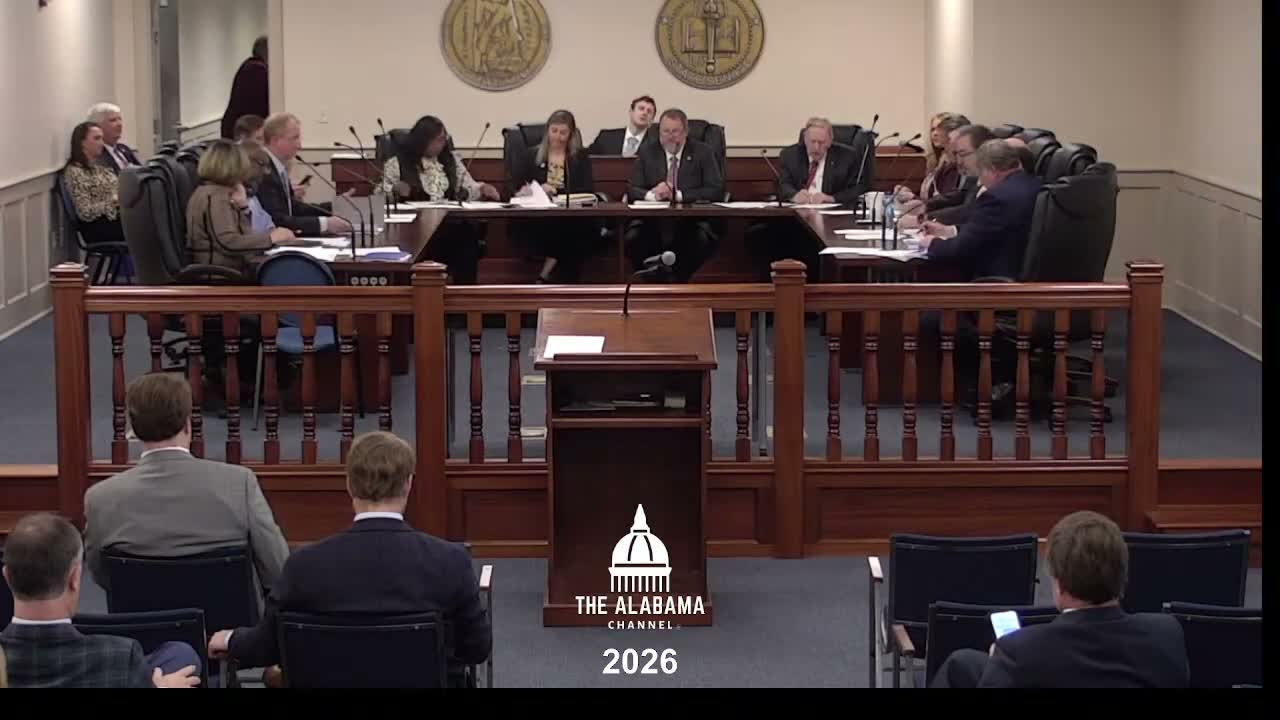
The Senate committee considered a package of bills and amendments covering cosmetology licensing, entertainment incentives, executive removal authority and candidate ethics filings.
SB183: Senator Coleman told the committee that SB183 removes natural hair braiding from cosmetology requirements, calling braiding “a rite of passage” in African American culture and noting the change would bring the state in line with about 37 other states. The sponsor said the bill removes training hour requirements currently tied to cosmetology and reported the bill favorably.
SB253: The sponsor outlined SB253 to expand eligibility for entertainment production incentives to smaller projects with budgets between $100,000 and $499,999. A commerce witness described last year’s change that added $2 million to an existing $20 million cap and explained that the $2 million was reserved temporarily for music recording before reverting for film use. The sponsor said no additional fiscal appropriation is required because the funding is within existing caps.
SB38 substitute (removal authority): A sponsor explained a substitute to SB38 that would state the governor may remove from office or discharge employees appointed by the governor (including those appointed by predecessors) and certain agency heads, while expressly excluding merit-system employees. The sponsor said the language codifies removal authority “under the constitution.” Committee members questioned whether removals could be with or without cause and whether affected appointees would have appeal rights; the sponsor said merit-system employees are carved out and he was not prepared to detail litigation recourse for other appointees.
SB194 amendment (ethics filings): The sponsor described confusion earlier in the election cycle about whether candidates needed to refile statements of economic interest after qualifying. The offered amendment would create a window for candidates who had not properly filed to provide proof rather than requiring all candidates to refile. Senators asked whether the change covered municipal, county and state candidates; the sponsor said the scope remains unchanged and does not include federal candidates.
Procedure and results: Several measures were reported favorably or advanced in committee during the session. For some roll-call votes the transcript records multiple explicit “Aye” or “No” responses (for example, Senator Kelly registered “No” on one roll call), while some names were called without an audible response in the transcript. Where the transcript records explicit roll-call answers, those responses are reported above; the transcript does not capture a complete, audible vote from every name called in every instance.
What’s next: Bills reported favorably will follow the Senate’s established procedures for floor consideration and further action.
SB183: Senator Coleman told the committee that SB183 removes natural hair braiding from cosmetology requirements, calling braiding “a rite of passage” in African American culture and noting the change would bring the state in line with about 37 other states. The sponsor said the bill removes training hour requirements currently tied to cosmetology and reported the bill favorably.
SB253: The sponsor outlined SB253 to expand eligibility for entertainment production incentives to smaller projects with budgets between $100,000 and $499,999. A commerce witness described last year’s change that added $2 million to an existing $20 million cap and explained that the $2 million was reserved temporarily for music recording before reverting for film use. The sponsor said no additional fiscal appropriation is required because the funding is within existing caps.
SB38 substitute (removal authority): A sponsor explained a substitute to SB38 that would state the governor may remove from office or discharge employees appointed by the governor (including those appointed by predecessors) and certain agency heads, while expressly excluding merit-system employees. The sponsor said the language codifies removal authority “under the constitution.” Committee members questioned whether removals could be with or without cause and whether affected appointees would have appeal rights; the sponsor said merit-system employees are carved out and he was not prepared to detail litigation recourse for other appointees.
SB194 amendment (ethics filings): The sponsor described confusion earlier in the election cycle about whether candidates needed to refile statements of economic interest after qualifying. The offered amendment would create a window for candidates who had not properly filed to provide proof rather than requiring all candidates to refile. Senators asked whether the change covered municipal, county and state candidates; the sponsor said the scope remains unchanged and does not include federal candidates.
Procedure and results: Several measures were reported favorably or advanced in committee during the session. For some roll-call votes the transcript records multiple explicit “Aye” or “No” responses (for example, Senator Kelly registered “No” on one roll call), while some names were called without an audible response in the transcript. Where the transcript records explicit roll-call answers, those responses are reported above; the transcript does not capture a complete, audible vote from every name called in every instance.
What’s next: Bills reported favorably will follow the Senate’s established procedures for floor consideration and further action.
View the Full Meeting & All Its Details
This article offers just a summary. Unlock complete video, transcripts, and insights as a Founder Member.
✓
Watch full, unedited meeting videos
✓
Search every word spoken in unlimited transcripts
✓
AI summaries & real-time alerts (all government levels)
✓
Permanent access to expanding government content
30-day money-back guarantee
