House committees press Michigan Public Health Institute on funding, security and contracts
February 05, 2026 | 2025-2026 House Legislature MI, Michigan
This article was created by AI summarizing key points discussed. AI makes mistakes, so for full details and context, please refer to the video of the full meeting. Please report any errors so we can fix them. Report an error »
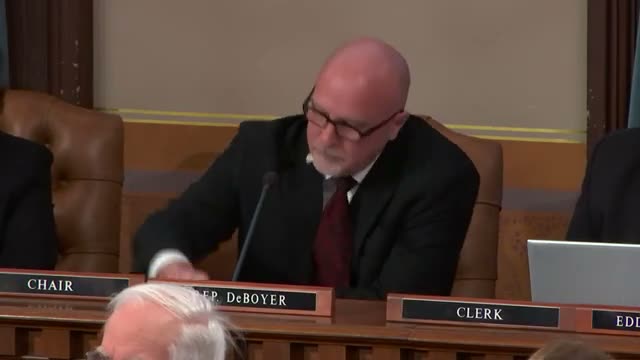
Lansing — The Michigan Public Health Institute told a joint House Appropriations and Oversight committee on Jan. 28 that it operates as a taxpayer-prioritized nonprofit partner to state government, drawing the majority of its funding from the Michigan Department of Health and Human Services and other state sources while providing technical assistance, research and program execution.
MPHI CEO Dr. Renee Kennedy and board member and Wayne State researcher Dr. Philip Levy described MPHI’s role as an operational partner that can move more quickly than civil-service hiring to staff short-term federal grants, conduct program evaluations and push evidence into policy discussion. "We are taxpayer driven, taxpayer prioritized," Kennedy said during the hearing, adding that MPHI pursues external grants and philanthropy to diversify funding.
Why it matters: Lawmakers sought specifics about MPHI’s master agreement with MDHHS, project inventory, contracting vendors, data-security safeguards and executive compensation, all areas legislators said they need to evaluate whether state dollars are being used efficiently and with appropriate oversight.
Key facts from the hearing
- Funding and scale: Kennedy said MPHI receives about 80–90% of its funding from the state and 10–20% from other sources; she stated MPHI’s overall budget at about $200,000,000 and described the organization as "less than 1% of MDHHS's budget." Kennedy also said MPHI employs about 1,000 people, of whom roughly 350 work independently for MPHI and under 700 are assigned to partner projects with state agencies.
- Master agreement and oversight: Kennedy described the MDHHS master agreement as a written scope of work with deliverables, timelines, budget parameters, reporting requirements and compliance standards. She said MPHI has internal finance and auditing controls (its CFO is a former state auditor and a certified public accountant) and that the organization produces year-end and progress reports to funders.
- Affiliate staff model: Kennedy explained that MPHI hires "affiliate" staff paid from state allocations but assigned to work inside MDHHS projects to expedite recruitment and project start dates for time-limited grants. She said many affiliate employees later transition into civil-service roles at the department.
- Data security and projects: In response to Representative Green pressing for a vendor list and security assurances, Kennedy said MPHI maintains a deliverables report listing active projects and that the organization recently earned a NIST SOC certification and holds "qualified entity" status for CMS (Centers for Medicare & Medicaid Services) data access. She told the committee she would provide the deliverables/vendor information and more details on the security certification offline.
- Executive compensation and board governance: When Representative Cara asked whether taxpayers are prioritized, Kennedy replied affirmatively and disclosed her salary: "My salary is $380,000." Levy noted salary decisions are governed by MPHI’s board, which has authority to set compensation and has approved increases in the past.
Questions lawmakers raised and MPHI responses
- Vendor and project lists: Lawmakers asked for a vendor list, confirmation of the roughly 400 projects cited and the 40-page deliverables report Kennedy referenced; Kennedy said the report and vendor details will be provided to members.
- Accountability pathway: Several members asked who is "ultimately accountable" when MPHI carries out work funded with public dollars. Kennedy said the funder (the relevant MDHHS unit or external foundation) holds accountability for performance; she also noted that the MDHHS director chairs MPHI’s board, creating an explicit link between MPHI governance and state oversight.
- Program impact and data lag: MPs seeking program outcomes and timelines were told reporting cadence varies by project; Kennedy said MPHI aims for accountability within a year and increasingly emphasizes measuring impact rather than process outputs alone.
What lawmakers asked MPHI to provide next
Committees requested the following material: the deliverables/project inventory, clarification on what MPHI defines as "vendor" and a vendor list, documentation of MPHI’s NIST SOC certification and the scope of its CMS qualified-entity access, and historical data on affiliate hires (trajectory and counts). Chairs asked members to submit outstanding questions by the end of the week so staff can collect them and MPHI can respond.
Selected quotes
"We are taxpayer driven, taxpayer prioritized," — Dr. Renee Kennedy, MPHI CEO
"The most important thing is to let the evidence speak for itself." — Dr. Philip Levy, Wayne State/MPHI board member
"You promised a vendor's list to me... I would appreciate the answers to those questions." — Representative Green
"My salary is $380,000." — Dr. Renee Kennedy, in response to Representative Cara
What happens next
Chairs of the Appropriations and Oversight committees said they will collect outstanding questions and requested documents and expect MPHI to provide detailed follow-up materials. Both committees signaled interest in further briefings to examine MPHI's contracts, accountability mechanisms and program impact. The Appropriations committee adjourned after the exchange; the separate Oversight committee closed likewise and indicated it may invite MPHI back for deeper review.
(Reporting is based solely on committee testimony and committee exchanges recorded in the Jan. 28 joint hearing.)
MPHI CEO Dr. Renee Kennedy and board member and Wayne State researcher Dr. Philip Levy described MPHI’s role as an operational partner that can move more quickly than civil-service hiring to staff short-term federal grants, conduct program evaluations and push evidence into policy discussion. "We are taxpayer driven, taxpayer prioritized," Kennedy said during the hearing, adding that MPHI pursues external grants and philanthropy to diversify funding.
Why it matters: Lawmakers sought specifics about MPHI’s master agreement with MDHHS, project inventory, contracting vendors, data-security safeguards and executive compensation, all areas legislators said they need to evaluate whether state dollars are being used efficiently and with appropriate oversight.
Key facts from the hearing
- Funding and scale: Kennedy said MPHI receives about 80–90% of its funding from the state and 10–20% from other sources; she stated MPHI’s overall budget at about $200,000,000 and described the organization as "less than 1% of MDHHS's budget." Kennedy also said MPHI employs about 1,000 people, of whom roughly 350 work independently for MPHI and under 700 are assigned to partner projects with state agencies.
- Master agreement and oversight: Kennedy described the MDHHS master agreement as a written scope of work with deliverables, timelines, budget parameters, reporting requirements and compliance standards. She said MPHI has internal finance and auditing controls (its CFO is a former state auditor and a certified public accountant) and that the organization produces year-end and progress reports to funders.
- Affiliate staff model: Kennedy explained that MPHI hires "affiliate" staff paid from state allocations but assigned to work inside MDHHS projects to expedite recruitment and project start dates for time-limited grants. She said many affiliate employees later transition into civil-service roles at the department.
- Data security and projects: In response to Representative Green pressing for a vendor list and security assurances, Kennedy said MPHI maintains a deliverables report listing active projects and that the organization recently earned a NIST SOC certification and holds "qualified entity" status for CMS (Centers for Medicare & Medicaid Services) data access. She told the committee she would provide the deliverables/vendor information and more details on the security certification offline.
- Executive compensation and board governance: When Representative Cara asked whether taxpayers are prioritized, Kennedy replied affirmatively and disclosed her salary: "My salary is $380,000." Levy noted salary decisions are governed by MPHI’s board, which has authority to set compensation and has approved increases in the past.
Questions lawmakers raised and MPHI responses
- Vendor and project lists: Lawmakers asked for a vendor list, confirmation of the roughly 400 projects cited and the 40-page deliverables report Kennedy referenced; Kennedy said the report and vendor details will be provided to members.
- Accountability pathway: Several members asked who is "ultimately accountable" when MPHI carries out work funded with public dollars. Kennedy said the funder (the relevant MDHHS unit or external foundation) holds accountability for performance; she also noted that the MDHHS director chairs MPHI’s board, creating an explicit link between MPHI governance and state oversight.
- Program impact and data lag: MPs seeking program outcomes and timelines were told reporting cadence varies by project; Kennedy said MPHI aims for accountability within a year and increasingly emphasizes measuring impact rather than process outputs alone.
What lawmakers asked MPHI to provide next
Committees requested the following material: the deliverables/project inventory, clarification on what MPHI defines as "vendor" and a vendor list, documentation of MPHI’s NIST SOC certification and the scope of its CMS qualified-entity access, and historical data on affiliate hires (trajectory and counts). Chairs asked members to submit outstanding questions by the end of the week so staff can collect them and MPHI can respond.
Selected quotes
"We are taxpayer driven, taxpayer prioritized," — Dr. Renee Kennedy, MPHI CEO
"The most important thing is to let the evidence speak for itself." — Dr. Philip Levy, Wayne State/MPHI board member
"You promised a vendor's list to me... I would appreciate the answers to those questions." — Representative Green
"My salary is $380,000." — Dr. Renee Kennedy, in response to Representative Cara
What happens next
Chairs of the Appropriations and Oversight committees said they will collect outstanding questions and requested documents and expect MPHI to provide detailed follow-up materials. Both committees signaled interest in further briefings to examine MPHI's contracts, accountability mechanisms and program impact. The Appropriations committee adjourned after the exchange; the separate Oversight committee closed likewise and indicated it may invite MPHI back for deeper review.
(Reporting is based solely on committee testimony and committee exchanges recorded in the Jan. 28 joint hearing.)
Don't Miss a Word: See the Full Meeting!
Go beyond summaries. Unlock every video, transcript, and key insight with a Founder Membership.
✓
Get instant access to full meeting videos
✓
Search and clip any phrase from complete transcripts
✓
Receive AI-powered summaries & custom alerts
✓
Enjoy lifetime, unrestricted access to government data
30-day money-back guarantee
