House committee advances CPACE authorization (HB163) after substitute and amendment
February 05, 2026 | House, Alabama Legislative Sessions, Alabama
This article was created by AI summarizing key points discussed. AI makes mistakes, so for full details and context, please refer to the video of the full meeting. Please report any errors so we can fix them. Report an error »
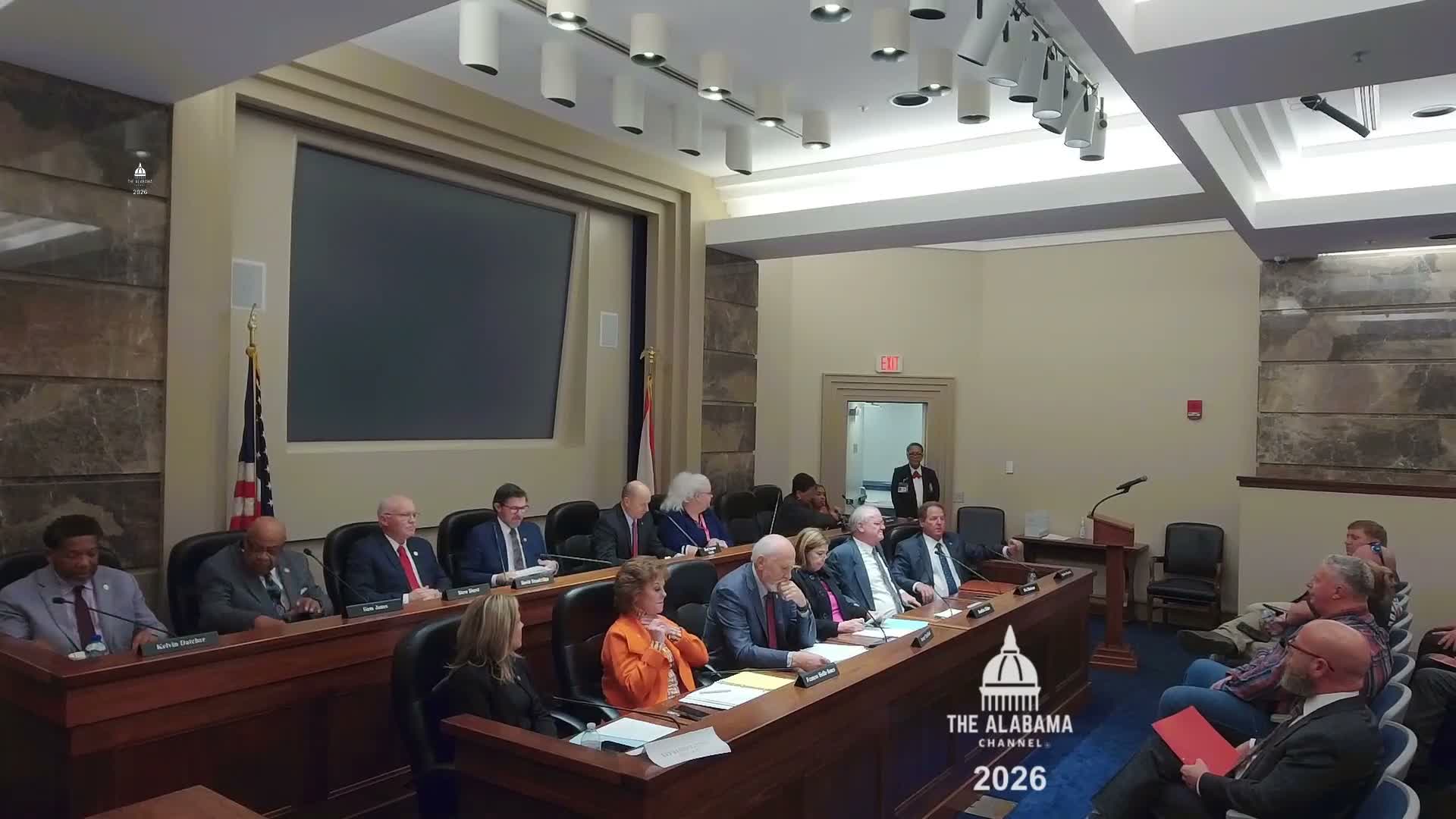
Representative Stubbs told the committee that House Bill 163, commonly called the CPACE bill, would allow local governments "to opt in to participate in the CPACE lending program," a financing tool used in other states to support private resiliency and economic development projects. He said the local government's role would be limited to filing the agreement and placing an assessment and lien on the property to secure repayment, and would not create responsibility for how a private borrower spends the loan.
The sponsor described the bill as complex and technical but emphasized its limited government role: "The local government has no responsibility in ensuring that the money is spent the way that the borrower tells the lender they're spending it," he said. He added the regime functions like a mortgage lien that protects lenders in the event of borrower default.
Committee members considered a substitute and a negotiated amendment that the sponsor said had been developed with stakeholders, including county commissions. After verification of the substitute and amendment documents, a member moved to adopt the substitute with the amendment and Representative Harrison seconded. The chair conducted a voice vote; members voted in favor and the committee advanced the bill. The transcript records a voice vote without individual tallies.
The committee did not record additional amendments on the floor. With committee approval, HB163 will proceed through the legislative process according to House rules and any further scheduling decided by committee leadership.
The sponsor described the bill as complex and technical but emphasized its limited government role: "The local government has no responsibility in ensuring that the money is spent the way that the borrower tells the lender they're spending it," he said. He added the regime functions like a mortgage lien that protects lenders in the event of borrower default.
Committee members considered a substitute and a negotiated amendment that the sponsor said had been developed with stakeholders, including county commissions. After verification of the substitute and amendment documents, a member moved to adopt the substitute with the amendment and Representative Harrison seconded. The chair conducted a voice vote; members voted in favor and the committee advanced the bill. The transcript records a voice vote without individual tallies.
The committee did not record additional amendments on the floor. With committee approval, HB163 will proceed through the legislative process according to House rules and any further scheduling decided by committee leadership.
View the Full Meeting & All Its Details
This article offers just a summary. Unlock complete video, transcripts, and insights as a Founder Member.
✓
Watch full, unedited meeting videos
✓
Search every word spoken in unlimited transcripts
✓
AI summaries & real-time alerts (all government levels)
✓
Permanent access to expanding government content
30-day money-back guarantee
