Lake County board hears preliminary pitch for 50–100 MW geothermal project; residents warn of water, seismic and infrastructure risks
February 05, 2026 | Lake County, California
This article was created by AI summarizing key points discussed. AI makes mistakes, so for full details and context, please refer to the video of the full meeting. Please report any errors so we can fix them. Report an error »
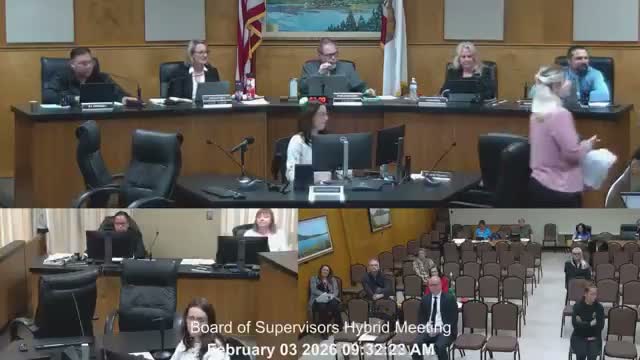
County staff and a private developer outlined early plans on Feb. 3 to evaluate siting an Enhanced Geothermal System (EGS) power plant on or near county‑owned land at the Southeast Water Treatment Facility.
Deputy County Administrative Officer Ben Rickleman said the idea originated from private landowner inquiries and that staff has been asked to explore whether some equipment and the power plant could be co‑located on county property. He emphasized the discussions are preliminary and that the county was being asked only for staff time to develop a proposal, not approval of the project itself.
Damien Gerard, principal at EGX Energy, told the board the company is considering a large project — “50 to 100 megawatts” — and estimated the plant would use about 30 acres of a roughly 400‑acre county property. Gerard said the site’s previous disturbance, road access and geologic conditions made it “an attractive” option to stage surface equipment while well paths might be sited elsewhere.
Several supervisors and members of the public raised procedural and technical concerns. Supervisor Sabatier and others said they had expected developers to follow established permitting processes and town‑hall outreach, and warned against setting a precedent of requiring board approval merely to allow staff to work with a developer. Supervisor Owen said energy projects should first be evaluated against the county’s emerging energy policy and asked that any county commitments prioritize local benefit and lower costs for residents.
Community Development Director Marya Turner and Special Districts staff described time already spent on preliminary meetings and clarified that no permit applications or fee payments have been submitted. Special Districts staff said they had already logged several hours meeting with the developer and the county’s consultant and sought direction about whether to continue that work.
Residents and local water managers urged caution. Cassandra Hulbert, who said she lives on Robin Lane near the Southeast plant, asked the board to pause authorization for the geothermal proposal until the sewage spill investigation and remediation are complete and independent environmental review has occurred. Diana Mann, general manager of the Clear Lake Oaks County Water District, said the proposal was a surprise and asked to be brought into discussions; she cited a 3½‑mile pipeline linking district service to the treatment plant and asked how the project would protect service and water supplies. Several commenters warned about groundwater, seismicity and proximity to a Superfund site.
Supervisor Crandall urged developers to hold town halls and consult tribal leaders; others suggested developers consider private land alternatives such as the Pluth Ranch. The developer offered to meet with supervisors and technical experts individually to address seismic, water and power questions.
No formal approval for a project or lease was requested. Staff asked only for authorization to continue limited work; board members generally favored allowing staff‑level research to continue with clear guidance about invoicing and limits on uncompensated staff time. The item concluded with direction for staff and developers to continue outreach and to return with a more detailed proposal if and when one is ready.
The development would require multiple local and state permits, including environmental review, and would be subject to state oversight including the California Energy Commission and other regulators. The county emphasized that any future agreement would come back to the board for decision.
Deputy County Administrative Officer Ben Rickleman said the idea originated from private landowner inquiries and that staff has been asked to explore whether some equipment and the power plant could be co‑located on county property. He emphasized the discussions are preliminary and that the county was being asked only for staff time to develop a proposal, not approval of the project itself.
Damien Gerard, principal at EGX Energy, told the board the company is considering a large project — “50 to 100 megawatts” — and estimated the plant would use about 30 acres of a roughly 400‑acre county property. Gerard said the site’s previous disturbance, road access and geologic conditions made it “an attractive” option to stage surface equipment while well paths might be sited elsewhere.
Several supervisors and members of the public raised procedural and technical concerns. Supervisor Sabatier and others said they had expected developers to follow established permitting processes and town‑hall outreach, and warned against setting a precedent of requiring board approval merely to allow staff to work with a developer. Supervisor Owen said energy projects should first be evaluated against the county’s emerging energy policy and asked that any county commitments prioritize local benefit and lower costs for residents.
Community Development Director Marya Turner and Special Districts staff described time already spent on preliminary meetings and clarified that no permit applications or fee payments have been submitted. Special Districts staff said they had already logged several hours meeting with the developer and the county’s consultant and sought direction about whether to continue that work.
Residents and local water managers urged caution. Cassandra Hulbert, who said she lives on Robin Lane near the Southeast plant, asked the board to pause authorization for the geothermal proposal until the sewage spill investigation and remediation are complete and independent environmental review has occurred. Diana Mann, general manager of the Clear Lake Oaks County Water District, said the proposal was a surprise and asked to be brought into discussions; she cited a 3½‑mile pipeline linking district service to the treatment plant and asked how the project would protect service and water supplies. Several commenters warned about groundwater, seismicity and proximity to a Superfund site.
Supervisor Crandall urged developers to hold town halls and consult tribal leaders; others suggested developers consider private land alternatives such as the Pluth Ranch. The developer offered to meet with supervisors and technical experts individually to address seismic, water and power questions.
No formal approval for a project or lease was requested. Staff asked only for authorization to continue limited work; board members generally favored allowing staff‑level research to continue with clear guidance about invoicing and limits on uncompensated staff time. The item concluded with direction for staff and developers to continue outreach and to return with a more detailed proposal if and when one is ready.
The development would require multiple local and state permits, including environmental review, and would be subject to state oversight including the California Energy Commission and other regulators. The county emphasized that any future agreement would come back to the board for decision.
Don't Miss a Word: See the Full Meeting!
Go beyond summaries. Unlock every video, transcript, and key insight with a Founder Membership.
✓
Get instant access to full meeting videos
✓
Search and clip any phrase from complete transcripts
✓
Receive AI-powered summaries & custom alerts
✓
Enjoy lifetime, unrestricted access to government data
30-day money-back guarantee
