Witnesses back site‑neutral billing and other cost‑containment measures while debating tradeoffs
February 05, 2026 | Health Care, HOUSE OF REPRESENTATIVES, Committees, Legislative , Vermont
This article was created by AI summarizing key points discussed. AI makes mistakes, so for full details and context, please refer to the video of the full meeting. Please report any errors so we can fix them. Report an error »
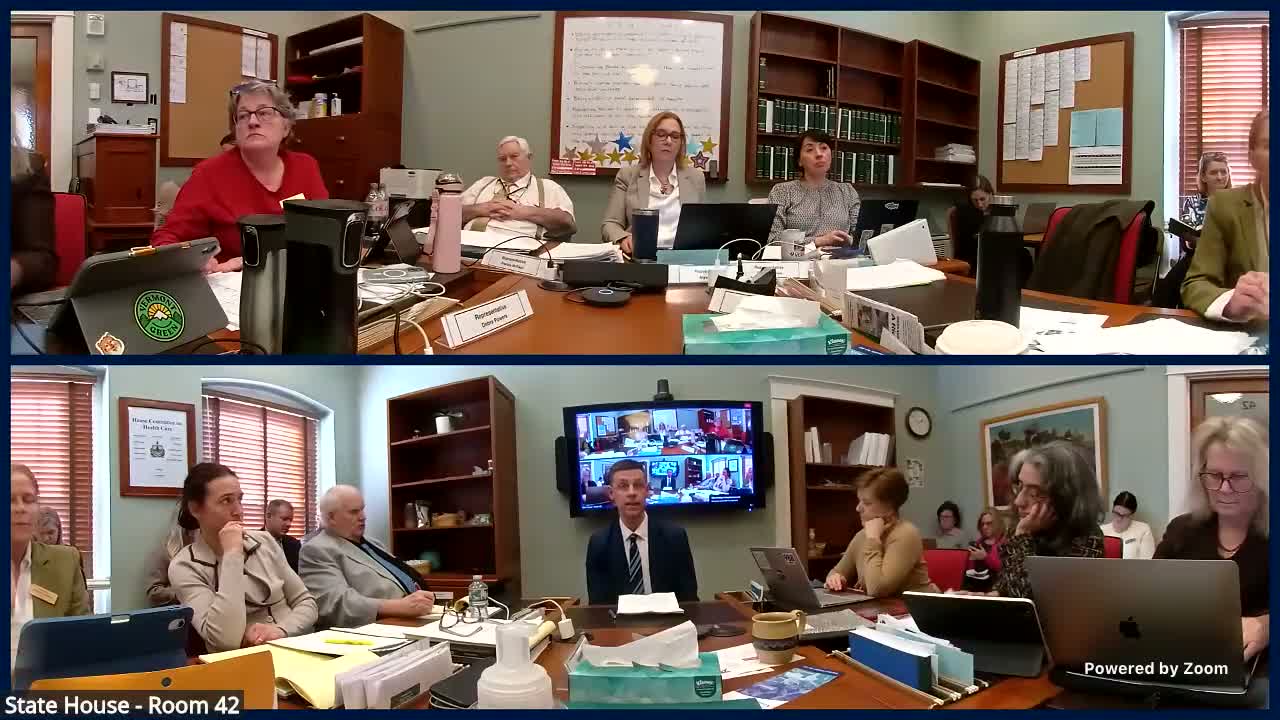
Witnesses at the H.585 hearing said site‑neutral billing and related cost‑containment tools could lower out‑of‑pocket costs and premiums but urged careful, evidence‑based implementation.
Courtney Harness of Blue Cross and Blue Shield of Vermont called site‑neutral billing "the most important piece of this entire bill" for its potential dollar impact while warning that a full and immediate rollout could imperil hospitals. Harness cited prior modeling presented to the committee that put potential system‑wide impacts into the hundreds of millions, but said the insurer needs further modeling and phased approaches to avoid unintended consequences. "If we do that this session, we probably lose all of our hospitals," Harness said, adding, "If we lose all of our hospitals, we also lose us." She offered to share modeling with the committee and asked for time to work through implementation details.
Susan Renton of Health First testified in favor of a blended site‑neutral approach, arguing it can reduce price variation between hospital‑employed and independent providers and slow consolidation that weakens high‑value community options. Renton presented illustrative slides showing severalfold price differences for identical services across hospitals and nonhospital providers.
Primary‑care representatives, including Michelle Wade of the Vermont Nurse Practitioners Association, urged caution on prior‑authorization changes and asked the committee to preserve Act 111’s primary‑care exemptions. Wade gave a clinical example in which a primary‑care provider was able to obtain a CT scan for a patient with appendicitis without a prior authorization, enabling same‑day treatment that likely averted a much costlier hospitalization.
Panelists also discussed association health plans, limited‑duration plans, age‑rating adjustments, reinsurance waivers, and the need for coordinated modeling across market segments. Blue Cross said administrative costs are comparatively low and that eliminating executive pay would move premiums minimally; witnesses agreed that high‑dollar claim edits, facility‑fee reforms, and negotiated hospital contracts are central levers for affordability.
Ending: Witnesses asked for further joint modeling with the committee and regulators; the panel did not adopt immediate changes but sought additional data and follow‑up testimony.
Courtney Harness of Blue Cross and Blue Shield of Vermont called site‑neutral billing "the most important piece of this entire bill" for its potential dollar impact while warning that a full and immediate rollout could imperil hospitals. Harness cited prior modeling presented to the committee that put potential system‑wide impacts into the hundreds of millions, but said the insurer needs further modeling and phased approaches to avoid unintended consequences. "If we do that this session, we probably lose all of our hospitals," Harness said, adding, "If we lose all of our hospitals, we also lose us." She offered to share modeling with the committee and asked for time to work through implementation details.
Susan Renton of Health First testified in favor of a blended site‑neutral approach, arguing it can reduce price variation between hospital‑employed and independent providers and slow consolidation that weakens high‑value community options. Renton presented illustrative slides showing severalfold price differences for identical services across hospitals and nonhospital providers.
Primary‑care representatives, including Michelle Wade of the Vermont Nurse Practitioners Association, urged caution on prior‑authorization changes and asked the committee to preserve Act 111’s primary‑care exemptions. Wade gave a clinical example in which a primary‑care provider was able to obtain a CT scan for a patient with appendicitis without a prior authorization, enabling same‑day treatment that likely averted a much costlier hospitalization.
Panelists also discussed association health plans, limited‑duration plans, age‑rating adjustments, reinsurance waivers, and the need for coordinated modeling across market segments. Blue Cross said administrative costs are comparatively low and that eliminating executive pay would move premiums minimally; witnesses agreed that high‑dollar claim edits, facility‑fee reforms, and negotiated hospital contracts are central levers for affordability.
Ending: Witnesses asked for further joint modeling with the committee and regulators; the panel did not adopt immediate changes but sought additional data and follow‑up testimony.
View the Full Meeting & All Its Details
This article offers just a summary. Unlock complete video, transcripts, and insights as a Founder Member.
✓
Watch full, unedited meeting videos
✓
Search every word spoken in unlimited transcripts
✓
AI summaries & real-time alerts (all government levels)
✓
Permanent access to expanding government content
30-day money-back guarantee
