Judiciary committee advances bill to let courts set online access to criminal case records
February 05, 2026 | Judiciary, HOUSE OF REPRESENTATIVES, Committees, Legislative , Vermont
This article was created by AI summarizing key points discussed. AI makes mistakes, so for full details and context, please refer to the video of the full meeting. Please report any errors so we can fix them. Report an error »
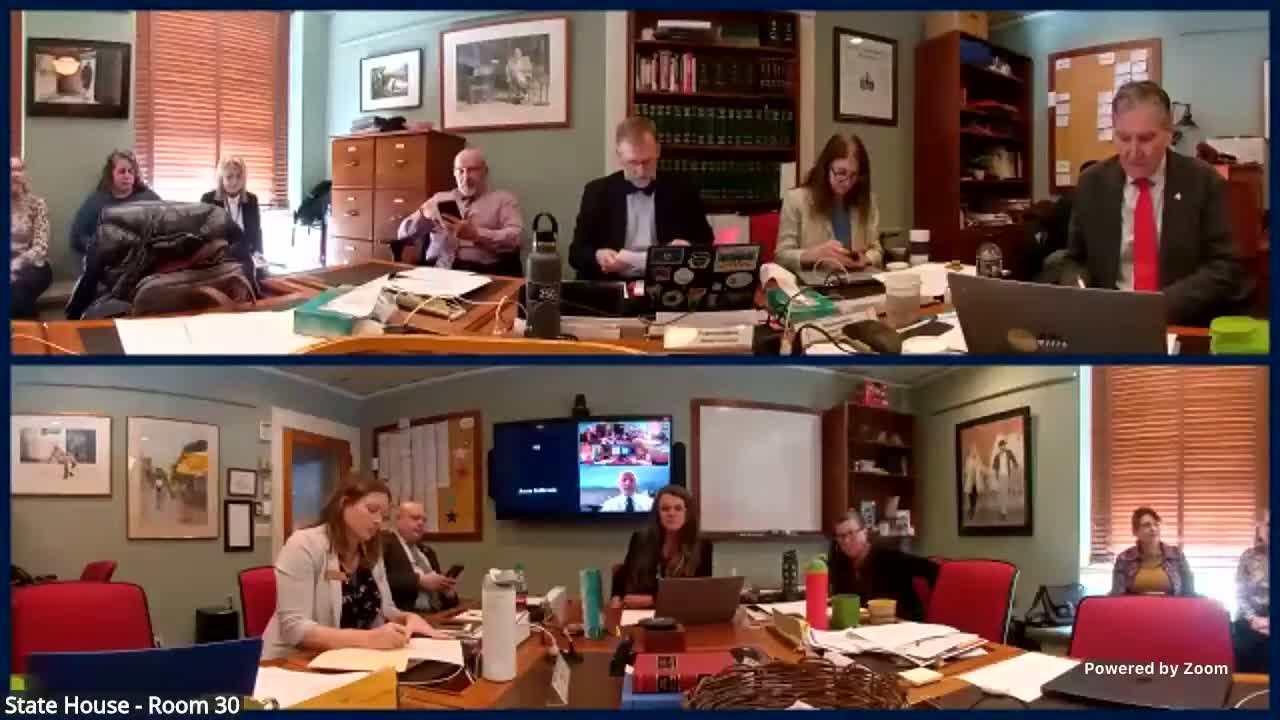
The Judiciary committee on Feb. 4 voted to take up House Bill H.572, a short-form bill that would remove a statutory prohibition on Internet access to criminal case records and direct the Vermont Supreme Court to promulgate rules governing public electronic access.
Michelle Childs, of the Office of Legislative Counsel, told the committee the draft amendment would strike the statutory ban in Title 12 and add language vesting procedures and access rules with the court, leaving specifics such as search limits and redaction protocols to the court rules process.
Journalists who testified said the change would make reporting more timely and efficient. Kristen Fountain, coordinator of the Vermont Journalism Coalition, said the current system forces reporters to rely on clerks to retrieve filings or to travel to courthouses and that electronic access would save scarce reporting time. “These are public records... normal to the time period now is electronically,” Fountain said.
Longtime community reporter John Flowers said making post‑arraignment filings available online would reduce delay and cost, especially for reporters who do not work near courthouses. “Access to criminal court records has become a little bit more difficult, after the technological advances that should make access and retrieval of documents easier,” Flowers testified.
Legal advocates argued the prohibition is out of step with constitutional principles. Anna Silbrady, a Yale Law School student and student director of the Media Freedom and Information Access Clinic, told the committee their research found “a strong constitutional and common law right of access to judicial records in criminal cases,” and cited Second Circuit precedent as supporting timely public access.
Officials emphasized that allowing online access does not automatically remove privacy protections. Cherry Corson, the state court administrator in testimony, described existing rule categories that exclude personally identifying information, juvenile matters and adoptions from public access and said the Public Access to Court Records Committee — which includes a media representative — would take the lead on drafting rules. Corson told the committee she discussed timing with court leadership and that a July 1, 2027 effective date for any new rules would be feasible to allow for drafting and public comment.
Representatives of law enforcement expressed caution about certain materials. Kim McManus, representing the Department of State's Attorneys and Sheriffs, said probable cause affidavits and other filings can contain highly sensitive personal information and urged that redaction practices and sealing procedures be carefully considered in rulemaking to prevent unintended harms if records are widely accessible online.
The committee recorded a motion to take H.572 off the wall — a procedural step to consider the short-form bill — and approved it without recorded opposition. Committee members directed staff to collect written testimony and indicated they expect the Public Access to Court Records Committee and the judicial rules process to shape implementation details before any change would take effect.
Next steps: supporters said they will submit written materials and citations referenced in testimony, and the committee will continue consideration after additional witnesses are heard and rules work proceeds through the court’s rule cycle.
Michelle Childs, of the Office of Legislative Counsel, told the committee the draft amendment would strike the statutory ban in Title 12 and add language vesting procedures and access rules with the court, leaving specifics such as search limits and redaction protocols to the court rules process.
Journalists who testified said the change would make reporting more timely and efficient. Kristen Fountain, coordinator of the Vermont Journalism Coalition, said the current system forces reporters to rely on clerks to retrieve filings or to travel to courthouses and that electronic access would save scarce reporting time. “These are public records... normal to the time period now is electronically,” Fountain said.
Longtime community reporter John Flowers said making post‑arraignment filings available online would reduce delay and cost, especially for reporters who do not work near courthouses. “Access to criminal court records has become a little bit more difficult, after the technological advances that should make access and retrieval of documents easier,” Flowers testified.
Legal advocates argued the prohibition is out of step with constitutional principles. Anna Silbrady, a Yale Law School student and student director of the Media Freedom and Information Access Clinic, told the committee their research found “a strong constitutional and common law right of access to judicial records in criminal cases,” and cited Second Circuit precedent as supporting timely public access.
Officials emphasized that allowing online access does not automatically remove privacy protections. Cherry Corson, the state court administrator in testimony, described existing rule categories that exclude personally identifying information, juvenile matters and adoptions from public access and said the Public Access to Court Records Committee — which includes a media representative — would take the lead on drafting rules. Corson told the committee she discussed timing with court leadership and that a July 1, 2027 effective date for any new rules would be feasible to allow for drafting and public comment.
Representatives of law enforcement expressed caution about certain materials. Kim McManus, representing the Department of State's Attorneys and Sheriffs, said probable cause affidavits and other filings can contain highly sensitive personal information and urged that redaction practices and sealing procedures be carefully considered in rulemaking to prevent unintended harms if records are widely accessible online.
The committee recorded a motion to take H.572 off the wall — a procedural step to consider the short-form bill — and approved it without recorded opposition. Committee members directed staff to collect written testimony and indicated they expect the Public Access to Court Records Committee and the judicial rules process to shape implementation details before any change would take effect.
Next steps: supporters said they will submit written materials and citations referenced in testimony, and the committee will continue consideration after additional witnesses are heard and rules work proceeds through the court’s rule cycle.
Don't Miss a Word: See the Full Meeting!
Go beyond summaries. Unlock every video, transcript, and key insight with a Founder Membership.
✓
Get instant access to full meeting videos
✓
Search and clip any phrase from complete transcripts
✓
Receive AI-powered summaries & custom alerts
✓
Enjoy lifetime, unrestricted access to government data
30-day money-back guarantee
