Committee agrees to strike disputed affidavit language after prosecutors warn of overnight burden
February 05, 2026 | Judiciary, HOUSE OF REPRESENTATIVES, Committees, Legislative , Vermont
This article was created by AI summarizing key points discussed. AI makes mistakes, so for full details and context, please refer to the video of the full meeting. Please report any errors so we can fix them. Report an error »
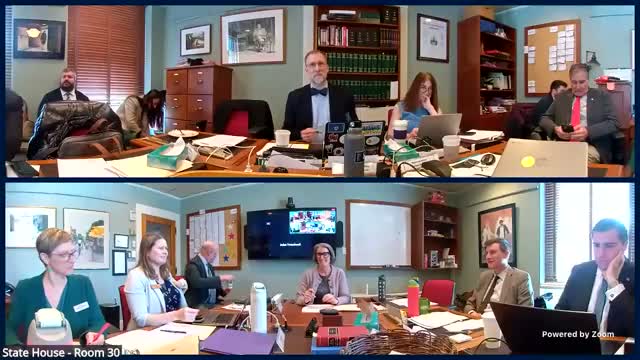
The Judiciary Committee moved to remove an inaccurate sentence from draft judicial-rule changes after prosecutors told lawmakers the language risked expanding overnight prosecutorial duties and worsening staff fatigue.
Eliza Novick Smith, a deputy state's attorney in Chittenden County, told the panel that requiring prosecutors to make or replicate charging decisions overnight would ‘‘require another person to be woken up in the middle of the night to do work that is going to be started afresh in the morning.’’ She described on-call schedules that carry a $50 per diem and said the current staffing model leaves little "slack in the line" to absorb additional overnight responsibilities.
"The sleep deprivation is a real challenge," Novick Smith said, describing nights when deputy prosecutors are awakened multiple times and then must perform in‑court work the next day. She and other witnesses said after‑hours duties are already concentrated in a small pool of staff and that adding mandatory overnight charging consultations would risk burnout and longer detentions for people held pending judicial review.
Novick Smith also warned of a legal risk: if an overnight affidavit records a night prosecutor's preliminary view about charges, a different prosecutor with fuller morning information might later file different charges, creating litigation over the discrepancy. "In a contentious case, I foresee litigating... why one DSA made a different determination than another," she said.
Committee members discussed alternate phrasing for the affidavit. Several lawmakers asked whether the affidavit could instead state the offenses "for which the arresting officer believes there is probable cause," language Novick Smith said would address concerns without compelling prosecutors into duplicative overnight charging work.
Judge Treadwell, appearing before the committee, characterized the existing struck sentence as legally incorrect and said courts focus on the facts in the affidavit of probable cause rather than an officer's opinion about what should be charged: "We are interested in the facts that are set forth in the affidavit of probable cause, to determine whether there is probable cause." He said clarifying the language would resolve the confusion.
After discussion, the committee chair proposed and members agreed to strike the specific problematic sentence from the draft and include that correction in the miscellaneous judiciary bill. The chair said the remainder of the proposed rules would be reported to the criminal rules committee for further consideration.
The criminal rules committee is expected to review the draft and decide next steps; committee members said options include tabling the proposal, forwarding it with a recommendation, or rewording it and seeking additional comment. The Judiciary Committee will report the concerns it heard to the criminal rules committee as it moves forward.
Eliza Novick Smith, a deputy state's attorney in Chittenden County, told the panel that requiring prosecutors to make or replicate charging decisions overnight would ‘‘require another person to be woken up in the middle of the night to do work that is going to be started afresh in the morning.’’ She described on-call schedules that carry a $50 per diem and said the current staffing model leaves little "slack in the line" to absorb additional overnight responsibilities.
"The sleep deprivation is a real challenge," Novick Smith said, describing nights when deputy prosecutors are awakened multiple times and then must perform in‑court work the next day. She and other witnesses said after‑hours duties are already concentrated in a small pool of staff and that adding mandatory overnight charging consultations would risk burnout and longer detentions for people held pending judicial review.
Novick Smith also warned of a legal risk: if an overnight affidavit records a night prosecutor's preliminary view about charges, a different prosecutor with fuller morning information might later file different charges, creating litigation over the discrepancy. "In a contentious case, I foresee litigating... why one DSA made a different determination than another," she said.
Committee members discussed alternate phrasing for the affidavit. Several lawmakers asked whether the affidavit could instead state the offenses "for which the arresting officer believes there is probable cause," language Novick Smith said would address concerns without compelling prosecutors into duplicative overnight charging work.
Judge Treadwell, appearing before the committee, characterized the existing struck sentence as legally incorrect and said courts focus on the facts in the affidavit of probable cause rather than an officer's opinion about what should be charged: "We are interested in the facts that are set forth in the affidavit of probable cause, to determine whether there is probable cause." He said clarifying the language would resolve the confusion.
After discussion, the committee chair proposed and members agreed to strike the specific problematic sentence from the draft and include that correction in the miscellaneous judiciary bill. The chair said the remainder of the proposed rules would be reported to the criminal rules committee for further consideration.
The criminal rules committee is expected to review the draft and decide next steps; committee members said options include tabling the proposal, forwarding it with a recommendation, or rewording it and seeking additional comment. The Judiciary Committee will report the concerns it heard to the criminal rules committee as it moves forward.
Don't Miss a Word: See the Full Meeting!
Go beyond summaries. Unlock every video, transcript, and key insight with a Founder Membership.
✓
Get instant access to full meeting videos
✓
Search and clip any phrase from complete transcripts
✓
Receive AI-powered summaries & custom alerts
✓
Enjoy lifetime, unrestricted access to government data
30-day money-back guarantee
