Committee reviews H.744 to clarify after‑hours arrest affidavits and possible prosecutorial input
February 05, 2026 | Judiciary, HOUSE OF REPRESENTATIVES, Committees, Legislative , Vermont
This article was created by AI summarizing key points discussed. AI makes mistakes, so for full details and context, please refer to the video of the full meeting. Please report any errors so we can fix them. Report an error »
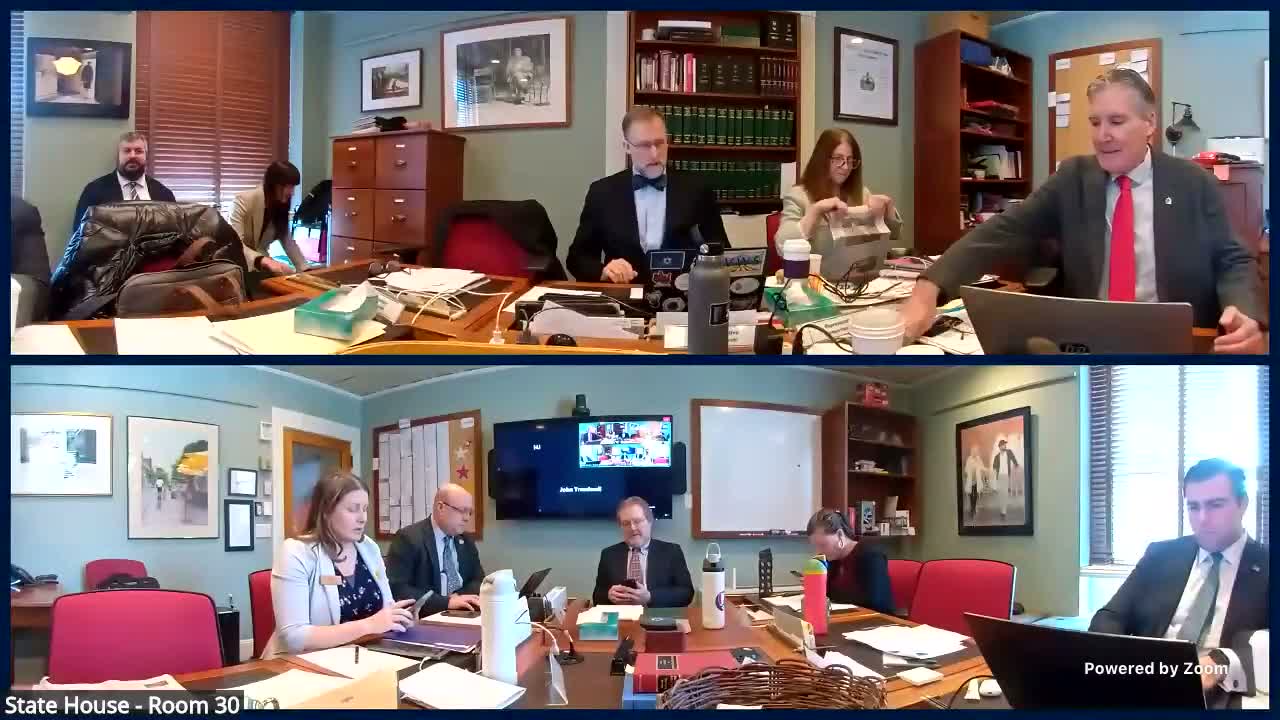
MONTPELIER — The Legislative Committee on Judicial Rules on Feb. 4 reviewed H.744, a bill that would clarify the after‑hours procedure for warrantless arrests and permit presiding judges to require that affidavits include preliminary information from prosecuting attorneys about potential charges and requested conditions of release.
Eric Fitzpatrick, counsel for the committee, told members the measure addresses a problematic phrase in the current Rule 3 provision that says an affidavit must indicate “the crimes to be charged by the arresting officer.” Fitzpatrick said the bill would allow each presiding judge, under Rule 5(b), to require that the affidavit include the charge or charges the prosecuting attorney “intends to file” and any conditions of release the prosecutor is requesting.
Judge John Treadwell, chair of the advisory committee on the rules of criminal procedure and a Windham County judge, testified the proposal “codifies, in some sense, the practices that are already authorized under Rule 5(b)” and that Rule 3 “does, in fact, affect significant liberty interests of people who are presumptively innocent.” He listed specific facts judges commonly consider for bail and conditions — prior convictions, failures to appear, threats of violence, residence and community ties — and said prosecutorial input can materially change what conditions a judge may lawfully set.
Treadwell emphasized charging decisions remain the prosecutor’s responsibility and described the requested information as preliminary: “I can read an affidavit and have some idea of what the state might charge, but that is not my job. That is a pure executive branch decision.” He said the overnight indication would not bind what the state files the following day.
Prosecutors told a different practical story. Eliza Novick Smith, deputy state’s attorney in Chittenden County, said the change would likely increase off‑hours workload for already stretched offices, arguing law enforcement generally supplies most of the factual information judges need and that prosecutors are available on call when necessary. She cited data provided to the office — “3,468 warrantless arrests in Vermont in [2024],” an average of roughly 9½ per day — and warned that routinely requiring prosecutorial involvement could worsen retention problems.
“Our preference as a department is to strike the new language,” Novick Smith said, while recommending a narrower fix: change the affidavit wording so it reflects that the officer is recommending charges rather than charging the defendant, for example by replacing “charged by the arresting officer” with “recommended by the arresting officer.”
Members discussed the difference between permissive and mandatory drafting. Several asked whether the bill’s statement of purpose language (“to require”) could be interpreted as mandatory; Fitzpatrick and Treadwell clarified that the operative text on page 2 uses permissive “may” language and leaves the decision to presiding judges in each county, rather than imposing a statewide mandatory obligation.
No formal action or vote occurred at the session. Committee members said they would hear additional testimony and consider whether to act or wait for the criminal rules committee to revisit proposed amendments at its upcoming meeting.
Next steps: the issue remains on the committee’s agenda pending additional witness testimony and the criminal rules committee’s follow‑up meeting.
Eric Fitzpatrick, counsel for the committee, told members the measure addresses a problematic phrase in the current Rule 3 provision that says an affidavit must indicate “the crimes to be charged by the arresting officer.” Fitzpatrick said the bill would allow each presiding judge, under Rule 5(b), to require that the affidavit include the charge or charges the prosecuting attorney “intends to file” and any conditions of release the prosecutor is requesting.
Judge John Treadwell, chair of the advisory committee on the rules of criminal procedure and a Windham County judge, testified the proposal “codifies, in some sense, the practices that are already authorized under Rule 5(b)” and that Rule 3 “does, in fact, affect significant liberty interests of people who are presumptively innocent.” He listed specific facts judges commonly consider for bail and conditions — prior convictions, failures to appear, threats of violence, residence and community ties — and said prosecutorial input can materially change what conditions a judge may lawfully set.
Treadwell emphasized charging decisions remain the prosecutor’s responsibility and described the requested information as preliminary: “I can read an affidavit and have some idea of what the state might charge, but that is not my job. That is a pure executive branch decision.” He said the overnight indication would not bind what the state files the following day.
Prosecutors told a different practical story. Eliza Novick Smith, deputy state’s attorney in Chittenden County, said the change would likely increase off‑hours workload for already stretched offices, arguing law enforcement generally supplies most of the factual information judges need and that prosecutors are available on call when necessary. She cited data provided to the office — “3,468 warrantless arrests in Vermont in [2024],” an average of roughly 9½ per day — and warned that routinely requiring prosecutorial involvement could worsen retention problems.
“Our preference as a department is to strike the new language,” Novick Smith said, while recommending a narrower fix: change the affidavit wording so it reflects that the officer is recommending charges rather than charging the defendant, for example by replacing “charged by the arresting officer” with “recommended by the arresting officer.”
Members discussed the difference between permissive and mandatory drafting. Several asked whether the bill’s statement of purpose language (“to require”) could be interpreted as mandatory; Fitzpatrick and Treadwell clarified that the operative text on page 2 uses permissive “may” language and leaves the decision to presiding judges in each county, rather than imposing a statewide mandatory obligation.
No formal action or vote occurred at the session. Committee members said they would hear additional testimony and consider whether to act or wait for the criminal rules committee to revisit proposed amendments at its upcoming meeting.
Next steps: the issue remains on the committee’s agenda pending additional witness testimony and the criminal rules committee’s follow‑up meeting.
Don't Miss a Word: See the Full Meeting!
Go beyond summaries. Unlock every video, transcript, and key insight with a Founder Membership.
✓
Get instant access to full meeting videos
✓
Search and clip any phrase from complete transcripts
✓
Receive AI-powered summaries & custom alerts
✓
Enjoy lifetime, unrestricted access to government data
30-day money-back guarantee
