DHCD tells Economic Matters Maryland must build tens of thousands of homes to curb rising costs
January 31, 2026 | Economic Matters Committee, HOUSE OF REPRESENTATIVES, Committees, Legislative, Maryland
This article was created by AI summarizing key points discussed. AI makes mistakes, so for full details and context, please refer to the video of the full meeting. Please report any errors so we can fix them. Report an error »
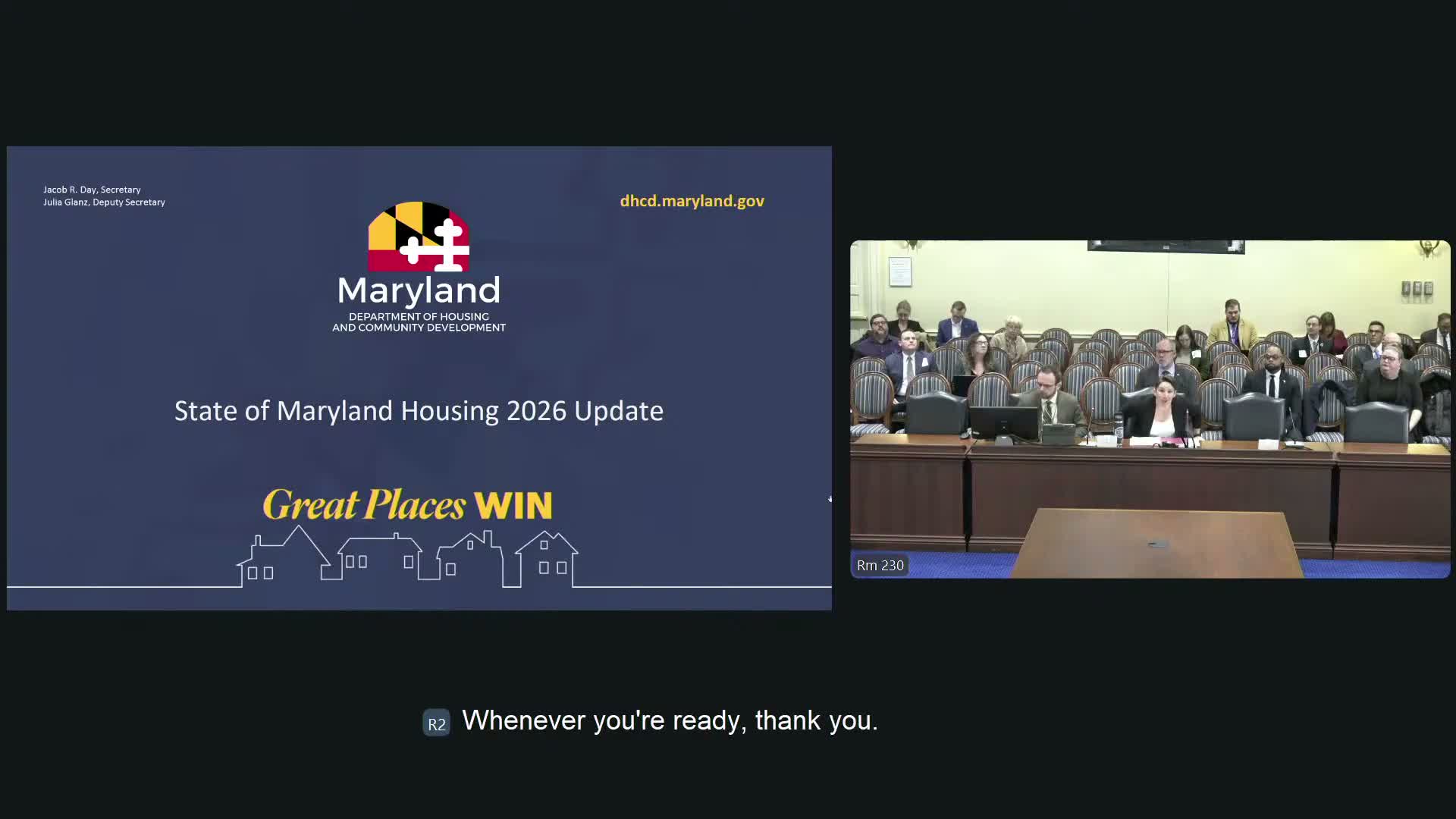
Annapolis — The Maryland Department of Housing and Community Development told the Economic Matters Committee on Monday that an acute supply shortage is the principal driver of housing unaffordability across the state and outlined legislative steps intended to increase production.
"Our solution is more supply," Deputy Secretary Julia Glanz said in opening remarks, summarizing the agency's position that increasing the number and variety of homes is the most direct way to reduce cost pressure for Maryland renters and buyers. Glanz provided a slate of statewide data: rents have risen more than 20% since the pandemic, median home values rose from about $280,000 in 2013 to roughly $436,000 today, and median rents are up about 42% since 2010.
DHCD said Maryland has underproduced housing by an average of approximately 5,600 units a year and estimates a statewide shortfall on the order of 100,000 units to meet current demand. The department's January housing targets report projects a need for roughly 185,000 additional units by 2030.
Glanz emphasized the limits of state control over some cost drivers — material prices and mortgage interest rates — while pointing to zoning and permitting as the areas where state action can have decisive effect. "Local zoning and land use authority is the number one factor within our influence and control," she said, arguing that clarifying where denser housing is allowed and reducing regulatory uncertainty will lower development cost and accelerate supply.
DHCD previewed multiple bills it supports that it said will address those problems: the Starter and Silver Homes Act, intended to enable smaller lots and smaller homes to reduce per-unit construction costs, and the Housing Certainty Act, which would lock in local regulations at the time a project receives approval and defer collection of some impact fees until later in the development cycle.
Committee members pressed DHCD for concrete price targets and for comparisons with neighboring states. Glanz and senior policy analyst Jordan Gilmore said a range of local, market and financing conditions determine final prices and that DHCD will follow up with state-by-state comparisons and jurisdiction-level analyses requested by members.
DHCD also flagged rising homelessness and housing instability: the department estimated that about 22,000 Marylanders experienced homelessness in fiscal year 2025, including roughly 2,200 families with children, and said permanent supportive housing shortages are a particular concern for seniors, veterans and youth.
The department said a permitting timeline review across state agencies will be published on March 1 and that hearings on the administration's housing bills are scheduled later this winter. Committee members requested additional data and follow-up briefings to examine the trade-offs and implementation details.
The committee did not take action on any bills during the briefing; members were notified that formal bill hearings will begin next week.
"Our solution is more supply," Deputy Secretary Julia Glanz said in opening remarks, summarizing the agency's position that increasing the number and variety of homes is the most direct way to reduce cost pressure for Maryland renters and buyers. Glanz provided a slate of statewide data: rents have risen more than 20% since the pandemic, median home values rose from about $280,000 in 2013 to roughly $436,000 today, and median rents are up about 42% since 2010.
DHCD said Maryland has underproduced housing by an average of approximately 5,600 units a year and estimates a statewide shortfall on the order of 100,000 units to meet current demand. The department's January housing targets report projects a need for roughly 185,000 additional units by 2030.
Glanz emphasized the limits of state control over some cost drivers — material prices and mortgage interest rates — while pointing to zoning and permitting as the areas where state action can have decisive effect. "Local zoning and land use authority is the number one factor within our influence and control," she said, arguing that clarifying where denser housing is allowed and reducing regulatory uncertainty will lower development cost and accelerate supply.
DHCD previewed multiple bills it supports that it said will address those problems: the Starter and Silver Homes Act, intended to enable smaller lots and smaller homes to reduce per-unit construction costs, and the Housing Certainty Act, which would lock in local regulations at the time a project receives approval and defer collection of some impact fees until later in the development cycle.
Committee members pressed DHCD for concrete price targets and for comparisons with neighboring states. Glanz and senior policy analyst Jordan Gilmore said a range of local, market and financing conditions determine final prices and that DHCD will follow up with state-by-state comparisons and jurisdiction-level analyses requested by members.
DHCD also flagged rising homelessness and housing instability: the department estimated that about 22,000 Marylanders experienced homelessness in fiscal year 2025, including roughly 2,200 families with children, and said permanent supportive housing shortages are a particular concern for seniors, veterans and youth.
The department said a permitting timeline review across state agencies will be published on March 1 and that hearings on the administration's housing bills are scheduled later this winter. Committee members requested additional data and follow-up briefings to examine the trade-offs and implementation details.
The committee did not take action on any bills during the briefing; members were notified that formal bill hearings will begin next week.
Don't Miss a Word: See the Full Meeting!
Go beyond summaries. Unlock every video, transcript, and key insight with a Founder Membership.
✓
Get instant access to full meeting videos
✓
Search and clip any phrase from complete transcripts
✓
Receive AI-powered summaries & custom alerts
✓
Enjoy lifetime, unrestricted access to government data
30-day money-back guarantee
