MAKO, MML tell committee local governments need flexibility and infrastructure to implement housing reforms
January 31, 2026 | Economic Matters Committee, HOUSE OF REPRESENTATIVES, Committees, Legislative, Maryland
This article was created by AI summarizing key points discussed. AI makes mistakes, so for full details and context, please refer to the video of the full meeting. Please report any errors so we can fix them. Report an error »
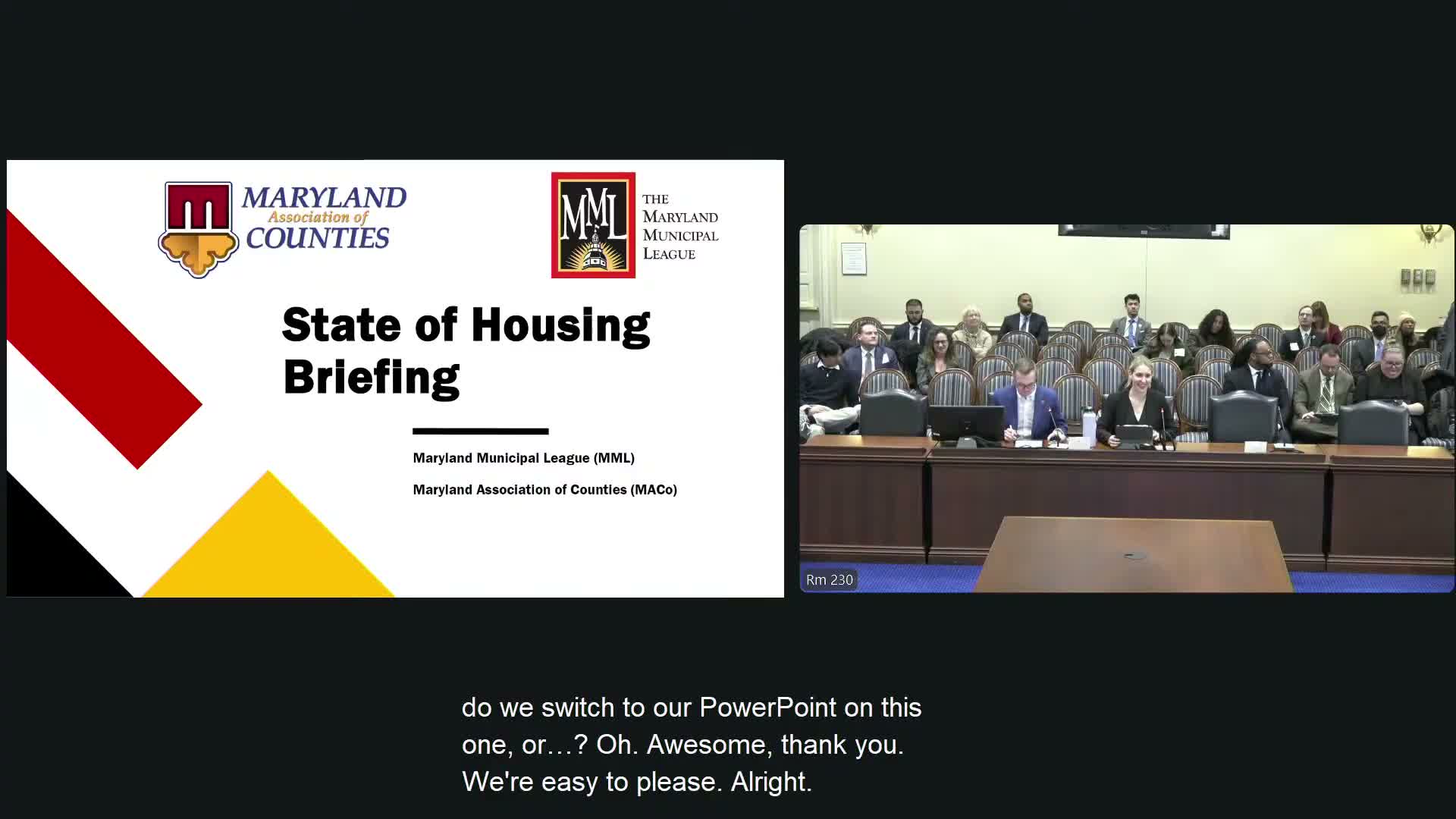
Annapolis — Local government associations told the Economic Matters Committee that state housing reforms must account for local implementation capacity, infrastructure limits and community input.
Angelica Bailey Thupari of the Maryland Municipal League and Dom Butchko of the Maryland Association of Counties described local government responsibilities for land use, master planning and infrastructure, and urged the committee to consider the practical steps needed to translate statewide goals into buildable projects.
"We decide what goes where and when," Bailey Thupari said, explaining that many Maryland municipalities are small, staff-limited and responsible for coordinating infrastructure, service delivery and development review.
Butchko and MML outlined the Building Affordably in My Backyard (Bambi) framework developed with counties: four pillars covering land use, market tools, state actions and renter protections. They said Bambi focuses on predictable review standards, smarter timing for fees to align payment with project cash flow, and mobilizing growth areas where infrastructure can support denser development.
Delegates representing rural areas pressed the panel on wastewater and septic constraints that limit new development on the Eastern Shore. MAKO’s representatives acknowledged those constraints and said some problems will require capital investment rather than regulatory change alone. The panel noted state agencies are coordinating on permitting timelines and that early vesting provisions in the Housing Certainty Act are intended to prevent regulators from changing rules in the middle of a project’s approvals.
Local officials emphasized trade-offs — forest conservation, stormwater, building codes and electrification — and urged the legislature to weigh upfront costs versus long-run benefits when considering mandates that affect local budgets and permitting authority.
Angelica Bailey Thupari of the Maryland Municipal League and Dom Butchko of the Maryland Association of Counties described local government responsibilities for land use, master planning and infrastructure, and urged the committee to consider the practical steps needed to translate statewide goals into buildable projects.
"We decide what goes where and when," Bailey Thupari said, explaining that many Maryland municipalities are small, staff-limited and responsible for coordinating infrastructure, service delivery and development review.
Butchko and MML outlined the Building Affordably in My Backyard (Bambi) framework developed with counties: four pillars covering land use, market tools, state actions and renter protections. They said Bambi focuses on predictable review standards, smarter timing for fees to align payment with project cash flow, and mobilizing growth areas where infrastructure can support denser development.
Delegates representing rural areas pressed the panel on wastewater and septic constraints that limit new development on the Eastern Shore. MAKO’s representatives acknowledged those constraints and said some problems will require capital investment rather than regulatory change alone. The panel noted state agencies are coordinating on permitting timelines and that early vesting provisions in the Housing Certainty Act are intended to prevent regulators from changing rules in the middle of a project’s approvals.
Local officials emphasized trade-offs — forest conservation, stormwater, building codes and electrification — and urged the legislature to weigh upfront costs versus long-run benefits when considering mandates that affect local budgets and permitting authority.
Don't Miss a Word: See the Full Meeting!
Go beyond summaries. Unlock every video, transcript, and key insight with a Founder Membership.
✓
Get instant access to full meeting videos
✓
Search and clip any phrase from complete transcripts
✓
Receive AI-powered summaries & custom alerts
✓
Enjoy lifetime, unrestricted access to government data
30-day money-back guarantee
