Maryland labor secretary tells committee pandemic-era identity fraud drove large overpayment backlog; department resuming collections
February 05, 2026 | Economic Matters Committee, HOUSE OF REPRESENTATIVES, Committees, Legislative, Maryland
This article was created by AI summarizing key points discussed. AI makes mistakes, so for full details and context, please refer to the video of the full meeting. Please report any errors so we can fix them. Report an error »
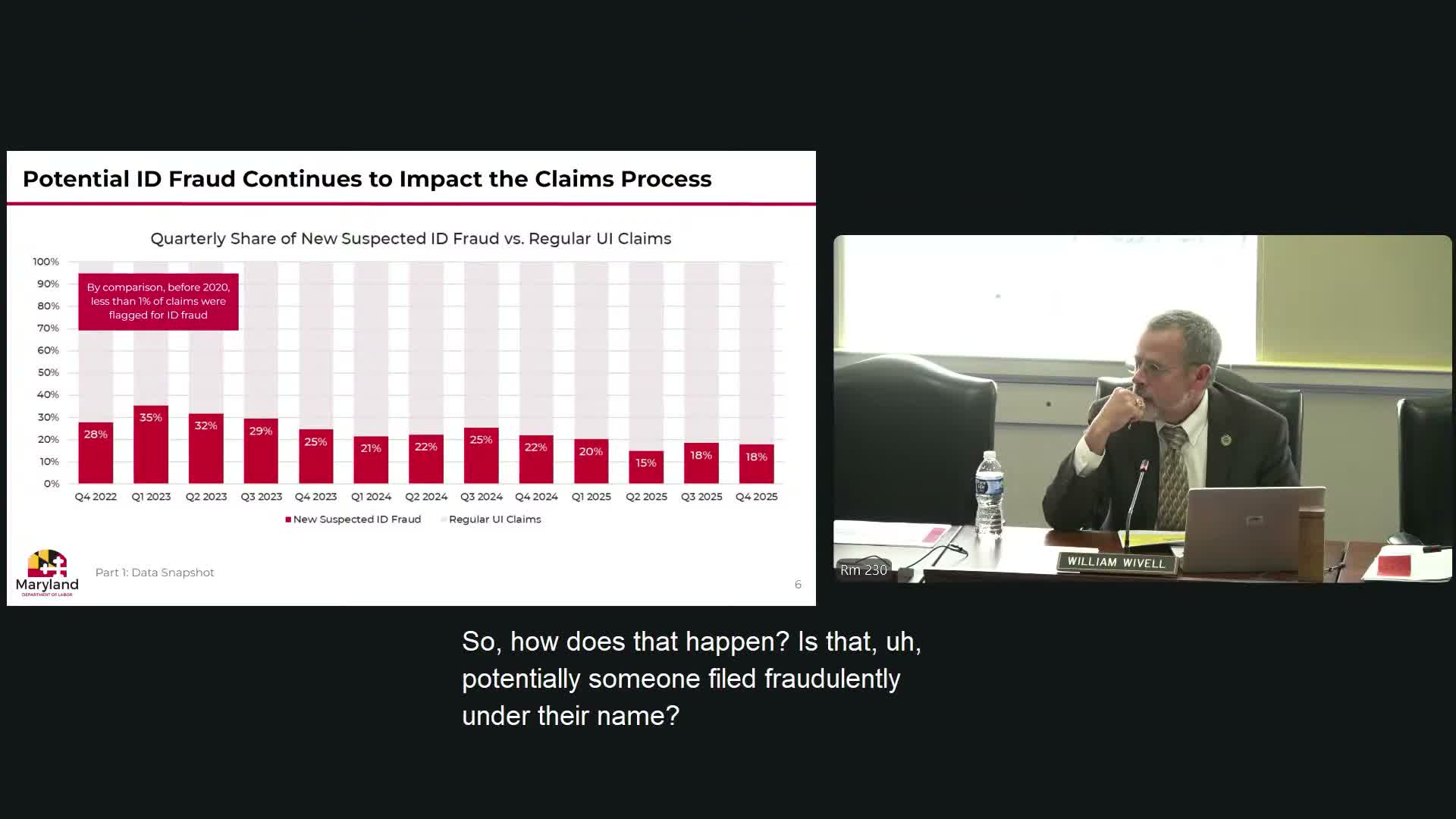
Secretary Wu told the Economic Matters Committee on Feb. 4 that pandemic-era identity theft and administrative pauses left a backlog of unemployment insurance overpayments that the department has begun to address.
Wu said the department stopped consistently collecting overpayments in 2020 and did not resume regular collection activity until 2023. "We turned that back on in 2023 going forward," she said, adding that many determinations from the pandemic period required reissuance to include legally mandated appeal rights.
Why it matters: The department must recover overpayments under federal law within a three-year window to be collectible, Wu said, and long pauses and litigation left a window of payments that cannot now be recovered. That gap contributed to audit findings and prompted the department to reissue notices and seek reconciliations.
Key facts and figures: Wu described the pandemic-era surge as "over 1,700,000 claims in Maryland alone in 2020, and the state paid out almost $7,000,000,000 in benefits." She cited the U.S. Government Accountability Office estimate of roughly $135 billion in national fraud. The department mailed roughly 180,000 overpayment notices late last year and said many recoveries ultimately will be returned to federal sources when the underlying benefit was federally funded.
Recoveries and bank negotiation: The secretary said the department recovered substantial sums tied to pandemic-era debit-card disbursements. She said the prior administration recovered about $484,000,000 and that the department later negotiated another recovery of about $520,000,000 from the bank that held those debit-card funds (the secretary identified the bank as Bank of America during Q&A). She described the recovery as the result of a negotiated settlement and said the department is completing reconciliations to match funds to individual accounts.
Claimants and identity-theft process: Committee members said constituents had received notices claiming they owed sums despite insisting they never received benefits. Wu described an affidavit and identity-verification process, in which staff examine identification and application records and work with claimants by phone or in person. She said that when verification shows the person is not the claimant on the file, they are not held liable for the overpayment.
Collections mechanisms and limits: The department restored collection tools including the federal offset processes that allow for collection via tax refunds and other offsets in coordination with the U.S. Treasury. Wu said the state has to make three outreach attempts before sending matters to collections and that appellants can request hearings, claim fraud, or set up payment plans.
What remains unresolved: Audit-period accounting and the statute-of-limitations window mean some funds from the early pandemic period cannot be pursued. The department disputed some of the Office of Legislative Audit figures, saying earlier recoveries had not yet been fully reconciled when the audit tables were prepared.
Wu said the department stopped consistently collecting overpayments in 2020 and did not resume regular collection activity until 2023. "We turned that back on in 2023 going forward," she said, adding that many determinations from the pandemic period required reissuance to include legally mandated appeal rights.
Why it matters: The department must recover overpayments under federal law within a three-year window to be collectible, Wu said, and long pauses and litigation left a window of payments that cannot now be recovered. That gap contributed to audit findings and prompted the department to reissue notices and seek reconciliations.
Key facts and figures: Wu described the pandemic-era surge as "over 1,700,000 claims in Maryland alone in 2020, and the state paid out almost $7,000,000,000 in benefits." She cited the U.S. Government Accountability Office estimate of roughly $135 billion in national fraud. The department mailed roughly 180,000 overpayment notices late last year and said many recoveries ultimately will be returned to federal sources when the underlying benefit was federally funded.
Recoveries and bank negotiation: The secretary said the department recovered substantial sums tied to pandemic-era debit-card disbursements. She said the prior administration recovered about $484,000,000 and that the department later negotiated another recovery of about $520,000,000 from the bank that held those debit-card funds (the secretary identified the bank as Bank of America during Q&A). She described the recovery as the result of a negotiated settlement and said the department is completing reconciliations to match funds to individual accounts.
Claimants and identity-theft process: Committee members said constituents had received notices claiming they owed sums despite insisting they never received benefits. Wu described an affidavit and identity-verification process, in which staff examine identification and application records and work with claimants by phone or in person. She said that when verification shows the person is not the claimant on the file, they are not held liable for the overpayment.
Collections mechanisms and limits: The department restored collection tools including the federal offset processes that allow for collection via tax refunds and other offsets in coordination with the U.S. Treasury. Wu said the state has to make three outreach attempts before sending matters to collections and that appellants can request hearings, claim fraud, or set up payment plans.
What remains unresolved: Audit-period accounting and the statute-of-limitations window mean some funds from the early pandemic period cannot be pursued. The department disputed some of the Office of Legislative Audit figures, saying earlier recoveries had not yet been fully reconciled when the audit tables were prepared.
Don't Miss a Word: See the Full Meeting!
Go beyond summaries. Unlock every video, transcript, and key insight with a Founder Membership.
✓
Get instant access to full meeting videos
✓
Search and clip any phrase from complete transcripts
✓
Receive AI-powered summaries & custom alerts
✓
Enjoy lifetime, unrestricted access to government data
30-day money-back guarantee
