DeSantis-led panel urges states�to police AI, opposes proposed federal 10-year "amnesty"
February 05, 2026 | Governor's Cabinet: Rep. DeSantis, Executive , Florida
This article was created by AI summarizing key points discussed. AI makes mistakes, so for full details and context, please refer to the video of the full meeting. Please report any errors so we can fix them. Report an error »
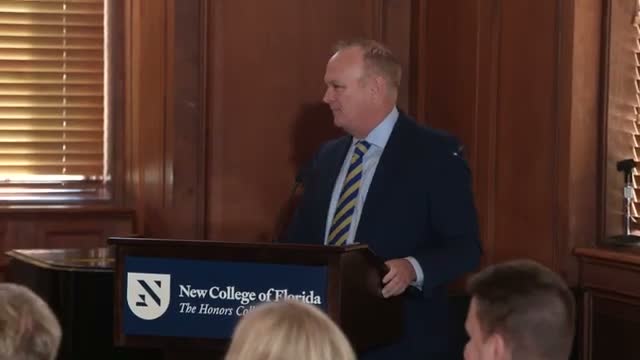
Governor Ron DeSantis convened a panel at New College in Sarasota to press for state-level authority over artificial intelligence and to oppose a congressional proposal he characterized as a 10-year federal "AI amnesty." DeSantis said states must be able to protect children, intellectual property and local communities from harms tied to large language models and consumer-facing chatbots.
"If AI is gonna lead to the loss of a lot of jobs, why would we wanna subsidize that?" DeSantis said, urging scrutiny of tax abatements and other incentives for data centers. He also warned that unregulated models could "gobble up" copyrighted works and erode long-standing legal protections.
Panelists from academia, technology and public health urged concrete rules. Max Tegmark, an MIT professor, proposed treating child-directed AI like other consumer products that undergo pre-deployment testing: "It should be the responsibility of a company that wants to sell this chatbot to kids to do a clinical trial and see did it increase suicidal ideation or not," he said.
Janet Kelly, a former Virginia secretary of health and human resources, spoke on behalf of Megan Garcia and recounted the family's claim that Garcia's son Sewell developed a harmful relationship with a Character AI chatbot. Kelly asked why tech products receive looser safety treatment than other goods for children.
Tim Estes, founder and CEO of Angel Q, urged mandatory transparency about how models are developed and liability tied to measurable harms: "If we're gonna give certain use cases a bit of a safe harbor, then set the structure up and make them have to play by certain rules," he said.
Mike McClellan, author and attorney, pressed the IP angle, describing large-scale scraping of books and other works for training models as an "intellectual property theft" problem and warning that legal shields for platforms have reduced accountability.
Panelists debated concrete tools: pre-deployment testing, mandated transparency, liability for harms to children, and using existing product-safety regimes rather than waiting for a new federal agency. DeSantis reiterated opposition to federal bailouts or blanket immunities for tech firms: "Under no circumstances can the American taxpayer ever bail out any of these big tech companies for their investment decisions," he said.
No formal votes or regulatory actions were taken at the event. Panelists said states can act now through executive measures and state legislation and called for continued public and legislative scrutiny of data-center incentives, platform liability and protections for children and creators.
"If AI is gonna lead to the loss of a lot of jobs, why would we wanna subsidize that?" DeSantis said, urging scrutiny of tax abatements and other incentives for data centers. He also warned that unregulated models could "gobble up" copyrighted works and erode long-standing legal protections.
Panelists from academia, technology and public health urged concrete rules. Max Tegmark, an MIT professor, proposed treating child-directed AI like other consumer products that undergo pre-deployment testing: "It should be the responsibility of a company that wants to sell this chatbot to kids to do a clinical trial and see did it increase suicidal ideation or not," he said.
Janet Kelly, a former Virginia secretary of health and human resources, spoke on behalf of Megan Garcia and recounted the family's claim that Garcia's son Sewell developed a harmful relationship with a Character AI chatbot. Kelly asked why tech products receive looser safety treatment than other goods for children.
Tim Estes, founder and CEO of Angel Q, urged mandatory transparency about how models are developed and liability tied to measurable harms: "If we're gonna give certain use cases a bit of a safe harbor, then set the structure up and make them have to play by certain rules," he said.
Mike McClellan, author and attorney, pressed the IP angle, describing large-scale scraping of books and other works for training models as an "intellectual property theft" problem and warning that legal shields for platforms have reduced accountability.
Panelists debated concrete tools: pre-deployment testing, mandated transparency, liability for harms to children, and using existing product-safety regimes rather than waiting for a new federal agency. DeSantis reiterated opposition to federal bailouts or blanket immunities for tech firms: "Under no circumstances can the American taxpayer ever bail out any of these big tech companies for their investment decisions," he said.
No formal votes or regulatory actions were taken at the event. Panelists said states can act now through executive measures and state legislation and called for continued public and legislative scrutiny of data-center incentives, platform liability and protections for children and creators.
Don't Miss a Word: See the Full Meeting!
Go beyond summaries. Unlock every video, transcript, and key insight with a Founder Membership.
✓
Get instant access to full meeting videos
✓
Search and clip any phrase from complete transcripts
✓
Receive AI-powered summaries & custom alerts
✓
Enjoy lifetime, unrestricted access to government data
30-day money-back guarantee
