Committee considers bill to codify tribal data sovereignty and require tribal reporting of notifiable conditions
February 03, 2026 | Legislative Sessions, Washington
This article was created by AI summarizing key points discussed. AI makes mistakes, so for full details and context, please refer to the video of the full meeting. Please report any errors so we can fix them. Report an error »
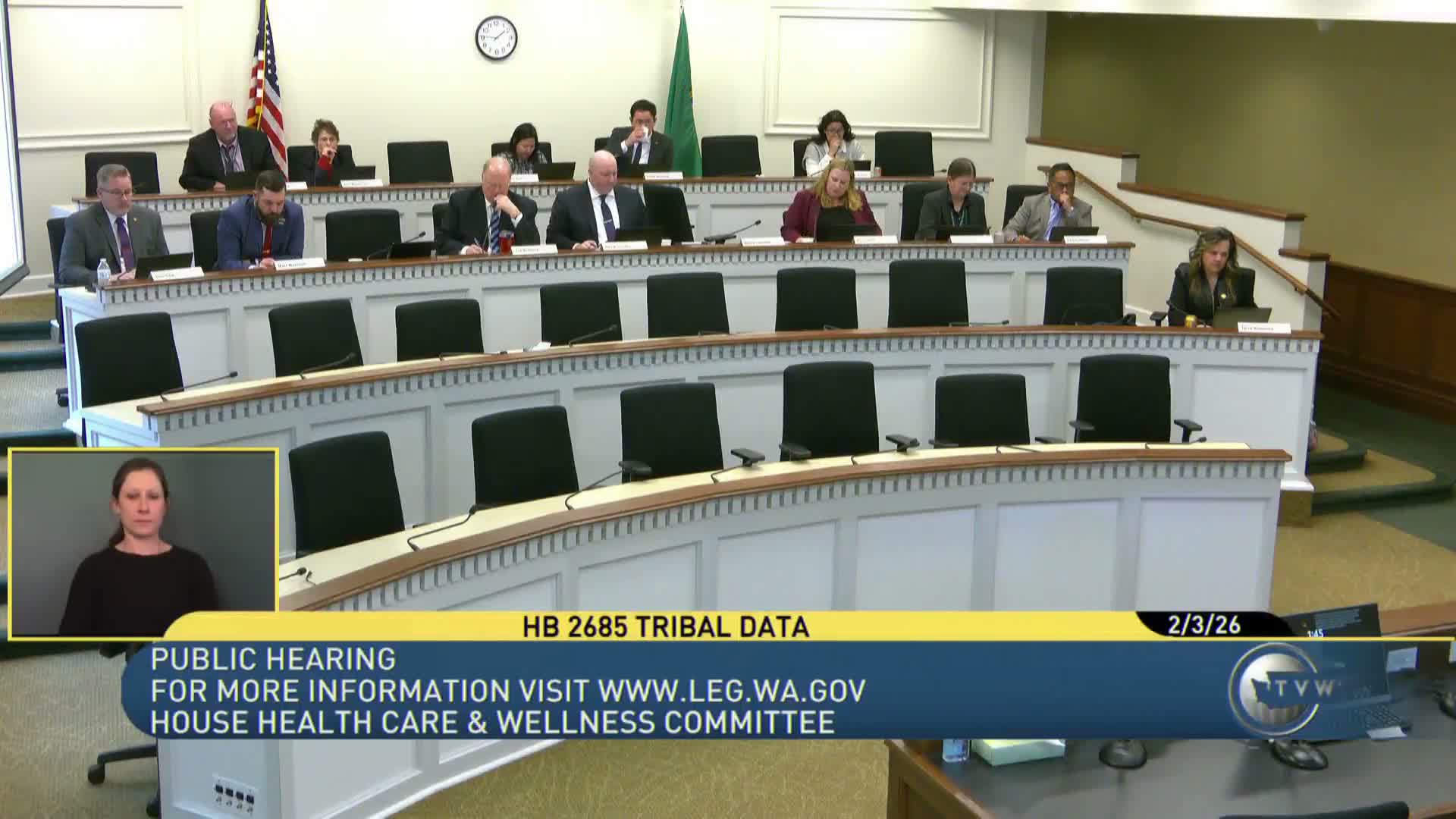
The House Healthcare and Wellness Committee received testimony on House Bill 2685, which would codify principles of tribal data sovereignty for state agencies, require the State Board of Health to adopt rules obligating providers and laboratories to report notifiable conditions to tribal health jurisdictions, and exempt certain tribal data from disclosure under the Public Records Act.
Allison Ryan, staff to the committee, described three main components: applying tribal data sovereignty principles when agencies use or share tribal data; rules for reporting notifiable conditions to tribal health jurisdictions by July 31, 2027; and a public-records exemption for tribal data held by specified state or local health agencies. The bill lists the agencies that must follow the principles and refers agencies to guidance from the Governor’s Indian Health Advisory Council.
Sponsor Representative Deborah Lekanoff said the bill codifies principles that tribes and the state have developed and stressed the need for government-to-government consultation so tribes can ‘‘tell the story’’ of their data. Tribal witnesses, including elected council members, urged passage and said tribal governance of data reduces misuse and improves public-health planning.
Opponents raised concerns about the bill’s scope. Robert McClure of the Washington Coalition for Open Government said the proposed Public Records Act exemption appears broad and could cover non-health data; he said the coalition opposes the bill until the committee provides clearer justification. Aaron Spark of the Health Care Authority said HCA supports tribal data access but believes the draft may be overbroad, lacks clear definitions of ownership interests and consent procedures, and would require substantial resourcing and changes to data collection practices.
The committee finished public testimony and did not take a committee vote during the public-hearing portion. Sponsors and agencies said they will continue to work through definitions, consent mechanisms and the scope of PRA exemptions.
Allison Ryan, staff to the committee, described three main components: applying tribal data sovereignty principles when agencies use or share tribal data; rules for reporting notifiable conditions to tribal health jurisdictions by July 31, 2027; and a public-records exemption for tribal data held by specified state or local health agencies. The bill lists the agencies that must follow the principles and refers agencies to guidance from the Governor’s Indian Health Advisory Council.
Sponsor Representative Deborah Lekanoff said the bill codifies principles that tribes and the state have developed and stressed the need for government-to-government consultation so tribes can ‘‘tell the story’’ of their data. Tribal witnesses, including elected council members, urged passage and said tribal governance of data reduces misuse and improves public-health planning.
Opponents raised concerns about the bill’s scope. Robert McClure of the Washington Coalition for Open Government said the proposed Public Records Act exemption appears broad and could cover non-health data; he said the coalition opposes the bill until the committee provides clearer justification. Aaron Spark of the Health Care Authority said HCA supports tribal data access but believes the draft may be overbroad, lacks clear definitions of ownership interests and consent procedures, and would require substantial resourcing and changes to data collection practices.
The committee finished public testimony and did not take a committee vote during the public-hearing portion. Sponsors and agencies said they will continue to work through definitions, consent mechanisms and the scope of PRA exemptions.
View the Full Meeting & All Its Details
This article offers just a summary. Unlock complete video, transcripts, and insights as a Founder Member.
✓
Watch full, unedited meeting videos
✓
Search every word spoken in unlimited transcripts
✓
AI summaries & real-time alerts (all government levels)
✓
Permanent access to expanding government content
30-day money-back guarantee
