Split testimony as committee considers Public Records Act task force bill
February 03, 2026 | Legislative Sessions, Washington
This article was created by AI summarizing key points discussed. AI makes mistakes, so for full details and context, please refer to the video of the full meeting. Please report any errors so we can fix them. Report an error »
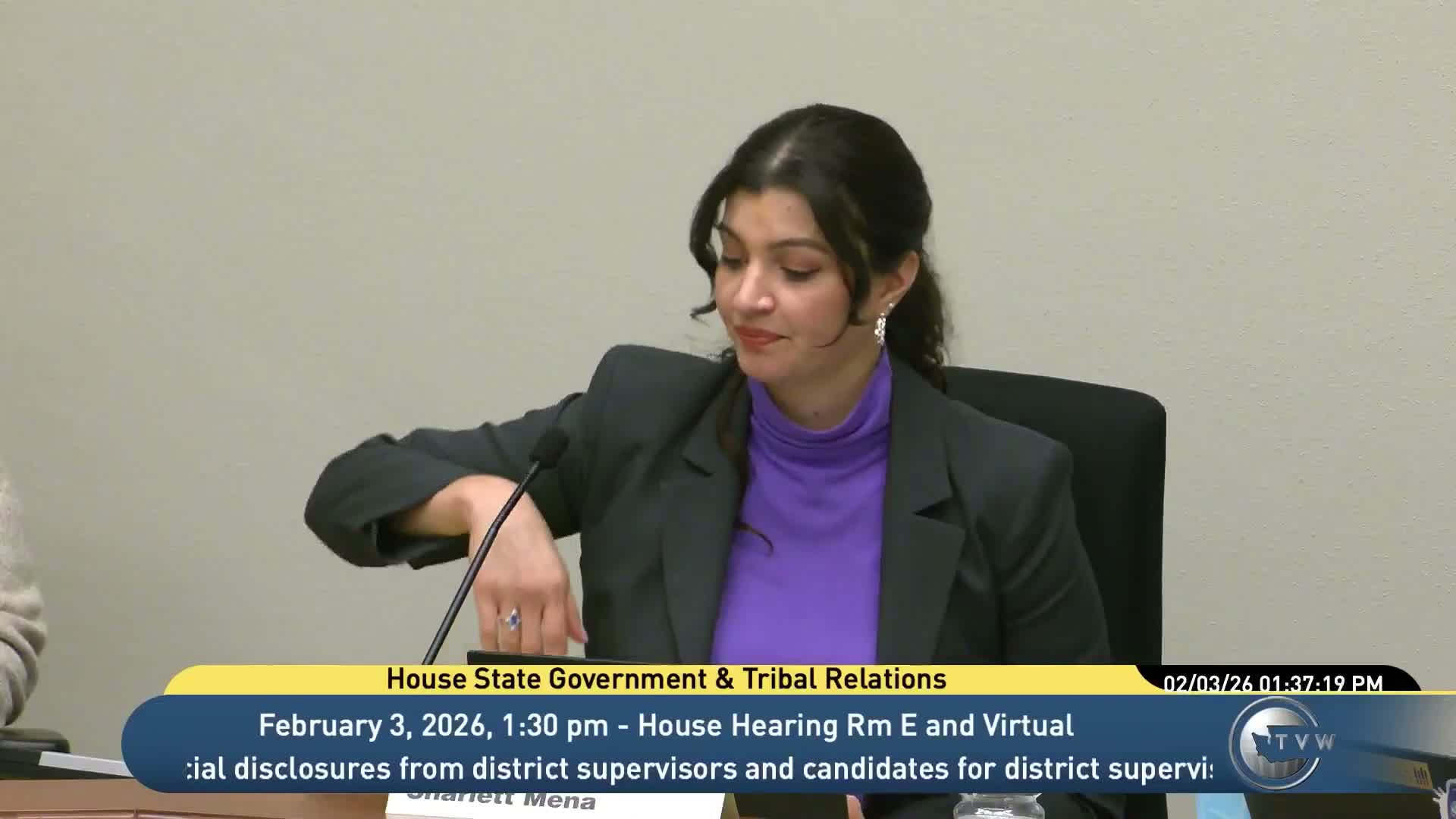
The House State Government and Tribal Relations Committee took testimony on House Bill 2661, which would establish a temporary task force to examine frivolous, harassing or retaliatory public records requests and make recommendations to balance transparency with agency burdens.
Desiree (OPR staff) told the committee the bill directs the task force to study the nature and impact of abusive requests, possible deterrents, judicial discretion, out-of-state approaches, and safeguards that preserve broad public access to records. She noted prior JLARC reporting requirements and that a fiscal note had been requested but not yet provided.
Representative (speaker who introduced the bill) said the measure grew from concerns raised by K–12 superintendents about costs and administrative burden. "A task force of the experts to bring recommendations to us would be the best step," he said, adding the panel would include equal representation from requester and provider sides and that meetings would be held virtually to contain costs.
Supporters from local government and school districts said the volume and complexity of requests—especially those requiring privilege review under FERPA or litigation-related production—have strained limited staff and budgets. Tina Eck, general counsel for the Washington Schools Risk Management Pool, said some school-system-related requests can cost jurisdictions "well over a half $1,000,000 a year" and often require substantial legal review. Fred Rundle, a district superintendent, estimated his district incurred about $85,000 in operating costs related to public records processing and said repeated or abandoned requests divert resources from students.
But open-government advocates, journalists and privacy advocates urged caution. Multiple witnesses, including representatives of the Washington Coalition for Open Government and reporters' organizations, said the bill's language risks restricting access and that the problem is often poor record-keeping, inadequate training or under-resourcing rather than misuse by requesters. Mike Fancher and George Erb of open-government groups urged modernizing technology and processes rather than limiting requester rights.
Several witnesses warned that labeling some journalists or requesters as "vexatious" has been used in the past to chill scrutiny. Ellen Hyatt of the Washington News Publishers Association said journalists have been branded vexatious in the past and urged protecting legitimate public-interest requests. Remote witnesses and in-person testifiers proposed alternatives including better training, centralized technical solutions, cost-recovery mechanisms and use of JLARC or other centralized studies.
The committee closed public testimony on HB 2661 after hearing from a broad panel of proponents and opponents. No formal committee action on HB 2661 occurred during the public testimony segment; the committee later moved to executive session on multiple bills.
Desiree (OPR staff) told the committee the bill directs the task force to study the nature and impact of abusive requests, possible deterrents, judicial discretion, out-of-state approaches, and safeguards that preserve broad public access to records. She noted prior JLARC reporting requirements and that a fiscal note had been requested but not yet provided.
Representative (speaker who introduced the bill) said the measure grew from concerns raised by K–12 superintendents about costs and administrative burden. "A task force of the experts to bring recommendations to us would be the best step," he said, adding the panel would include equal representation from requester and provider sides and that meetings would be held virtually to contain costs.
Supporters from local government and school districts said the volume and complexity of requests—especially those requiring privilege review under FERPA or litigation-related production—have strained limited staff and budgets. Tina Eck, general counsel for the Washington Schools Risk Management Pool, said some school-system-related requests can cost jurisdictions "well over a half $1,000,000 a year" and often require substantial legal review. Fred Rundle, a district superintendent, estimated his district incurred about $85,000 in operating costs related to public records processing and said repeated or abandoned requests divert resources from students.
But open-government advocates, journalists and privacy advocates urged caution. Multiple witnesses, including representatives of the Washington Coalition for Open Government and reporters' organizations, said the bill's language risks restricting access and that the problem is often poor record-keeping, inadequate training or under-resourcing rather than misuse by requesters. Mike Fancher and George Erb of open-government groups urged modernizing technology and processes rather than limiting requester rights.
Several witnesses warned that labeling some journalists or requesters as "vexatious" has been used in the past to chill scrutiny. Ellen Hyatt of the Washington News Publishers Association said journalists have been branded vexatious in the past and urged protecting legitimate public-interest requests. Remote witnesses and in-person testifiers proposed alternatives including better training, centralized technical solutions, cost-recovery mechanisms and use of JLARC or other centralized studies.
The committee closed public testimony on HB 2661 after hearing from a broad panel of proponents and opponents. No formal committee action on HB 2661 occurred during the public testimony segment; the committee later moved to executive session on multiple bills.
Don't Miss a Word: See the Full Meeting!
Go beyond summaries. Unlock every video, transcript, and key insight with a Founder Membership.
✓
Get instant access to full meeting videos
✓
Search and clip any phrase from complete transcripts
✓
Receive AI-powered summaries & custom alerts
✓
Enjoy lifetime, unrestricted access to government data
30-day money-back guarantee
