Rep. McCann introduces bill to require counselors spend 80% of time on student services
February 04, 2026 | Education, HOUSE OF REPRESENTATIVES, Committees, Legislative , Vermont
This article was created by AI summarizing key points discussed. AI makes mistakes, so for full details and context, please refer to the video of the full meeting. Please report any errors so we can fix them. Report an error »
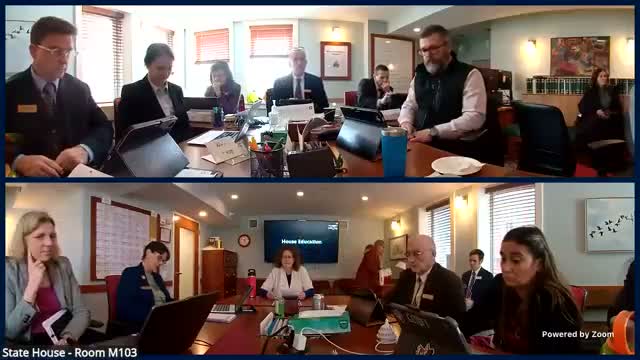
Representative McCann presented H.618 to the Education committee on Tuesday, proposing that licensed school counselors spend at least 80% of their time providing direct or indirect services to students and no more than 20% on school support services. McCann framed the bill as a way to prioritize student needs, reduce administrative burdens that detract from counseling, and improve access to academic, career and social‑emotional supports.
"This school counselor's bill proposes to require school counselors to spend 80% of their time providing direct or indirect services to students," McCann said. He told the committee counselors are often pulled into duties such as lunch supervision and substitute teaching, which the bill aims to limit.
Legislative counsel, identified as St. James from the Office of Legislative Counsel, read the bill as introduced and summarized its findings and definitions. Counsel cited the American School Counselor Association (ASCA) national model recommendation that counselors spend 80% or more of their time on direct and indirect student services and referenced a 2020 ASCA State of the Profession study reporting that 39% of school counselors were challenged by inappropriate duties. The bill would add a section to Title 16 (Chapter 1) defining direct services, indirect services and school support services and would take effect on July 1, 2026.
McCann listed several states that have enacted 80/20 measures or similar protections, including Maine, Tennessee, Washington, Pennsylvania, Texas, North Carolina, Utah, Virginia and Alaska. Committee members asked whether the term would encompass both mental‑health and guidance counselors and what specific administrative duties would be restricted; McCann and others answered that the measure is intended as an umbrella for licensed school counselors and cited examples such as lunch duty and covering classes when substitutes are unavailable.
The transcript ends with the counsel’s reading of the bill and no recorded vote; the committee planned a formal walkthrough of the bill text but did not reach a decision in the recorded segment.
"This school counselor's bill proposes to require school counselors to spend 80% of their time providing direct or indirect services to students," McCann said. He told the committee counselors are often pulled into duties such as lunch supervision and substitute teaching, which the bill aims to limit.
Legislative counsel, identified as St. James from the Office of Legislative Counsel, read the bill as introduced and summarized its findings and definitions. Counsel cited the American School Counselor Association (ASCA) national model recommendation that counselors spend 80% or more of their time on direct and indirect student services and referenced a 2020 ASCA State of the Profession study reporting that 39% of school counselors were challenged by inappropriate duties. The bill would add a section to Title 16 (Chapter 1) defining direct services, indirect services and school support services and would take effect on July 1, 2026.
McCann listed several states that have enacted 80/20 measures or similar protections, including Maine, Tennessee, Washington, Pennsylvania, Texas, North Carolina, Utah, Virginia and Alaska. Committee members asked whether the term would encompass both mental‑health and guidance counselors and what specific administrative duties would be restricted; McCann and others answered that the measure is intended as an umbrella for licensed school counselors and cited examples such as lunch duty and covering classes when substitutes are unavailable.
The transcript ends with the counsel’s reading of the bill and no recorded vote; the committee planned a formal walkthrough of the bill text but did not reach a decision in the recorded segment.
View the Full Meeting & All Its Details
This article offers just a summary. Unlock complete video, transcripts, and insights as a Founder Member.
✓
Watch full, unedited meeting videos
✓
Search every word spoken in unlimited transcripts
✓
AI summaries & real-time alerts (all government levels)
✓
Permanent access to expanding government content
30-day money-back guarantee
