House Transportation panel previews T-bill, EV registration funds and vehicle-inspection hearing
February 05, 2026 | Transportation, HOUSE OF REPRESENTATIVES, Committees, Legislative , Vermont
This article was created by AI summarizing key points discussed. AI makes mistakes, so for full details and context, please refer to the video of the full meeting. Please report any errors so we can fix them. Report an error »
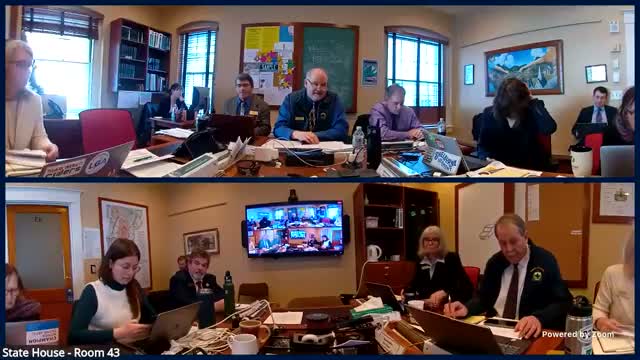
House Transportation members used the Feb. 3 meeting to preview several topics the committee will take up in detail this session: language changes to the T‑bill, an upcoming joint public hearing on state vehicle inspections, emerging bills (including a local option fuel-tax proposal) and budget items that may affect other committees.
Chair and members said the committee will continue to hear agency testimony across the week and invite local governments and stakeholders affected by the T‑bill language. The committee discussed a planned joint public hearing on Vermont state vehicle inspection that committee members expect to be held on a Wednesday evening with a likely start around 6 p.m.; members said they would attend as their schedules permit.
On EV registration revenue, budget staff explained a change in the governor’s proposed budget that would move the mechanism from a one‑time transfer to a statutory appropriation enabling money raised from an additional EV registration fee to go to the Agency of Commerce and Community Development (ACCD). Logan, who provided the budget detail, said, “It is $1,000,000 this year,” and staff said that figure matches the expected revenue from the additional registration fee.
Members also pressed for more budget detail around a separate $10,000,000 transfer flagged in the materials. The committee asked appropriations staff to provide testimony about how pulling that funding would affect other programs and whether it could have downstream effects on property taxes and school budgets; staff said appropriators would begin presentations after the budget adjustment work is complete.
Several members raised bills they want to explore as "conversation starters." Chair confirmed plans to take testimony on Representative Burke’s bill related to a local-option fuel tax and on Representative Malay’s covered-bridges bill. The committee said many vehicle-related bills (for example, DMV changes and miscellaneous motor-vehicle items) will likely be considered in the second half of the session once the underlying DMV legislation circulates.
The meeting included discussion of consumer-protection proposals for public EV chargers (requiring posted prices, uptime status and reasonable payment methods) and whether vendor or contract terms could require those features for publicly funded chargers; some members suggested coordinating with Commerce and ACCD on vendor and payment issues.
No formal motions or votes were taken during this portion of the meeting; members asked for follow-up testimony on budget impacts and invited stakeholders to suggest witnesses for specific bills.
Chair and members said the committee will continue to hear agency testimony across the week and invite local governments and stakeholders affected by the T‑bill language. The committee discussed a planned joint public hearing on Vermont state vehicle inspection that committee members expect to be held on a Wednesday evening with a likely start around 6 p.m.; members said they would attend as their schedules permit.
On EV registration revenue, budget staff explained a change in the governor’s proposed budget that would move the mechanism from a one‑time transfer to a statutory appropriation enabling money raised from an additional EV registration fee to go to the Agency of Commerce and Community Development (ACCD). Logan, who provided the budget detail, said, “It is $1,000,000 this year,” and staff said that figure matches the expected revenue from the additional registration fee.
Members also pressed for more budget detail around a separate $10,000,000 transfer flagged in the materials. The committee asked appropriations staff to provide testimony about how pulling that funding would affect other programs and whether it could have downstream effects on property taxes and school budgets; staff said appropriators would begin presentations after the budget adjustment work is complete.
Several members raised bills they want to explore as "conversation starters." Chair confirmed plans to take testimony on Representative Burke’s bill related to a local-option fuel tax and on Representative Malay’s covered-bridges bill. The committee said many vehicle-related bills (for example, DMV changes and miscellaneous motor-vehicle items) will likely be considered in the second half of the session once the underlying DMV legislation circulates.
The meeting included discussion of consumer-protection proposals for public EV chargers (requiring posted prices, uptime status and reasonable payment methods) and whether vendor or contract terms could require those features for publicly funded chargers; some members suggested coordinating with Commerce and ACCD on vendor and payment issues.
No formal motions or votes were taken during this portion of the meeting; members asked for follow-up testimony on budget impacts and invited stakeholders to suggest witnesses for specific bills.
Don't Miss a Word: See the Full Meeting!
Go beyond summaries. Unlock every video, transcript, and key insight with a Founder Membership.
✓
Get instant access to full meeting videos
✓
Search and clip any phrase from complete transcripts
✓
Receive AI-powered summaries & custom alerts
✓
Enjoy lifetime, unrestricted access to government data
30-day money-back guarantee
