AOT CFO defends using $12.25M in FHWA indirect reimbursements to close $33M FY27 gap
February 05, 2026 | Transportation, HOUSE OF REPRESENTATIVES, Committees, Legislative , Vermont
This article was created by AI summarizing key points discussed. AI makes mistakes, so for full details and context, please refer to the video of the full meeting. Please report any errors so we can fix them. Report an error »
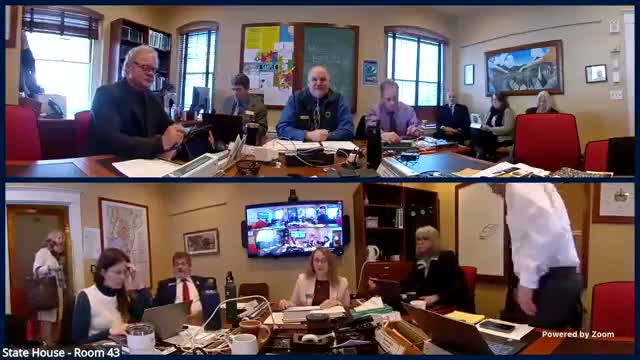
State House — Agency of Transportation Chief Financial Officer Candace Selquist told the House Transportation Committee on Feb. 4 that the department plans to apply an FHWA-approved indirect cost rate in FY27 to recover roughly $12,250,000 in indirect-cost reimbursements, as part of a package that closes a projected $33 million shortfall in the agency budget.
Selquist said the indirect-cost plan is on file with the Federal Highway Administration and that using it does not increase the federal apportionment; rather, it reallocates part of the existing FHWA apportionment to cover eligible central costs such as utilities, property management and central services. "We are receiving in the '27 budget 12,250,000 worth of indirect costs from FHWA," Selquist said during the hearing.
Why it matters: committee members and AOT officials said the move frees state transportation dollars for other items but reduces the pool of federal funds available for direct project costs. Selquist told lawmakers the agency paired the $12.2 million in indirect receipts with $21 million in internal reductions (including about $5.3 million in highways reductions and a $7.5 million reduction-in-force) to arrive at the total $33 million adjustment.
How AOT chose the amount: Selquist said the last time AOT used the indirect-cost rate at this scale was in FY2022, when about $20 million was recouped. She said that figure was "too great a risk" to rely on for the FY27 budget, so, after conversations with chief engineer Jeremy Reed and executive leadership, the agency adopted a more conservative target that moved from $13 million to $12.2 million as staff narrowed eligible salary, benefit and internal-service figures. "I felt like $20,000,000 was too great a risk to put in this budget cycle," she said.
Risk and eligibility: Selquist told lawmakers the principal risk is uncertainty about which costs FHWA will determine to be eligible in the reimbursement process; if the department counts on $12.2 million and fewer costs qualify, AOT must identify alternatives to cover the gap. "We never know exactly what is going to be determined as an eligible cost from FHWA," she said.
Advanced construction and the governor's proposal: Committee members pressed how the administration's $10 million purchase-and-use proposal interacts with federal leveraging. AOT staff said that the $10 million could leverage approximately $63 million in federal funds through advanced construction — a tool that effectively allows the state to obligate future apportionments now. Secretary Joe Flynn told the committee advanced construction "is not a new concept" and has been part of prior budgets, but several members warned that relying on advanced construction reduces capacity in future years and could pinch paving and other project budgets.
Inflation and timing: Lawmakers raised the urgency of obligating projects now because of rising construction costs. Selquist cited Chief Engineer Jeremy Reed's estimate that construction inflation in Vermont averages about 23%, and Secretary Flynn referenced national testimony (AASHTO; American Society of Civil Engineers) indicating even larger increases in some areas. Those figures informed members' concerns that postponing projects risks higher future costs and less work for local contractors.
Contingencies and reserves: Selquist said the AOT has identified a mix of reductions and indirect receipts and that the Transportation Fund stabilization reserve for FY27 is about $16.6 million. She told the committee that options for responding to a revenue downgrade will be more limited under the FY27 construct than in previous years because the budget draws earlier on carryover and other levers.
Other items: Committee members also pressed Selquist on a proposal to pass credit-card processing fees for DMV and related transactions to customers — a $1.9 million item in the package — and sought clarification that the measure is intended to recover banking fees rather than create new DMV revenue. Selquist said alternative payment methods (ACH, cash, check) remain available.
What comes next: Lawmakers asked staff for further detail on which white-book projects will be affected and on the precise mechanics FHWA will use to determine eligible indirect costs. The hearing paused for a break with follow-up expected as the committee continues to examine trade-offs between near-term obligations and multi-year capacity for paving, bridges and other projects.
Selquist said the indirect-cost plan is on file with the Federal Highway Administration and that using it does not increase the federal apportionment; rather, it reallocates part of the existing FHWA apportionment to cover eligible central costs such as utilities, property management and central services. "We are receiving in the '27 budget 12,250,000 worth of indirect costs from FHWA," Selquist said during the hearing.
Why it matters: committee members and AOT officials said the move frees state transportation dollars for other items but reduces the pool of federal funds available for direct project costs. Selquist told lawmakers the agency paired the $12.2 million in indirect receipts with $21 million in internal reductions (including about $5.3 million in highways reductions and a $7.5 million reduction-in-force) to arrive at the total $33 million adjustment.
How AOT chose the amount: Selquist said the last time AOT used the indirect-cost rate at this scale was in FY2022, when about $20 million was recouped. She said that figure was "too great a risk" to rely on for the FY27 budget, so, after conversations with chief engineer Jeremy Reed and executive leadership, the agency adopted a more conservative target that moved from $13 million to $12.2 million as staff narrowed eligible salary, benefit and internal-service figures. "I felt like $20,000,000 was too great a risk to put in this budget cycle," she said.
Risk and eligibility: Selquist told lawmakers the principal risk is uncertainty about which costs FHWA will determine to be eligible in the reimbursement process; if the department counts on $12.2 million and fewer costs qualify, AOT must identify alternatives to cover the gap. "We never know exactly what is going to be determined as an eligible cost from FHWA," she said.
Advanced construction and the governor's proposal: Committee members pressed how the administration's $10 million purchase-and-use proposal interacts with federal leveraging. AOT staff said that the $10 million could leverage approximately $63 million in federal funds through advanced construction — a tool that effectively allows the state to obligate future apportionments now. Secretary Joe Flynn told the committee advanced construction "is not a new concept" and has been part of prior budgets, but several members warned that relying on advanced construction reduces capacity in future years and could pinch paving and other project budgets.
Inflation and timing: Lawmakers raised the urgency of obligating projects now because of rising construction costs. Selquist cited Chief Engineer Jeremy Reed's estimate that construction inflation in Vermont averages about 23%, and Secretary Flynn referenced national testimony (AASHTO; American Society of Civil Engineers) indicating even larger increases in some areas. Those figures informed members' concerns that postponing projects risks higher future costs and less work for local contractors.
Contingencies and reserves: Selquist said the AOT has identified a mix of reductions and indirect receipts and that the Transportation Fund stabilization reserve for FY27 is about $16.6 million. She told the committee that options for responding to a revenue downgrade will be more limited under the FY27 construct than in previous years because the budget draws earlier on carryover and other levers.
Other items: Committee members also pressed Selquist on a proposal to pass credit-card processing fees for DMV and related transactions to customers — a $1.9 million item in the package — and sought clarification that the measure is intended to recover banking fees rather than create new DMV revenue. Selquist said alternative payment methods (ACH, cash, check) remain available.
What comes next: Lawmakers asked staff for further detail on which white-book projects will be affected and on the precise mechanics FHWA will use to determine eligible indirect costs. The hearing paused for a break with follow-up expected as the committee continues to examine trade-offs between near-term obligations and multi-year capacity for paving, bridges and other projects.
Don't Miss a Word: See the Full Meeting!
Go beyond summaries. Unlock every video, transcript, and key insight with a Founder Membership.
✓
Get instant access to full meeting videos
✓
Search and clip any phrase from complete transcripts
✓
Receive AI-powered summaries & custom alerts
✓
Enjoy lifetime, unrestricted access to government data
30-day money-back guarantee
