Beaverton transportation office details electric-bus rollout and managed‑charging savings
February 04, 2026 | Beaverton SD 48J, School Districts, Oregon
This article was created by AI summarizing key points discussed. AI makes mistakes, so for full details and context, please refer to the video of the full meeting. Please report any errors so we can fix them. Report an error »
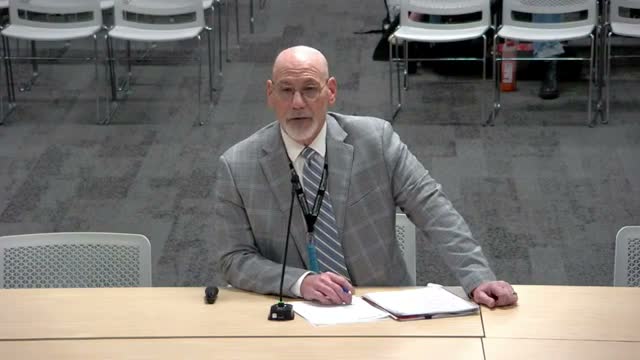
Beaverton School District’s transportation department reported Feb. 3 that the district’s electrification program is nearing a 100-bus milestone, with infrastructure and managed charging already producing substantial operational savings.
Craig Beaver, the district’s transportation administrator, said the district has 81–85 electric buses in service now and expects to reach about 100 buses by April. Beaver said the district has deployed 105 chargers and completed most of its charger installation work. "Right now, we have 85 buses, or 81 buses in service right now. By April, we'll reach a 100," Beaver said.
Beaver also described savings from managed charging and a vehicle‑to‑grid pilot with Portland General Electric (PGE). In one example, he said a meter with 36 chargers used 67,000 kilowatt hours in January; under managed charging that meter’s bill was about $13,000 compared with an estimated $60,000 without managed charging. "It's just a tremendous asset to us," Beaver said of the managed-charging approach.
He described a $20 million grant that funds part of the program and said supplier delays have pushed final deliveries into March or April; the district has requested a 180‑day extension from the EPA. Beaver said 48 of 50 antiquated buses tied to the grant have been scrapped and the final two would be removed this week.
On staffing, Beaver reported 327 total transportation employees districtwide, including about 285 drivers; he noted improved retention with 45 hires and 29 separations so far this year and said the district is actively training additional drivers. He also said the district is exploring smaller electric vans and Type A electric buses to serve special programs and long-distance routes.
Board members asked about using the district’s charging infrastructure to support broader public charging or regional shared‑transportation goals; Beaver said vehicle-to‑building and public charging are possible future phases that would require additional policy work and partnership.
What’s next: The district will continue deliveries through March–April, pursue the EPA extension for grant closeout, and return to the board as pilots and potential public‑charging policies evolve.
Craig Beaver, the district’s transportation administrator, said the district has 81–85 electric buses in service now and expects to reach about 100 buses by April. Beaver said the district has deployed 105 chargers and completed most of its charger installation work. "Right now, we have 85 buses, or 81 buses in service right now. By April, we'll reach a 100," Beaver said.
Beaver also described savings from managed charging and a vehicle‑to‑grid pilot with Portland General Electric (PGE). In one example, he said a meter with 36 chargers used 67,000 kilowatt hours in January; under managed charging that meter’s bill was about $13,000 compared with an estimated $60,000 without managed charging. "It's just a tremendous asset to us," Beaver said of the managed-charging approach.
He described a $20 million grant that funds part of the program and said supplier delays have pushed final deliveries into March or April; the district has requested a 180‑day extension from the EPA. Beaver said 48 of 50 antiquated buses tied to the grant have been scrapped and the final two would be removed this week.
On staffing, Beaver reported 327 total transportation employees districtwide, including about 285 drivers; he noted improved retention with 45 hires and 29 separations so far this year and said the district is actively training additional drivers. He also said the district is exploring smaller electric vans and Type A electric buses to serve special programs and long-distance routes.
Board members asked about using the district’s charging infrastructure to support broader public charging or regional shared‑transportation goals; Beaver said vehicle-to‑building and public charging are possible future phases that would require additional policy work and partnership.
What’s next: The district will continue deliveries through March–April, pursue the EPA extension for grant closeout, and return to the board as pilots and potential public‑charging policies evolve.
View the Full Meeting & All Its Details
This article offers just a summary. Unlock complete video, transcripts, and insights as a Founder Member.
✓
Watch full, unedited meeting videos
✓
Search every word spoken in unlimited transcripts
✓
AI summaries & real-time alerts (all government levels)
✓
Permanent access to expanding government content
30-day money-back guarantee
