Riverton council narrows under‑21 exceptions, adopts two ordinances tightening alcohol rules
February 04, 2026 | Riverton, Fremont County, Wyoming
This article was created by AI summarizing key points discussed. AI makes mistakes, so for full details and context, please refer to the video of the full meeting. Please report any errors so we can fix them. Report an error »
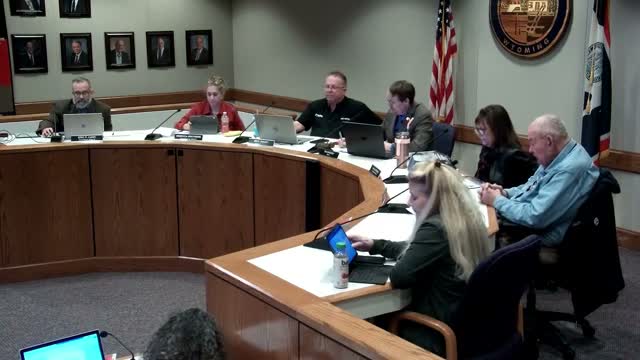
The Riverton City Council on Feb. 3 approved changes to municipal code governing persons under 21 in establishments that sell alcohol, revising two interrelated ordinances following a work session and public discussion. The council voted to adopt Ordinance 26‑001 (amending Title 5 business licenses and alcohol definitions) on second reading after approving targeted amendments. Council also removed Ordinance 26‑002 (Title 9 offenses by or against minors) from the table and passed it on second reading.
City staff and council members said the goal was to make enforcement realistic and preserve the city’s long‑standing rule that minors should not be in bars where alcohol sales are the primary source of revenue. Councilmember debate focused on definitional clarity and enforceability: the adopted amendment removed subsections F1, F2, G and H (which had proposed nuanced exceptions tied to commercial kitchens and other categories), retained the basic prohibition paragraph (F) with exceptions for licensees whose non‑alcohol sales exceed a majority, and amended the gross‑sales threshold language to read “not less than 51% of gross sales.” Administrative staff also agreed to update licensing/renewal forms so applicants may attest to their primary revenue source at application time to reduce after‑the‑fact enforcement burdens.
Council members said the revisions reflect the work‑session consensus: preserve a default prohibition on minors in primarily alcohol‑driven on‑premises operations while allowing businesses that operate principally as restaurants or retail establishments to be treated differently, provided their revenue mix supports that status. The ordinances were read by title and passed by voice vote; council directed staff to incorporate the administrative attestation into renewal and application procedures.
What happens next: Both ordinances will return for required subsequent readings as part of the municipal adoption process, and staff will circulate recommended application language to licensees ahead of renewals.
City staff and council members said the goal was to make enforcement realistic and preserve the city’s long‑standing rule that minors should not be in bars where alcohol sales are the primary source of revenue. Councilmember debate focused on definitional clarity and enforceability: the adopted amendment removed subsections F1, F2, G and H (which had proposed nuanced exceptions tied to commercial kitchens and other categories), retained the basic prohibition paragraph (F) with exceptions for licensees whose non‑alcohol sales exceed a majority, and amended the gross‑sales threshold language to read “not less than 51% of gross sales.” Administrative staff also agreed to update licensing/renewal forms so applicants may attest to their primary revenue source at application time to reduce after‑the‑fact enforcement burdens.
Council members said the revisions reflect the work‑session consensus: preserve a default prohibition on minors in primarily alcohol‑driven on‑premises operations while allowing businesses that operate principally as restaurants or retail establishments to be treated differently, provided their revenue mix supports that status. The ordinances were read by title and passed by voice vote; council directed staff to incorporate the administrative attestation into renewal and application procedures.
What happens next: Both ordinances will return for required subsequent readings as part of the municipal adoption process, and staff will circulate recommended application language to licensees ahead of renewals.
View the Full Meeting & All Its Details
This article offers just a summary. Unlock complete video, transcripts, and insights as a Founder Member.
✓
Watch full, unedited meeting videos
✓
Search every word spoken in unlimited transcripts
✓
AI summaries & real-time alerts (all government levels)
✓
Permanent access to expanding government content
30-day money-back guarantee
