Southwest Wyoming Regional Airport reports completed terminal, $43.95M project and new parking fees
February 04, 2026 | Rock Springs City Council, Rock Springs, Sweetwater County, Wyoming
This article was created by AI summarizing key points discussed. AI makes mistakes, so for full details and context, please refer to the video of the full meeting. Please report any errors so we can fix them. Report an error »
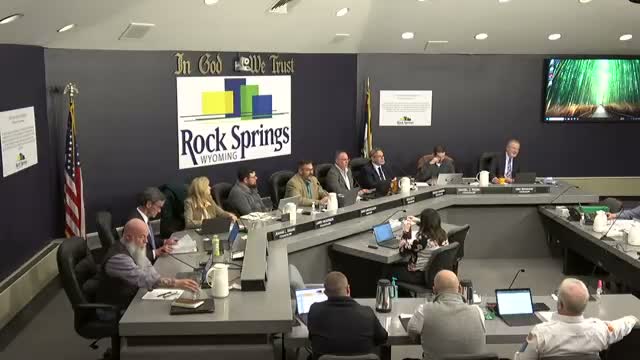
Devin Brubaker, representing the Southwest Wyoming Regional Airport, updated the Rock Springs City Council on airport operations, project finances and near-term priorities on Feb. 3.
Brubaker said the airport finished its new commercial terminal and completed a 20-year master plan. He reported a clean FAA review with "0 discrepancies" and highlighted that the terminal project totaled $43,950,000 and involved 23 separate grant agreements or loans that require ongoing closeout work. The Federal Aviation Administration covered roughly $26,760,000 (about 61%); the Wyoming Business Council provided $10,000,000 in BRC support (described as $5 million in grants and $5 million in loans); Sweetwater County and local cash contributions covered smaller local shares.
Brubaker provided 2025 performance metrics: the airport sold about 518,000 gallons of jet fuel and 43,000 gallons of avgas in calendar-year figures, and a single transient FBO hangar generated $455,992 in revenue. Passenger levels were the second-best year on record (behind 2012). He also said the airport's completion percentage was 99.11% (national average ~98.54%) and on-time performance compared favorably with national averages.
To help cover operating and debt costs, the airport board has adopted paid parking: Brubaker said the board set a $6 daily rate with the first four hours free and will offer an annual membership for frequent local users. He said parking is a large revenue source for airports of Rock Springs’ size and that about 39% of vehicles using the lot are from outside the county.
Brubaker warned that the airport faces new debt-service pressure from the terminal ($194,000 annual debt service) and that continued airline lease and operating-agreement negotiations will affect the airport budget. He noted ongoing legislative items to watch, including state air-service funding in the budget bill (about $18.4 million overall in the draft) and liability-limit proposals that could affect local insurance costs.
Why this matters: The new terminal expands accessibility (ADA improvements noted), increases airport-generated revenue streams and exposes the airport and local governments to project-closeout and debt-service commitments. Paid parking shifts more direct costs to users rather than local taxpayers.
Next steps: The airport will continue to monitor legislative air-service funding, complete grant closeouts, pursue hangar and taxi-lane construction with remaining apportionment funds, and advance design work for crosswind runway rehabilitation scheduled for 2027–2028.
(Reporting is based on the airport presentation to the council; direct quotes and figures come from Devin Brubaker’s remarks.)
Brubaker said the airport finished its new commercial terminal and completed a 20-year master plan. He reported a clean FAA review with "0 discrepancies" and highlighted that the terminal project totaled $43,950,000 and involved 23 separate grant agreements or loans that require ongoing closeout work. The Federal Aviation Administration covered roughly $26,760,000 (about 61%); the Wyoming Business Council provided $10,000,000 in BRC support (described as $5 million in grants and $5 million in loans); Sweetwater County and local cash contributions covered smaller local shares.
Brubaker provided 2025 performance metrics: the airport sold about 518,000 gallons of jet fuel and 43,000 gallons of avgas in calendar-year figures, and a single transient FBO hangar generated $455,992 in revenue. Passenger levels were the second-best year on record (behind 2012). He also said the airport's completion percentage was 99.11% (national average ~98.54%) and on-time performance compared favorably with national averages.
To help cover operating and debt costs, the airport board has adopted paid parking: Brubaker said the board set a $6 daily rate with the first four hours free and will offer an annual membership for frequent local users. He said parking is a large revenue source for airports of Rock Springs’ size and that about 39% of vehicles using the lot are from outside the county.
Brubaker warned that the airport faces new debt-service pressure from the terminal ($194,000 annual debt service) and that continued airline lease and operating-agreement negotiations will affect the airport budget. He noted ongoing legislative items to watch, including state air-service funding in the budget bill (about $18.4 million overall in the draft) and liability-limit proposals that could affect local insurance costs.
Why this matters: The new terminal expands accessibility (ADA improvements noted), increases airport-generated revenue streams and exposes the airport and local governments to project-closeout and debt-service commitments. Paid parking shifts more direct costs to users rather than local taxpayers.
Next steps: The airport will continue to monitor legislative air-service funding, complete grant closeouts, pursue hangar and taxi-lane construction with remaining apportionment funds, and advance design work for crosswind runway rehabilitation scheduled for 2027–2028.
(Reporting is based on the airport presentation to the council; direct quotes and figures come from Devin Brubaker’s remarks.)
Don't Miss a Word: See the Full Meeting!
Go beyond summaries. Unlock every video, transcript, and key insight with a Founder Membership.
✓
Get instant access to full meeting videos
✓
Search and clip any phrase from complete transcripts
✓
Receive AI-powered summaries & custom alerts
✓
Enjoy lifetime, unrestricted access to government data
30-day money-back guarantee
