Milwaukie audit: clean opinion but $22.3 million prior‑period adjustment exposes depreciation weakness
February 04, 2026 | Milwaukie, Clackamas County, Oregon
This article was created by AI summarizing key points discussed. AI makes mistakes, so for full details and context, please refer to the video of the full meeting. Please report any errors so we can fix them. Report an error »
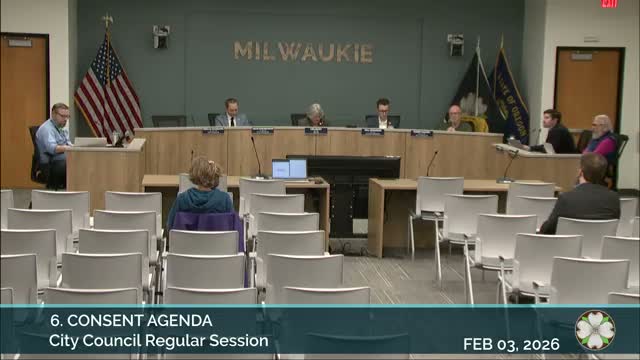
Milwaukie's external auditors gave the city's fiscal-year 2025 financial statements an unmodified (clean) opinion while reporting a single material weakness tied to asset depreciation.
Ashley Austin, engagement reviewer for Baker Tilly, told the council the audit covered the period from July 1, 2024, through June 30, 2025, and included tests of transactions, confirmations with third parties, internal-control reviews, and federal‑grant compliance testing (the auditors selected ARPA as the major program for single-audit procedures). Austin said the firm issued a clean opinion that the financial statements were fairly presented in accordance with generally accepted accounting principles.
At the same time, Austin said auditors identified a material weakness stemming from aggressive useful-life assumptions for capital assets that resulted in assets being depreciated too quickly. That review led management and the auditors to post a prior‑period adjustment totaling $22,300,000 to correct accumulated depreciation.
"We did issue an unmodified opinion," Austin said. "However, we did have one material weakness related to depreciation that we reported under financial reporting." She stressed the adjustment was noncash and resulted from correcting useful‑life assumptions.
City management told the council staff discovered the problem while preparing for this year's audit and worked with the auditors to reevaluate estimated useful lives for roughly 140 assets. Michael Osborne, who introduced the audit presentation, said management elected to correct the error this fiscal year because the adjustment was significant enough to warrant a prior‑period restatement. He said the correction did not affect fund balances or cash flows.
"This had no direct cash implications nor did it impact any of our fund balances," Osborne said, adding that staff would review the fixed-asset policy and implement improved controls to ensure reasonable useful lives going forward.
Councilors asked how long auditors were on site and whether the city must file annual audits despite a biennial budget. Austin said the audit included interim fieldwork in the late summer and two weeks of final fieldwork around November, and confirmed state rules require an annual audit filing; the city also submitted required federal audit filings to the Federal Clearinghouse.
Council discussion emphasized both appreciation for staff effort to find and fix the issue and questions about how the aggressive depreciation schedule originated. Austin noted the city had had multiple auditors over recent years and that management had identified and corrected the condition.
What's next: Management said it will present proposed revisions to the city's fixed-asset policy during the upcoming budget process, and the finance team will implement strengthened controls to reduce the risk of a repeat finding.
Ashley Austin, engagement reviewer for Baker Tilly, told the council the audit covered the period from July 1, 2024, through June 30, 2025, and included tests of transactions, confirmations with third parties, internal-control reviews, and federal‑grant compliance testing (the auditors selected ARPA as the major program for single-audit procedures). Austin said the firm issued a clean opinion that the financial statements were fairly presented in accordance with generally accepted accounting principles.
At the same time, Austin said auditors identified a material weakness stemming from aggressive useful-life assumptions for capital assets that resulted in assets being depreciated too quickly. That review led management and the auditors to post a prior‑period adjustment totaling $22,300,000 to correct accumulated depreciation.
"We did issue an unmodified opinion," Austin said. "However, we did have one material weakness related to depreciation that we reported under financial reporting." She stressed the adjustment was noncash and resulted from correcting useful‑life assumptions.
City management told the council staff discovered the problem while preparing for this year's audit and worked with the auditors to reevaluate estimated useful lives for roughly 140 assets. Michael Osborne, who introduced the audit presentation, said management elected to correct the error this fiscal year because the adjustment was significant enough to warrant a prior‑period restatement. He said the correction did not affect fund balances or cash flows.
"This had no direct cash implications nor did it impact any of our fund balances," Osborne said, adding that staff would review the fixed-asset policy and implement improved controls to ensure reasonable useful lives going forward.
Councilors asked how long auditors were on site and whether the city must file annual audits despite a biennial budget. Austin said the audit included interim fieldwork in the late summer and two weeks of final fieldwork around November, and confirmed state rules require an annual audit filing; the city also submitted required federal audit filings to the Federal Clearinghouse.
Council discussion emphasized both appreciation for staff effort to find and fix the issue and questions about how the aggressive depreciation schedule originated. Austin noted the city had had multiple auditors over recent years and that management had identified and corrected the condition.
What's next: Management said it will present proposed revisions to the city's fixed-asset policy during the upcoming budget process, and the finance team will implement strengthened controls to reduce the risk of a repeat finding.
View the Full Meeting & All Its Details
This article offers just a summary. Unlock complete video, transcripts, and insights as a Founder Member.
✓
Watch full, unedited meeting videos
✓
Search every word spoken in unlimited transcripts
✓
AI summaries & real-time alerts (all government levels)
✓
Permanent access to expanding government content
30-day money-back guarantee
