Milwaukie council debates plan to tie utility accounts to property owners; concerns raised for renters and low‑income households
February 04, 2026 | Milwaukie, Clackamas County, Oregon
This article was created by AI summarizing key points discussed. AI makes mistakes, so for full details and context, please refer to the video of the full meeting. Please report any errors so we can fix them. Report an error »
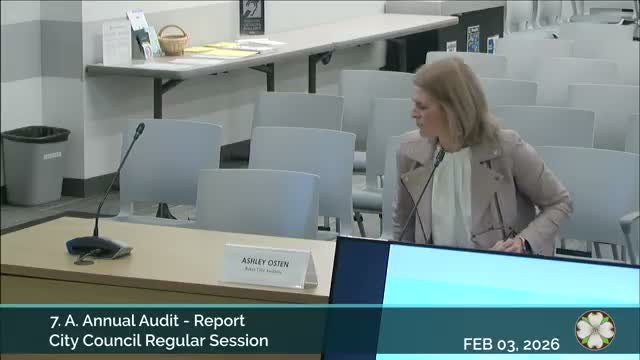
City staff proposed changing Milwaukie's utility code to make property owners the default account holders for residential single-family utility service, a move intended to reduce unpaid balances and let the city place liens on properties to recoup fees.
Michael Osborne (director) said the proposal would define "property owner" as the individual or entity that legally owns property within the city and shift responsibility for water and other city fees to that owner until a notice of termination or reasonable proof of new ownership is provided. Staff argued the change would reduce billing gaps during vacancy, remove the city as an ineffective middleman when tenants leave, and provide a clearer avenue to recover unpaid charges by linking an outstanding balance to a real property asset.
"Tying it to the property owner... gives the city more leverage," Osborne said, adding the city could place a lien when necessary and avoid sending small balances to collections.
Councilors and attendees raised multiple concerns. Several said the proposal could saddle landlords with liens for debts incurred by tenants, potentially affecting seniors who rent as a source of income. One councilor warned that placing ultimate liability on owners could push some landlords to screen out lower-income applicants. Others asked whether the structure would be treated as a tax under Measure 5 case law and urged a city attorney review.
Council discussion touched on available enforcement tools: shutoffs remain a remedy for nonpayment, lien placement would occur only after unresolved balances meet thresholds, and the city manager or finance director would retain discretion on exceptions and enforcement. Staff also proposed phased or limited application (starting with single-family residential accounts) and the option for property owners to designate alternative mailing addresses or management companies to receive bills.
The council pressed staff to return with a redline of the proposed code changes, legal analysis about tax/vs-fee implications, and clearer guardrails to protect low-income tenants and small property owners. Staff said they would take public input and bring a redline in a subsequent meeting before adoption.
On a related payments topic, staff defended a new 3% processing fee on card transactions, noting rising card-processing costs (the city paid about $342,000 last year) and describing alternatives such as cash, mail, bank bill-pay, city auto-draft, and an eCheck option under negotiation that could involve modest per-transaction fees and funding delays.
Next steps: Staff will draft and circulate a redline of the proposed utility-code revisions, seek legal review on Measure 5/tax implications, and return to council with follow-up options and mitigation measures for low-income households.
Michael Osborne (director) said the proposal would define "property owner" as the individual or entity that legally owns property within the city and shift responsibility for water and other city fees to that owner until a notice of termination or reasonable proof of new ownership is provided. Staff argued the change would reduce billing gaps during vacancy, remove the city as an ineffective middleman when tenants leave, and provide a clearer avenue to recover unpaid charges by linking an outstanding balance to a real property asset.
"Tying it to the property owner... gives the city more leverage," Osborne said, adding the city could place a lien when necessary and avoid sending small balances to collections.
Councilors and attendees raised multiple concerns. Several said the proposal could saddle landlords with liens for debts incurred by tenants, potentially affecting seniors who rent as a source of income. One councilor warned that placing ultimate liability on owners could push some landlords to screen out lower-income applicants. Others asked whether the structure would be treated as a tax under Measure 5 case law and urged a city attorney review.
Council discussion touched on available enforcement tools: shutoffs remain a remedy for nonpayment, lien placement would occur only after unresolved balances meet thresholds, and the city manager or finance director would retain discretion on exceptions and enforcement. Staff also proposed phased or limited application (starting with single-family residential accounts) and the option for property owners to designate alternative mailing addresses or management companies to receive bills.
The council pressed staff to return with a redline of the proposed code changes, legal analysis about tax/vs-fee implications, and clearer guardrails to protect low-income tenants and small property owners. Staff said they would take public input and bring a redline in a subsequent meeting before adoption.
On a related payments topic, staff defended a new 3% processing fee on card transactions, noting rising card-processing costs (the city paid about $342,000 last year) and describing alternatives such as cash, mail, bank bill-pay, city auto-draft, and an eCheck option under negotiation that could involve modest per-transaction fees and funding delays.
Next steps: Staff will draft and circulate a redline of the proposed utility-code revisions, seek legal review on Measure 5/tax implications, and return to council with follow-up options and mitigation measures for low-income households.
Don't Miss a Word: See the Full Meeting!
Go beyond summaries. Unlock every video, transcript, and key insight with a Founder Membership.
✓
Get instant access to full meeting videos
✓
Search and clip any phrase from complete transcripts
✓
Receive AI-powered summaries & custom alerts
✓
Enjoy lifetime, unrestricted access to government data
30-day money-back guarantee
