Nevada regulators defend enforcement record as lawmakers press for tougher action on The Boring Company
February 04, 2026 | 2026 Legislature NV, Nevada
This article was created by AI summarizing key points discussed. AI makes mistakes, so for full details and context, please refer to the video of the full meeting. Please report any errors so we can fix them. Report an error »
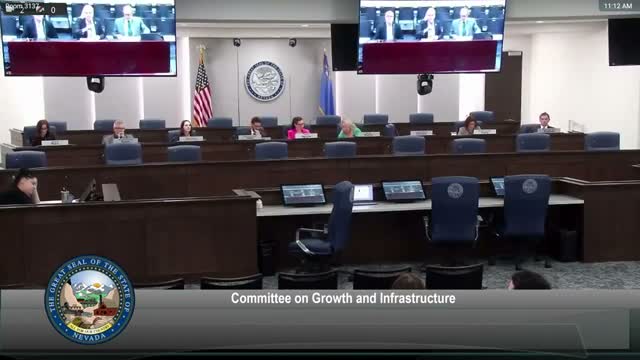
At a joint interim meeting of the Nevada Legislature's Joint Interim Standing Committee on Growth and Infrastructure, state workplace and environmental regulators answered detailed questions about repeated safety and pollution complaints tied to The Boring Company, and legislators pressed for faster, tougher enforcement.
Committee Chair Howard Watts framed the hearing around a string of widely reported incidents in Las Vegas, including worker chemical burns, alleged improper discharges and multiple contested enforcement actions. "We want to get this information out into the open," Watts said, summarizing public records and press reporting the committee had reviewed.
Why it matters: The Boring Company’s tunneling work in the Las Vegas Valley has drawn sustained public scrutiny from firefighters, neighborhood residents and environmental groups. Committee members said the agency responses and current enforcement timelines leave community members uncertain about when, and how, hazards will be fixed.
Nevada OSHA laid out its inspection and review process. Victoria Cadone, administrator at the Division of Industrial Relations, said inspections begin with a compliance safety and health officer who documents hazards, interviews employees and compiles an extensive case file. That file is reviewed by a supervisor and then a district manager, who decides whether to propose citations. Cadone said the agency must meet legal criteria before issuing citations and that the statutory window allows up to six months from the date of employee exposure to complete an inspection, though the goal is often 60–90 days.
Sally Ortiz, senior principal deputy legislative counsel with DIR, described the legal sufficiency review that led to the withdrawal of three willful citations in May. "A cursory glance showed some very disturbing anomalies, mistakes, omissions," she said, explaining that legal counsel recommended withdrawing the proposed citations pending further review. Director Chris Sanchez told lawmakers, "We follow the law ... We don't take into consideration someone's pocketbooks or the political leanings." Officials also described new internal policies to require a legal review of proposed willful citations going forward and improved templates for violation worksheets and inspection narratives to reduce errors.
On enforcement timelines and adjudication, lawmakers repeatedly raised concerns about case delays. Cadone and Ortiz acknowledged lapse-time problems — the agencies cited a current lapse time above 400 days versus a stated target roughly around 180 days — and noted that the Occupational Safety and Health Review Board has had quorum and vacancy issues that slow contested-case resolution. Committee members asked whether Nevada should consider a different adjudicatory model, such as a dedicated administrative law judge, to reduce delays and increase independence.
NDEP (state environmental regulators) officials described parallel environmental enforcement. Jennifer Carr, NDEP’s administrator, said the division enforces permits and federal delegations such as the Clean Water Act and has used an administrative order on consent and stipulated penalties to address past discharges. Carr said the division had assessed stipulated penalties tied to a 2022 settlement agreement and that the agency is currently in an informal dispute-resolution phase with the company on more recent alleged violations.
Carr and deputies told lawmakers that the agency escalates enforcement on a graduated scale and can seek injunctive relief when public health is at risk; they cited prior cases where injunctions and district-court enforcement were used. The division described regularly meeting with local partners, including the Clark County Water Reclamation District, and holding monthly coordination meetings with the company as part of the administrative order on consent.
Sampling and site-specific concerns figured prominently. Lawmakers pressed NDEP on why agency inspectors did not take laboratory samples at a green-colored pond near one tunneling site; NDEP responded that inspectors judged the pond to be primarily shallow groundwater that accumulated after construction paused and that no active discharge was observed at the time. NDEP said Clark County took the lead on a separate alleged discharge into sanitary sewer lines that later drew a substantial local penalty.
Public comment and outside stakeholders emphasized accountability. Hector Areola of the Nevada Environmental Justice Coalition told the committee that Nevada "deserves mass transit that is built with respect for our land, air, water, and the people of our state," and argued regulators and the Legislature should ensure the company is held to existing laws. The Sierra Club and Representative Gina Titus (by phone) pressed for transparency around why some fines were reduced or rescinded, and for documentation of any executive-level interventions.
What the committee is asking for next: Legislators requested follow-up materials from both agencies, including timelines showing when legal review occurred, details of the missing or altered case-file records that prompted a forensic inquiry, comparisons of adjudication models used by other state OSHA plans, and an accounting of staffing gains and vacancy rates intended to reduce backlogs. Chair Watts announced that the committee will continue to follow the matter at future interim meetings and noted the committee’s next meeting date.
The hearing produced no votes or formal legislative actions; it was an informational session aimed at clarifying enforcement mechanics and identifying potential statutory or administrative steps to accelerate adjudication and strengthen oversight. The committee will consider additional information and possible policy proposals during the interim.
Committee Chair Howard Watts framed the hearing around a string of widely reported incidents in Las Vegas, including worker chemical burns, alleged improper discharges and multiple contested enforcement actions. "We want to get this information out into the open," Watts said, summarizing public records and press reporting the committee had reviewed.
Why it matters: The Boring Company’s tunneling work in the Las Vegas Valley has drawn sustained public scrutiny from firefighters, neighborhood residents and environmental groups. Committee members said the agency responses and current enforcement timelines leave community members uncertain about when, and how, hazards will be fixed.
Nevada OSHA laid out its inspection and review process. Victoria Cadone, administrator at the Division of Industrial Relations, said inspections begin with a compliance safety and health officer who documents hazards, interviews employees and compiles an extensive case file. That file is reviewed by a supervisor and then a district manager, who decides whether to propose citations. Cadone said the agency must meet legal criteria before issuing citations and that the statutory window allows up to six months from the date of employee exposure to complete an inspection, though the goal is often 60–90 days.
Sally Ortiz, senior principal deputy legislative counsel with DIR, described the legal sufficiency review that led to the withdrawal of three willful citations in May. "A cursory glance showed some very disturbing anomalies, mistakes, omissions," she said, explaining that legal counsel recommended withdrawing the proposed citations pending further review. Director Chris Sanchez told lawmakers, "We follow the law ... We don't take into consideration someone's pocketbooks or the political leanings." Officials also described new internal policies to require a legal review of proposed willful citations going forward and improved templates for violation worksheets and inspection narratives to reduce errors.
On enforcement timelines and adjudication, lawmakers repeatedly raised concerns about case delays. Cadone and Ortiz acknowledged lapse-time problems — the agencies cited a current lapse time above 400 days versus a stated target roughly around 180 days — and noted that the Occupational Safety and Health Review Board has had quorum and vacancy issues that slow contested-case resolution. Committee members asked whether Nevada should consider a different adjudicatory model, such as a dedicated administrative law judge, to reduce delays and increase independence.
NDEP (state environmental regulators) officials described parallel environmental enforcement. Jennifer Carr, NDEP’s administrator, said the division enforces permits and federal delegations such as the Clean Water Act and has used an administrative order on consent and stipulated penalties to address past discharges. Carr said the division had assessed stipulated penalties tied to a 2022 settlement agreement and that the agency is currently in an informal dispute-resolution phase with the company on more recent alleged violations.
Carr and deputies told lawmakers that the agency escalates enforcement on a graduated scale and can seek injunctive relief when public health is at risk; they cited prior cases where injunctions and district-court enforcement were used. The division described regularly meeting with local partners, including the Clark County Water Reclamation District, and holding monthly coordination meetings with the company as part of the administrative order on consent.
Sampling and site-specific concerns figured prominently. Lawmakers pressed NDEP on why agency inspectors did not take laboratory samples at a green-colored pond near one tunneling site; NDEP responded that inspectors judged the pond to be primarily shallow groundwater that accumulated after construction paused and that no active discharge was observed at the time. NDEP said Clark County took the lead on a separate alleged discharge into sanitary sewer lines that later drew a substantial local penalty.
Public comment and outside stakeholders emphasized accountability. Hector Areola of the Nevada Environmental Justice Coalition told the committee that Nevada "deserves mass transit that is built with respect for our land, air, water, and the people of our state," and argued regulators and the Legislature should ensure the company is held to existing laws. The Sierra Club and Representative Gina Titus (by phone) pressed for transparency around why some fines were reduced or rescinded, and for documentation of any executive-level interventions.
What the committee is asking for next: Legislators requested follow-up materials from both agencies, including timelines showing when legal review occurred, details of the missing or altered case-file records that prompted a forensic inquiry, comparisons of adjudication models used by other state OSHA plans, and an accounting of staffing gains and vacancy rates intended to reduce backlogs. Chair Watts announced that the committee will continue to follow the matter at future interim meetings and noted the committee’s next meeting date.
The hearing produced no votes or formal legislative actions; it was an informational session aimed at clarifying enforcement mechanics and identifying potential statutory or administrative steps to accelerate adjudication and strengthen oversight. The committee will consider additional information and possible policy proposals during the interim.
Don't Miss a Word: See the Full Meeting!
Go beyond summaries. Unlock every video, transcript, and key insight with a Founder Membership.
✓
Get instant access to full meeting videos
✓
Search and clip any phrase from complete transcripts
✓
Receive AI-powered summaries & custom alerts
✓
Enjoy lifetime, unrestricted access to government data
30-day money-back guarantee
