Lampasas workshop: water providers warn of capacity shortfalls and multimillion‑dollar upgrades
February 03, 2026 | Lampasas, Lampasas County, Texas
This article was created by AI summarizing key points discussed. AI makes mistakes, so for full details and context, please refer to the video of the full meeting. Please report any errors so we can fix them. Report an error »
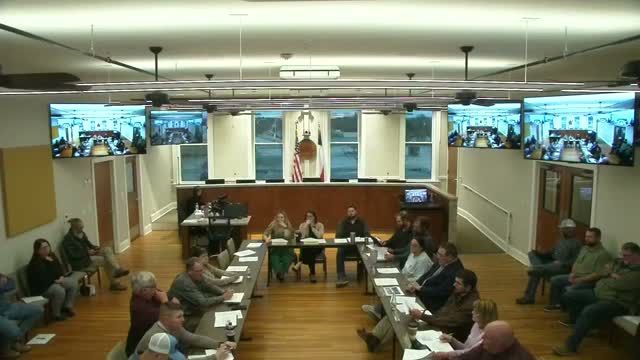
At a Feb. 2 workshop, district representatives and city staff told the Lampasas council the regional water system is approaching capacity and will need large, coordinated investments to continue serving existing customers and future development.
"We've hit a wall," said Speaker 4, summarizing the engineering view that repairs and capacity projects have reached their limits and that the system needs more than piecemeal fixes. Speaker 4 cited a previous estimate of about $9,000,000 to install a parallel transmission line between the U.S. 195 corridor and U.S. 190 and warned that without shared planning and funding, members could face steep costs or loss of local control as larger regional projects are completed.
Why it matters: speakers said rising Central Texas Water charges and an evolving regional allocation framework will push operating costs higher for member utilities unless the partners coordinate on upgrades and cost shares. Speaker 1 described a planned clarifier project intended to roughly double plant capacity, which was estimated in the discussion at about $8,000,000 and potentially scheduled for 2029. Staff also recalled that a larger plant update was estimated in the past at roughly $20,000,000.
Billing and contracts: the council and staff discussed contentious billing and contract terms with Central Texas Water. Speaker 1 said the existing contract “only allows you to pay 37% of the O&M” while other members cover the remaining share; Speaker 1 characterized that split as a continuing source of subsidy pressure. City staff (Speaker 11) said municipal billing teams review monthly statements and have been able to push back charges that don’t meet contract terms.
Regional options and limits: participants discussed several structural options, including buying capacity, jointly funding renovations, converting to a water-control and improvement district or forming a multi‑member municipal water entity that could issue bonds and levy tariffs. Speaker 4 and others warned that conversion or consolidation would require broad member votes, legal work on leases and watershed contracts, and could raise near‑term costs for members unwilling or unable to participate.
Longer-term risk: multiple speakers flagged a regional project linking Belton and Stillhouse lakes (discussed as likely to be completed around 2031) as a turning point for water allocation. Speaker 4 said that once that connection is made, competing entities and new regulatory decisions could change how water is prioritized across the corridor, increasing uncertainty for smaller members.
Near-term management: staff recommended better technical coordination (monthly contract-review meetings and a technical team) to identify budget timing and allow members to plan large expenditures before the fiscal year cutoff in June. Several contributors asked for more transparent, itemized operating-and-maintenance figures in monthly bills so cities and districts could evaluate impacts on local rates.
What was not decided: the workshop produced discussion and several options but no binding commitment to buy or sell plants, convert governance structures, or pursue a specific capital‑funding plan. Multiple participants urged further joint planning and clearer billing audits before pursuing major structural changes.
"We've hit a wall," said Speaker 4, summarizing the engineering view that repairs and capacity projects have reached their limits and that the system needs more than piecemeal fixes. Speaker 4 cited a previous estimate of about $9,000,000 to install a parallel transmission line between the U.S. 195 corridor and U.S. 190 and warned that without shared planning and funding, members could face steep costs or loss of local control as larger regional projects are completed.
Why it matters: speakers said rising Central Texas Water charges and an evolving regional allocation framework will push operating costs higher for member utilities unless the partners coordinate on upgrades and cost shares. Speaker 1 described a planned clarifier project intended to roughly double plant capacity, which was estimated in the discussion at about $8,000,000 and potentially scheduled for 2029. Staff also recalled that a larger plant update was estimated in the past at roughly $20,000,000.
Billing and contracts: the council and staff discussed contentious billing and contract terms with Central Texas Water. Speaker 1 said the existing contract “only allows you to pay 37% of the O&M” while other members cover the remaining share; Speaker 1 characterized that split as a continuing source of subsidy pressure. City staff (Speaker 11) said municipal billing teams review monthly statements and have been able to push back charges that don’t meet contract terms.
Regional options and limits: participants discussed several structural options, including buying capacity, jointly funding renovations, converting to a water-control and improvement district or forming a multi‑member municipal water entity that could issue bonds and levy tariffs. Speaker 4 and others warned that conversion or consolidation would require broad member votes, legal work on leases and watershed contracts, and could raise near‑term costs for members unwilling or unable to participate.
Longer-term risk: multiple speakers flagged a regional project linking Belton and Stillhouse lakes (discussed as likely to be completed around 2031) as a turning point for water allocation. Speaker 4 said that once that connection is made, competing entities and new regulatory decisions could change how water is prioritized across the corridor, increasing uncertainty for smaller members.
Near-term management: staff recommended better technical coordination (monthly contract-review meetings and a technical team) to identify budget timing and allow members to plan large expenditures before the fiscal year cutoff in June. Several contributors asked for more transparent, itemized operating-and-maintenance figures in monthly bills so cities and districts could evaluate impacts on local rates.
What was not decided: the workshop produced discussion and several options but no binding commitment to buy or sell plants, convert governance structures, or pursue a specific capital‑funding plan. Multiple participants urged further joint planning and clearer billing audits before pursuing major structural changes.
View the Full Meeting & All Its Details
This article offers just a summary. Unlock complete video, transcripts, and insights as a Founder Member.
✓
Watch full, unedited meeting videos
✓
Search every word spoken in unlimited transcripts
✓
AI summaries & real-time alerts (all government levels)
✓
Permanent access to expanding government content
30-day money-back guarantee
