Committee hears health experts and broadcasters on ending clock changes
February 04, 2026 | Executive Departments and Administration, House of Representatives, Committees , Legislative, New Hampshire
This article was created by AI summarizing key points discussed. AI makes mistakes, so for full details and context, please refer to the video of the full meeting. Please report any errors so we can fix them. Report an error »
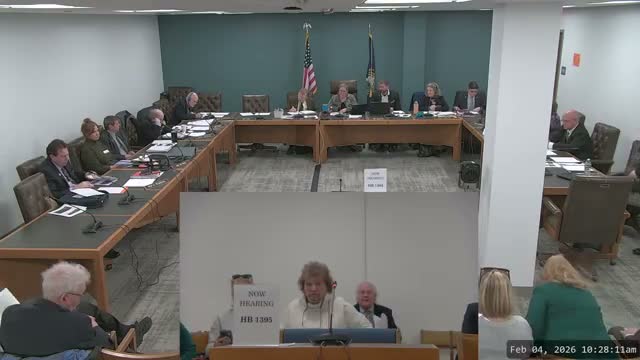
Representative Timothy Horrigan, prime sponsor of HB 11 49, told the committee the bill would eliminate the annual switch between standard and daylight time and adopt year‑round standard time, but only if contiguous states join or the federal government acts. "This changeover is unnecessary and confusing," Horrigan said, arguing the shift worsens health outcomes and safety risks.
Industry witnesses raised practical concerns. Scott Spradling of the New Hampshire Association of Broadcasters told the committee: "We're really worried about the impact on commerce if we did this in a state by state method," saying broadcast networks and advertising schedules are calibrated on the clock hour and that piecemeal state changes could create turmoil for regional networks.
Medical witnesses urged action on health grounds. Dr. Douglas Johnson, a pulmonary and sleep physician, testified that clock transitions and extended daylight‑saving periods disrupt circadian rhythms and increase risks for cardiovascular events and accidents. "Numerous medical associations have endorsed abolishing daylight savings time and instead having year round standard time," he said. Dr. Corinne Johnson, representing the American Academy of Sleep Medicine and the Coalition for Permanent Standard Time, said the 1966 Uniform Time Act already allows states to adopt standard time year‑round and that evidence supports permanent standard time as better for sleep health.
Committee members pressed the sponsor on federal authority and interstate coordination. Horrigan acknowledged the federal government primarily regulates time zones but said he believes states may adopt year‑round standard time without federal permission, whereas year‑round daylight time requires federal change. Committee members noted the complexity of regional media markets and the desirability of multi‑state coordination.
The hearing closed after witnesses finished; the committee did not take immediate action.
Industry witnesses raised practical concerns. Scott Spradling of the New Hampshire Association of Broadcasters told the committee: "We're really worried about the impact on commerce if we did this in a state by state method," saying broadcast networks and advertising schedules are calibrated on the clock hour and that piecemeal state changes could create turmoil for regional networks.
Medical witnesses urged action on health grounds. Dr. Douglas Johnson, a pulmonary and sleep physician, testified that clock transitions and extended daylight‑saving periods disrupt circadian rhythms and increase risks for cardiovascular events and accidents. "Numerous medical associations have endorsed abolishing daylight savings time and instead having year round standard time," he said. Dr. Corinne Johnson, representing the American Academy of Sleep Medicine and the Coalition for Permanent Standard Time, said the 1966 Uniform Time Act already allows states to adopt standard time year‑round and that evidence supports permanent standard time as better for sleep health.
Committee members pressed the sponsor on federal authority and interstate coordination. Horrigan acknowledged the federal government primarily regulates time zones but said he believes states may adopt year‑round standard time without federal permission, whereas year‑round daylight time requires federal change. Committee members noted the complexity of regional media markets and the desirability of multi‑state coordination.
The hearing closed after witnesses finished; the committee did not take immediate action.
View the Full Meeting & All Its Details
This article offers just a summary. Unlock complete video, transcripts, and insights as a Founder Member.
✓
Watch full, unedited meeting videos
✓
Search every word spoken in unlimited transcripts
✓
AI summaries & real-time alerts (all government levels)
✓
Permanent access to expanding government content
30-day money-back guarantee
