Committee discusses proprietor licensing, inspections and anti‑trafficking tools for massage establishments
February 04, 2026 | Executive Departments and Administration, House of Representatives, Committees , Legislative, New Hampshire
This article was created by AI summarizing key points discussed. AI makes mistakes, so for full details and context, please refer to the video of the full meeting. Please report any errors so we can fix them. Report an error »
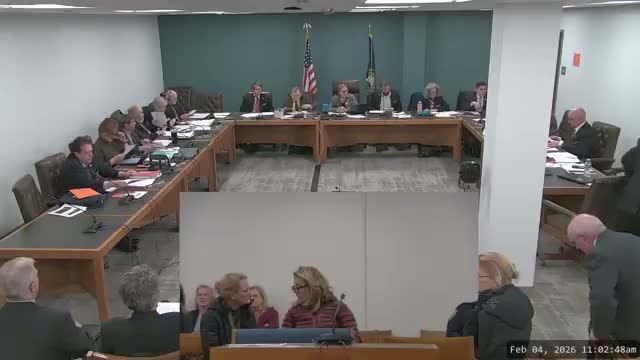
The committee opened extended work sessions on bills addressing massage and bodywork establishments. Sponsors presented a replace‑all amendment to HB 14 58 that would define "massage establishment proprietor" as the person operating a location (including a leaseholder or owner), require proprietor licenses for establishments with more than one practitioner, and require identity proof (Social Security number or taxpayer ID) and a criminal background check to hold a proprietor license.
Sponsors said the change targets operators of multi‑practitioner establishments to enable law enforcement to tie an accountable person to a location, which proponents argued is necessary to use existing statutes to pursue criminal conduct when there is no victim willing to testify. The amendment separates a lower‑cost proprietor licensing approach from a more costly inspection regime under HB 14 69, which would carry a larger fiscal note.
Committee members raised several concerns: whether a landlord who leases space would be classified as an operator, how the state would maintain a registry or lookup for licenses, whether the proprietor license would effectively require proprietors to be therapists, and the scope of LPLC inspection authority. Witnesses and sponsors said OPLC already has investigatory and inspection authority, and the working approach would use rulemaking to clarify definitions and implement background checks while trying to limit fiscal impact.
Members debated local authority; the sponsor indicated they would not preempt all local ordinances and leaned toward allowing more restrictive local rules to remain in place. The committee did not finalize language and asked for amendments to be distributed ahead of the next meeting.
Sponsors said the change targets operators of multi‑practitioner establishments to enable law enforcement to tie an accountable person to a location, which proponents argued is necessary to use existing statutes to pursue criminal conduct when there is no victim willing to testify. The amendment separates a lower‑cost proprietor licensing approach from a more costly inspection regime under HB 14 69, which would carry a larger fiscal note.
Committee members raised several concerns: whether a landlord who leases space would be classified as an operator, how the state would maintain a registry or lookup for licenses, whether the proprietor license would effectively require proprietors to be therapists, and the scope of LPLC inspection authority. Witnesses and sponsors said OPLC already has investigatory and inspection authority, and the working approach would use rulemaking to clarify definitions and implement background checks while trying to limit fiscal impact.
Members debated local authority; the sponsor indicated they would not preempt all local ordinances and leaned toward allowing more restrictive local rules to remain in place. The committee did not finalize language and asked for amendments to be distributed ahead of the next meeting.
View the Full Meeting & All Its Details
This article offers just a summary. Unlock complete video, transcripts, and insights as a Founder Member.
✓
Watch full, unedited meeting videos
✓
Search every word spoken in unlimited transcripts
✓
AI summaries & real-time alerts (all government levels)
✓
Permanent access to expanding government content
30-day money-back guarantee
