Estero staff: river bacteria often exceed reference levels; septic tanks implicated
February 04, 2026 | Estero, Lee County, Florida
This article was created by AI summarizing key points discussed. AI makes mistakes, so for full details and context, please refer to the video of the full meeting. Please report any errors so we can fix them. Report an error »
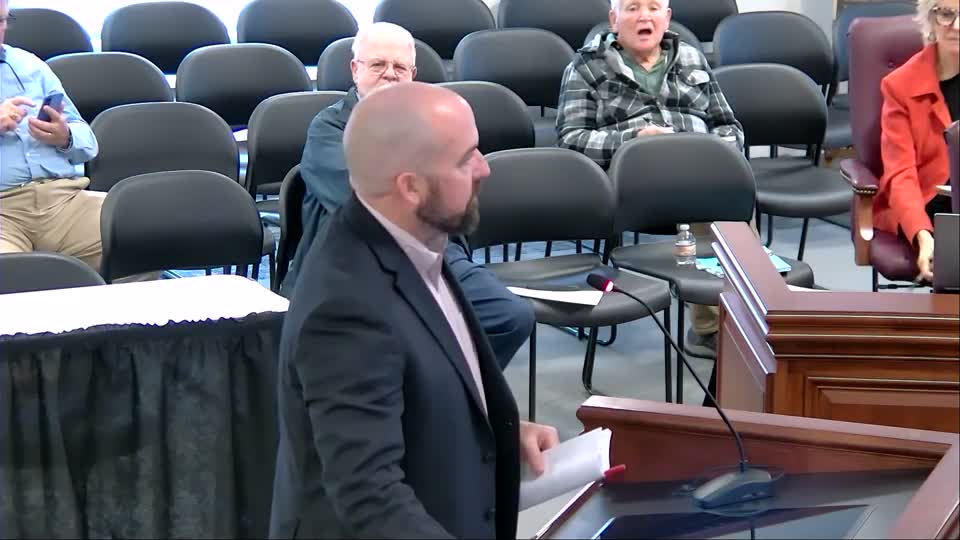
David, the village's water‑quality presenter, gave a detailed briefing on the Estero River monitoring program and the data staff use to prioritize projects. Monitoring at numerous sites (some with decades of records, others newly added) focuses primarily on bacterial indicators and total nitrogen because the Florida Department of Environmental Protection has identified bacteria concerns in the watershed and for Estero Bay.
David said Enterococci results for saltwater reaches and E. coli results for freshwater reaches are ‘‘significantly above’’ the reference lines at multiple downstream sites, and that many of the high values spatially coincide with areas served by septic tanks and package wastewater treatment plants. "The majority of them are above that baseline," he told council, while noting the data are circumstantial rather than conclusive proof of source. Staff emphasized that bacteria are highly variable (spiking and dropping between monthly samples) while nutrients such as nitrogen show smoother trends.
Council and staff discussed potential drivers — rainfall/runoff, tide conditions and human sources — and staff said the village's monitoring is monthly at most sites and that some locations can go dry and therefore lack samples at times. David said the village will use baseline data to evaluate the impact of upcoming packaged wastewater treatment plants and UEP projects: after the plants come online the data may show improvements, but nutrient responses may take months or longer because of environmental storage effects.
Staff said the monitoring program will inform responses if a TMDL (total maximum daily load) for bacteria is established for the Estero River; Estero Bay's TMDL does not currently include the river segment in the same way. Council members asked about human health thresholds and were given context that beach/shore guidance and river sampling use different numeric benchmarks.
What happens next: staff will continue monthly monitoring, incorporate new sampling locations, and compare data after package wastewater treatment projects are operational to evaluate trends.
David said Enterococci results for saltwater reaches and E. coli results for freshwater reaches are ‘‘significantly above’’ the reference lines at multiple downstream sites, and that many of the high values spatially coincide with areas served by septic tanks and package wastewater treatment plants. "The majority of them are above that baseline," he told council, while noting the data are circumstantial rather than conclusive proof of source. Staff emphasized that bacteria are highly variable (spiking and dropping between monthly samples) while nutrients such as nitrogen show smoother trends.
Council and staff discussed potential drivers — rainfall/runoff, tide conditions and human sources — and staff said the village's monitoring is monthly at most sites and that some locations can go dry and therefore lack samples at times. David said the village will use baseline data to evaluate the impact of upcoming packaged wastewater treatment plants and UEP projects: after the plants come online the data may show improvements, but nutrient responses may take months or longer because of environmental storage effects.
Staff said the monitoring program will inform responses if a TMDL (total maximum daily load) for bacteria is established for the Estero River; Estero Bay's TMDL does not currently include the river segment in the same way. Council members asked about human health thresholds and were given context that beach/shore guidance and river sampling use different numeric benchmarks.
What happens next: staff will continue monthly monitoring, incorporate new sampling locations, and compare data after package wastewater treatment projects are operational to evaluate trends.
View the Full Meeting & All Its Details
This article offers just a summary. Unlock complete video, transcripts, and insights as a Founder Member.
✓
Watch full, unedited meeting videos
✓
Search every word spoken in unlimited transcripts
✓
AI summaries & real-time alerts (all government levels)
✓
Permanent access to expanding government content
30-day money-back guarantee
