Committee bill to fund and structure Nebraska’s medical cannabis program draws fierce opposition over registry, product limits and authority
February 02, 2026 | 2026 Legislature NE, Nebraska
This article was created by AI summarizing key points discussed. AI makes mistakes, so for full details and context, please refer to the video of the full meeting. Please report any errors so we can fix them. Report an error »
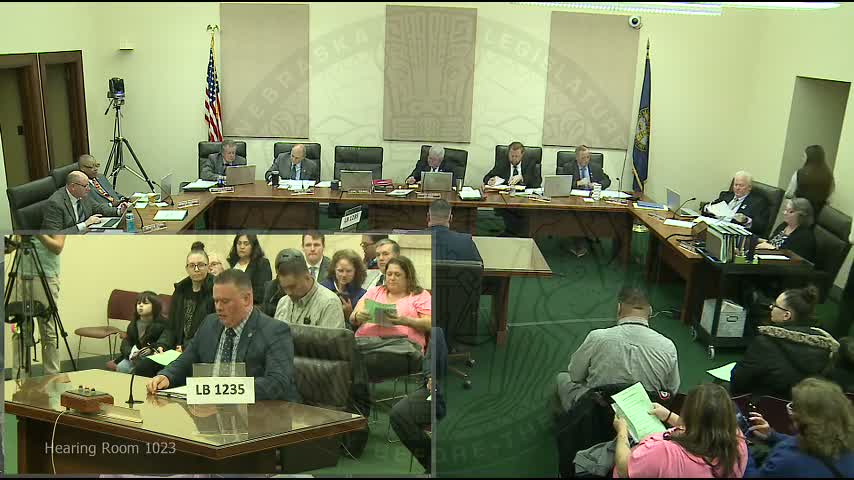
LINCOLN — The General Affairs Committee heard LB 12‑35, a committee bill the Nebraska Medical Cannabis Commission requested to provide statutory authority for program operations, funding and safeguards. Committee legal counsel Kevin Langevin summarized the bill as a structural measure to allow fees and fines to fund the program, protect patient registry information, require a seed‑to‑sale tracking system and give the commission recall and background‑check authority.
"LB 12‑35 closes statutory gaps so that the medical cannabis program operates with statutory authority, appropriate safeguards and financial accountability," Kevin Langevin told senators at the hearing.
Supporters from cultivators and industry groups said the bill contains necessary operational elements. Nancy Laughlin Wagner, CEO of Midwest Cultivators Group, said patient privacy protections and legal clarity for licensees were essential and suggested the state authorize in‑state laboratories licensed to test product to avoid gaps in the supply chain.
But opponents — including many patients, caregivers and health professionals — urged the committee to reject LB 12‑35 as written. Their central objections were: (1) the bill creates a patient and caregiver registry with potential verification access for law enforcement, chilling participation; (2) the measure would codify commission control over patient protections and allow the commission to limit product forms and THC amounts, undermining ballot initiative 4‑37; and (3) banning or limiting out‑of‑state practitioner recommendations would deny access to many patients who rely on specialists in neighboring states.
"LB 12‑35 is a poison pill in practice because it is built on the same worldview we are hearing from the governor and attorney general, who are publicly hostile to the cannabis expansion," John Cartier, counsel for the Omaha Tribe, told senators. He asked the committee to remove law‑enforcement access to the registry and preserve reciprocity for out‑of‑state practitioners.
Patients described real‑world harms they say the current rules and the bill would cause. "For many patients in Nebraska, the only current meaningful path to relief is in 4‑37," testified Krista Eggers, volunteer director of Nebraskans for Medical Marijuana. She and other parents described seizure disorders and cancer care where whole‑plant forms or edible dosing are important.
Industry witnesses asked for changes, including graduated fees so early licensees are not priced out and clearer licensing for testing laboratories. Several industry speakers also complained about the commission’s application grading and transparency for cultivator selections.
What’s next: Committee discussion included technical questions about whether the bill, as amended, restores ballot language and how it would interact with existing commission rules. Chair Holcroft closed public testimony after dozens of opponents, several proponents and neutrals, and indicated the committee would meet in executive session to consider the bill.
"LB 12‑35 closes statutory gaps so that the medical cannabis program operates with statutory authority, appropriate safeguards and financial accountability," Kevin Langevin told senators at the hearing.
Supporters from cultivators and industry groups said the bill contains necessary operational elements. Nancy Laughlin Wagner, CEO of Midwest Cultivators Group, said patient privacy protections and legal clarity for licensees were essential and suggested the state authorize in‑state laboratories licensed to test product to avoid gaps in the supply chain.
But opponents — including many patients, caregivers and health professionals — urged the committee to reject LB 12‑35 as written. Their central objections were: (1) the bill creates a patient and caregiver registry with potential verification access for law enforcement, chilling participation; (2) the measure would codify commission control over patient protections and allow the commission to limit product forms and THC amounts, undermining ballot initiative 4‑37; and (3) banning or limiting out‑of‑state practitioner recommendations would deny access to many patients who rely on specialists in neighboring states.
"LB 12‑35 is a poison pill in practice because it is built on the same worldview we are hearing from the governor and attorney general, who are publicly hostile to the cannabis expansion," John Cartier, counsel for the Omaha Tribe, told senators. He asked the committee to remove law‑enforcement access to the registry and preserve reciprocity for out‑of‑state practitioners.
Patients described real‑world harms they say the current rules and the bill would cause. "For many patients in Nebraska, the only current meaningful path to relief is in 4‑37," testified Krista Eggers, volunteer director of Nebraskans for Medical Marijuana. She and other parents described seizure disorders and cancer care where whole‑plant forms or edible dosing are important.
Industry witnesses asked for changes, including graduated fees so early licensees are not priced out and clearer licensing for testing laboratories. Several industry speakers also complained about the commission’s application grading and transparency for cultivator selections.
What’s next: Committee discussion included technical questions about whether the bill, as amended, restores ballot language and how it would interact with existing commission rules. Chair Holcroft closed public testimony after dozens of opponents, several proponents and neutrals, and indicated the committee would meet in executive session to consider the bill.
View the Full Meeting & All Its Details
This article offers just a summary. Unlock complete video, transcripts, and insights as a Founder Member.
✓
Watch full, unedited meeting videos
✓
Search every word spoken in unlimited transcripts
✓
AI summaries & real-time alerts (all government levels)
✓
Permanent access to expanding government content
30-day money-back guarantee
