Passaic council advances short‑term rental registration and 3% occupancy tax amid parking, enforcement questions
February 04, 2026 | Passaic City, Passaic County, New Jersey
This article was created by AI summarizing key points discussed. AI makes mistakes, so for full details and context, please refer to the video of the full meeting. Please report any errors so we can fix them. Report an error »
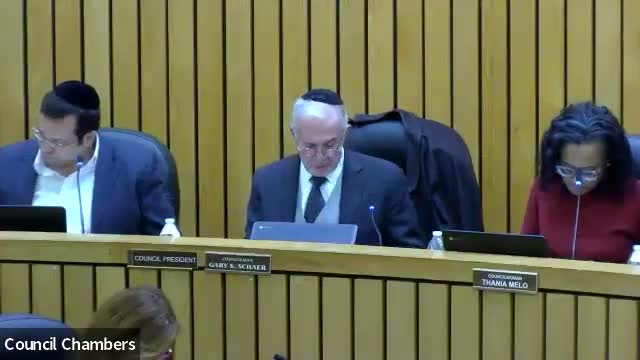
Passaic City Council moved forward on two measures intended to regulate short‑term rentals and capture tax revenue from them, advancing a unit registration scheme and a separate 3% occupancy tax and $250 registration fee.
Supporters said the registration ordinance (Proposed Ordinance 25‑12‑26) is intended to bring existing short‑term rentals into a regulatory framework that protects safety, limits the number of nights a principal residence may be rented and gives the city enforcement tools. A related ordinance (Proposed Ordinance 25‑13‑26) would add an occupancy tax to Chapter 275 and impose a $250 registration fee for qualifying units.
Why it matters: Council members said the measures are designed to balance neighborhood impacts and homeowner financial flexibility ahead of major events that could raise demand. City staff told the council they identified more than 100 online listings that appear to be in Passaic and said registration fees alone could generate at least modest up‑front revenue.
Key debate and details: Residents and several council members focused on practical enforcement questions: how occupancy limits are calculated, how on‑site parking would be certified, how the city would detect unreported rentals and whether the program would pay for itself.
“Per the ordinance, each unit will have a maximum occupancy based on building and fire codes,” a city attorney/staff speaker explained during the hearing, describing occupancy as dependent on egress, square footage and bedroom sizes. The same staff described the registration as per unit (not per owner), and said principal residences must be occupied at least 275 days a year — leaving roughly 90 days available for short‑term renting under the draft language.
On parking, one council member asked how an owner could “certify that every effort” was made to avoid on‑street impacts; staff said the certification would be reflected in the rental agreement and registration documents and that inspections and unit‑specific conditions could limit the number of vehicles tied to a registration.
Revenue and costs: A resident asked for a cost analysis of city personnel needed to inspect, register and monitor rentals. The business administrator said the city considered staffing and enforcement costs and would not have presented the ordinance without believing operations could be covered. Staff estimated registration fees from existing listings could yield roughly $25,000 if 100 units paid the $250 fee; actual tax receipts would depend on utilization and events that drive demand.
Enforcement and penalties: The city attorney noted state statutes and local code tools already address illegal rooming‑house activity and said violations could carry fines or criminal charges in egregious cases. Officials also said community complaints would trigger city follow‑up that could remove registration privileges for a unit.
Next steps: Both ordinances advanced through public hearing and votes to move forward to final consideration or subsequent hearings. Council members asked staff to return with monitoring metrics and to consider additional registration requirements (for example, vehicle registration for rental periods) as possible future amendments.
A council official closed the discussion by saying the goal is regulatory clarity and public‑safety protection while allowing homeowners limited, short‑term use of their principal residences.
Supporters said the registration ordinance (Proposed Ordinance 25‑12‑26) is intended to bring existing short‑term rentals into a regulatory framework that protects safety, limits the number of nights a principal residence may be rented and gives the city enforcement tools. A related ordinance (Proposed Ordinance 25‑13‑26) would add an occupancy tax to Chapter 275 and impose a $250 registration fee for qualifying units.
Why it matters: Council members said the measures are designed to balance neighborhood impacts and homeowner financial flexibility ahead of major events that could raise demand. City staff told the council they identified more than 100 online listings that appear to be in Passaic and said registration fees alone could generate at least modest up‑front revenue.
Key debate and details: Residents and several council members focused on practical enforcement questions: how occupancy limits are calculated, how on‑site parking would be certified, how the city would detect unreported rentals and whether the program would pay for itself.
“Per the ordinance, each unit will have a maximum occupancy based on building and fire codes,” a city attorney/staff speaker explained during the hearing, describing occupancy as dependent on egress, square footage and bedroom sizes. The same staff described the registration as per unit (not per owner), and said principal residences must be occupied at least 275 days a year — leaving roughly 90 days available for short‑term renting under the draft language.
On parking, one council member asked how an owner could “certify that every effort” was made to avoid on‑street impacts; staff said the certification would be reflected in the rental agreement and registration documents and that inspections and unit‑specific conditions could limit the number of vehicles tied to a registration.
Revenue and costs: A resident asked for a cost analysis of city personnel needed to inspect, register and monitor rentals. The business administrator said the city considered staffing and enforcement costs and would not have presented the ordinance without believing operations could be covered. Staff estimated registration fees from existing listings could yield roughly $25,000 if 100 units paid the $250 fee; actual tax receipts would depend on utilization and events that drive demand.
Enforcement and penalties: The city attorney noted state statutes and local code tools already address illegal rooming‑house activity and said violations could carry fines or criminal charges in egregious cases. Officials also said community complaints would trigger city follow‑up that could remove registration privileges for a unit.
Next steps: Both ordinances advanced through public hearing and votes to move forward to final consideration or subsequent hearings. Council members asked staff to return with monitoring metrics and to consider additional registration requirements (for example, vehicle registration for rental periods) as possible future amendments.
A council official closed the discussion by saying the goal is regulatory clarity and public‑safety protection while allowing homeowners limited, short‑term use of their principal residences.
View the Full Meeting & All Its Details
This article offers just a summary. Unlock complete video, transcripts, and insights as a Founder Member.
✓
Watch full, unedited meeting videos
✓
Search every word spoken in unlimited transcripts
✓
AI summaries & real-time alerts (all government levels)
✓
Permanent access to expanding government content
30-day money-back guarantee
