Watertown council hears plea over emergency shelter costs, receives Main Street update and approves zoning-code amendment on first reading
February 04, 2026 | Watertown, Jefferson County, Wisconsin
This article was created by AI summarizing key points discussed. AI makes mistakes, so for full details and context, please refer to the video of the full meeting. Please report any errors so we can fix them. Report an error »
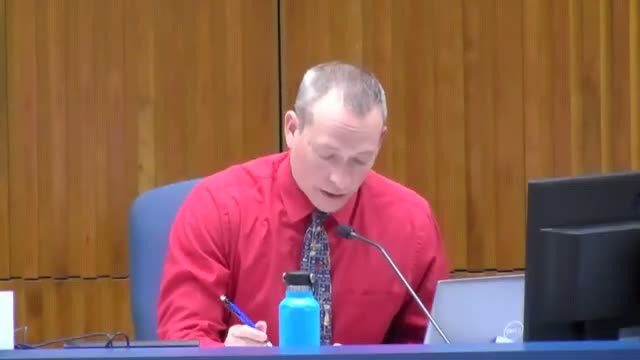
Watertown Common Council members on Tuesday heard a public appeal from a community shelter organizer who said the volunteer-run program is operating at unsustainable cost and urged the city to help find sprinkler-equipped indoor space.
“On the night of 01/28, we sheltered 122 people, including three children,” said Katie Vanderlinden, pastor at Ebenezer Moravian Church, summarizing recent emergency-shelter operations run in partnership with local hotels and churches. She said the effort “has cost us thousands of dollars” and asked the council to consider city-owned or other local spaces (the former fire department or the basement of the city building were raised as examples) that would meet the council’s sprinkler requirement.
The request came during the public-comment period after Eric Schmidt, a resident, urged accuracy in public statements about constitutional law, reading aloud text from the First Amendment to underscore his point.
The council did not take an immediate funding vote; instead, Vanderlinden’s remarks were entered into the record and she asked the council to consider longer-term partnerships so the community-run shelter is not solely responsible for recurring nightly costs.
The council also received a detailed quarterly briefing from the Watertown Main Street program. A Main Street representative, Stephanie, explained the program’s facade-and-sign grant process, including application requirements (an estimate and a rendering) and refundable application fees — $50 for sign grants and $100 for facade grants — and described the program’s volunteer requirement for grantees.
“We’re contributing $5,000 to our grant program” as part of the MOU with the city, the Main Street representative said, and noted recent events intended to support downtown businesses: a winter market with 15 vendors and about 150 patrons, and a Sweet Stroll with 78 participants. She said Main Street plans further events in February and March and will run five Friday-night farmers-market evenings in Benson Family Town Square beginning in June.
During Q&A, the Main Street representative said she does not presently track a numeric downtown storefront-occupancy rate but offered to compile that information for the council. She and councilmembers also discussed business concerns about an upcoming streetscape proposal and the practicalities of reusing 25-year-old lamp posts.
On other reports, Councilmember Berg praised staff work on emerald ash borer response, citing materials in park-and-rec minutes showing a decline from roughly 1,000 affected ash trees in earlier years to about 74 still needing treatment.
Procedurally, the council moved into a closed session under Wisconsin Statute 19.85 to consult with legal counsel about strategy related to a Dodge County comprehensive-plan matter and a Town of Emmett boundary agreement; the motion was made by Lampe, seconded by Berg, and passed on roll call. The body returned to open session at 8:09 p.m.
The council then considered Ordinance 2601, an item described by the mayor as an amendment to Chapter 550 of the zoning code (amendments to sections 550-32c, 550-33c, 550-36c, 550-37c and 550-56). Lampe moved the first reading; Blankey seconded. A roll-call recording in the transcript shows members responding 'Aye' and the motion carried on first reading.
The meeting concluded with a motion to adjourn, which the council approved.
What’s next: Vanderlinden asked the council to evaluate potential municipal or partner facilities that meet fire-safety requirements for longer-term shelter use. Council members and staff indicated follow-up on the request and on additional data (for example, a downtown occupancy figure) would be addressed on future agendas.
“On the night of 01/28, we sheltered 122 people, including three children,” said Katie Vanderlinden, pastor at Ebenezer Moravian Church, summarizing recent emergency-shelter operations run in partnership with local hotels and churches. She said the effort “has cost us thousands of dollars” and asked the council to consider city-owned or other local spaces (the former fire department or the basement of the city building were raised as examples) that would meet the council’s sprinkler requirement.
The request came during the public-comment period after Eric Schmidt, a resident, urged accuracy in public statements about constitutional law, reading aloud text from the First Amendment to underscore his point.
The council did not take an immediate funding vote; instead, Vanderlinden’s remarks were entered into the record and she asked the council to consider longer-term partnerships so the community-run shelter is not solely responsible for recurring nightly costs.
The council also received a detailed quarterly briefing from the Watertown Main Street program. A Main Street representative, Stephanie, explained the program’s facade-and-sign grant process, including application requirements (an estimate and a rendering) and refundable application fees — $50 for sign grants and $100 for facade grants — and described the program’s volunteer requirement for grantees.
“We’re contributing $5,000 to our grant program” as part of the MOU with the city, the Main Street representative said, and noted recent events intended to support downtown businesses: a winter market with 15 vendors and about 150 patrons, and a Sweet Stroll with 78 participants. She said Main Street plans further events in February and March and will run five Friday-night farmers-market evenings in Benson Family Town Square beginning in June.
During Q&A, the Main Street representative said she does not presently track a numeric downtown storefront-occupancy rate but offered to compile that information for the council. She and councilmembers also discussed business concerns about an upcoming streetscape proposal and the practicalities of reusing 25-year-old lamp posts.
On other reports, Councilmember Berg praised staff work on emerald ash borer response, citing materials in park-and-rec minutes showing a decline from roughly 1,000 affected ash trees in earlier years to about 74 still needing treatment.
Procedurally, the council moved into a closed session under Wisconsin Statute 19.85 to consult with legal counsel about strategy related to a Dodge County comprehensive-plan matter and a Town of Emmett boundary agreement; the motion was made by Lampe, seconded by Berg, and passed on roll call. The body returned to open session at 8:09 p.m.
The council then considered Ordinance 2601, an item described by the mayor as an amendment to Chapter 550 of the zoning code (amendments to sections 550-32c, 550-33c, 550-36c, 550-37c and 550-56). Lampe moved the first reading; Blankey seconded. A roll-call recording in the transcript shows members responding 'Aye' and the motion carried on first reading.
The meeting concluded with a motion to adjourn, which the council approved.
What’s next: Vanderlinden asked the council to evaluate potential municipal or partner facilities that meet fire-safety requirements for longer-term shelter use. Council members and staff indicated follow-up on the request and on additional data (for example, a downtown occupancy figure) would be addressed on future agendas.
Don't Miss a Word: See the Full Meeting!
Go beyond summaries. Unlock every video, transcript, and key insight with a Founder Membership.
✓
Get instant access to full meeting videos
✓
Search and clip any phrase from complete transcripts
✓
Receive AI-powered summaries & custom alerts
✓
Enjoy lifetime, unrestricted access to government data
30-day money-back guarantee
