Nebraska bill would give livestock handlers clear right‑of‑way and limited authority to stop traffic
February 02, 2026 | 2026 Legislature NE, Nebraska
This article was created by AI summarizing key points discussed. AI makes mistakes, so for full details and context, please refer to the video of the full meeting. Please report any errors so we can fix them. Report an error »
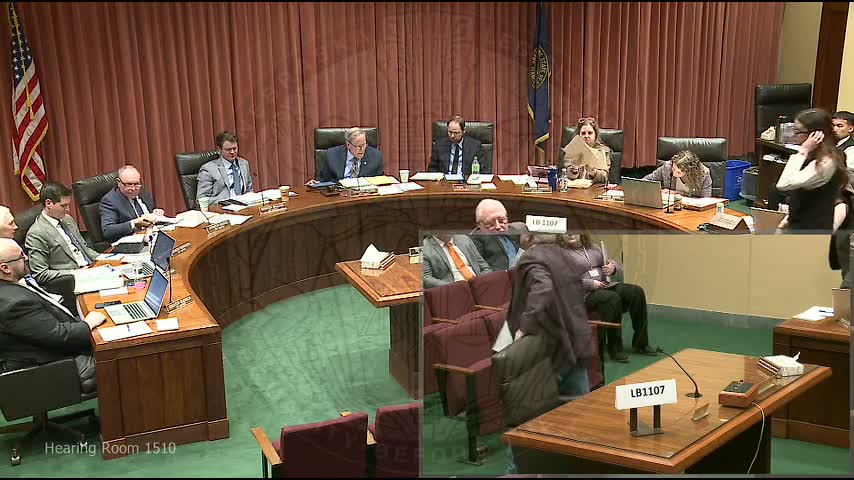
Sen. Tanya Storer presented LB977 to clarify rules when livestock are moved on Nebraska roads. The bill would explicitly require motorists to yield the right of way to people leading, herding or driving livestock, keep a distress‑signal provision enabling handlers to stop traffic by raising a hand, add livestock handlers to the statutory definition of vulnerable road users, and prohibit livestock movements on roads with posted minimum speeds of 20 miles per hour or greater.
Storer said the legislation responds to increasing conflicts as more residents unfamiliar with agricultural practices encounter livestock on highways. “Moving livestock on Nebraska roads is part of doing business,” she said, and the bill aims to prevent confusion that can lead to dangerous confrontations.
Agriculture and ranching groups including Nebraska Cattlemen and the Nebraska Farm Bureau supported the bill. Rob Starr (Nebraska Cattlemen) and Craig Miles (a fourth‑generation rancher) described dangerous episodes when motorists failed to stop and urged that producers be empowered to protect livestock and handlers. Witnesses described typical safety practices (flaggers, orange hazard flags, use of people at front and back of herds) and noted limits on law‑enforcement availability in remote areas.
Committee members raised questions about scenarios not covered (for example, unattended livestock) and whether the law could create opportunities for misuse; Storer said the bill is focused on clarifying duties and does not override emergency or road‑maintenance priorities. She also noted the statute treats violations as traffic infractions and that more serious repeat offenses carry misdemeanor penalties under existing vulnerable‑user provisions.
The committee heard the testimony and asked staff and interested parties to continue refining language and operational details before any vote.
Storer said the legislation responds to increasing conflicts as more residents unfamiliar with agricultural practices encounter livestock on highways. “Moving livestock on Nebraska roads is part of doing business,” she said, and the bill aims to prevent confusion that can lead to dangerous confrontations.
Agriculture and ranching groups including Nebraska Cattlemen and the Nebraska Farm Bureau supported the bill. Rob Starr (Nebraska Cattlemen) and Craig Miles (a fourth‑generation rancher) described dangerous episodes when motorists failed to stop and urged that producers be empowered to protect livestock and handlers. Witnesses described typical safety practices (flaggers, orange hazard flags, use of people at front and back of herds) and noted limits on law‑enforcement availability in remote areas.
Committee members raised questions about scenarios not covered (for example, unattended livestock) and whether the law could create opportunities for misuse; Storer said the bill is focused on clarifying duties and does not override emergency or road‑maintenance priorities. She also noted the statute treats violations as traffic infractions and that more serious repeat offenses carry misdemeanor penalties under existing vulnerable‑user provisions.
The committee heard the testimony and asked staff and interested parties to continue refining language and operational details before any vote.
View the Full Meeting & All Its Details
This article offers just a summary. Unlock complete video, transcripts, and insights as a Founder Member.
✓
Watch full, unedited meeting videos
✓
Search every word spoken in unlimited transcripts
✓
AI summaries & real-time alerts (all government levels)
✓
Permanent access to expanding government content
30-day money-back guarantee
