Nebraska committee hears bill to modernize Ethanol Board, shifts small diesel fees to support ethanol programs
February 03, 2026 | 2026 Legislature NE, Nebraska
This article was created by AI summarizing key points discussed. AI makes mistakes, so for full details and context, please refer to the video of the full meeting. Please report any errors so we can fix them. Report an error »
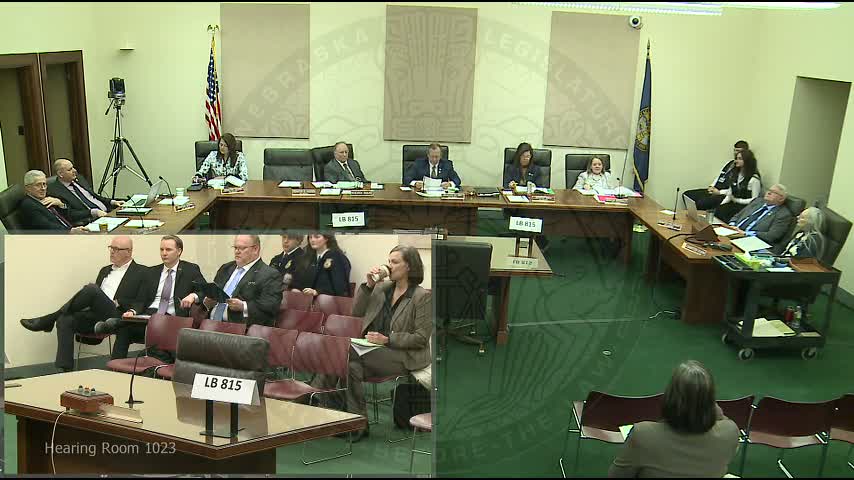
Senator Tom Brandt introduced LB815 on the Nebraska LegislatureAgriculture Committee on Feb. 5, proposing changes to the Nebraska Ethanol Board(NEB) to update its mission, add producer representation and modernize funding.
The bill would convert an existing business seat into an ethanol producer seat, raising board membership from seven to nine, and change the NEBcash-fund revenue streams. Ben Rhodes, the NEB executive director, told the committee that LB815 eliminates certain small, legacy refund transfers and the current three-tenths-of-a-cent-per-gallon remittance (on dyed diesel) to the Petroleum Release Fund (PRF), implements a quarter-cent-per-gallon fee on dyed (off-road) diesel to the Agricultural Alcohol Fuel Tax Fund (AAFTF), and increases the on-road (clear) diesel fee to six-tenths of a cent per gallon so the PRFremains whole. Rhodes characterized the proposal as a revenue shift targeted to maintain PRF funding while directing a modest, historically targeted source back into ethanol development.
Jan Tenebensel, chair of the Nebraska Ethanol Board and a farmer from Cambridge, said the NEB has invested about $30 million over decades and that updating the statute is necessary for the board to support new markets, including broader E15 use, marine blends and longer-term work on sustainable aviation fuel and renewable chemicals. "LB815 modernizes the NEB's mission, structure, and funding," Tenebensel said in testimony.
Proponents emphasized rural economic benefits and producer price support. Randy Gard, a fuel retailer and NEB secretary, said retailers have invested in blender pumps and sold higher-ethanol blends, and that consumers saved on fuel costs where higher blends circulated. John Hansen of Nebraska Farmers Union framed the bill as one of several value-added, farm-led tools to support farm incomes.
Opponents focused on the proposed fee shift. Mark Whitehead of Whitehead Oil Company and the Nebraska Petroleum Marketers and Convenience Store Association said the Petroleum Release Fund (LUST/PRF) was created to cover environmental remediation and that motor-fuel fees should remain dedicated to transportation and cleanup. "LB815 departs from that principle by creating a new permanent tax on dyed diesel for purposes unrelated to either of those," Whitehead said.
Committee members pressed for numeric clarity after some initial confusion in the hearing: several senators misread fee changes as whole pennies (3¢ to 6¢). Committee staff and witnesses clarified that the shifts are in tenths of a cent (three-tenths to six-tenths of a cent per gallon), i.e., 0.003 to 0.006 dollars per gallon, not whole cents. Witnesses said the net result should lower the legacy fee farmers paid and sustain PRF funding while moving a targeted revenue stream to ethanol promotion.
Tom Brandt closed by stressing export markets and new product pathways and asking the committee to support the modernization.
The committee took letters into the record (six proponents, one opponent) and closed the hearing; no committee vote was recorded at that time.
The bill would convert an existing business seat into an ethanol producer seat, raising board membership from seven to nine, and change the NEBcash-fund revenue streams. Ben Rhodes, the NEB executive director, told the committee that LB815 eliminates certain small, legacy refund transfers and the current three-tenths-of-a-cent-per-gallon remittance (on dyed diesel) to the Petroleum Release Fund (PRF), implements a quarter-cent-per-gallon fee on dyed (off-road) diesel to the Agricultural Alcohol Fuel Tax Fund (AAFTF), and increases the on-road (clear) diesel fee to six-tenths of a cent per gallon so the PRFremains whole. Rhodes characterized the proposal as a revenue shift targeted to maintain PRF funding while directing a modest, historically targeted source back into ethanol development.
Jan Tenebensel, chair of the Nebraska Ethanol Board and a farmer from Cambridge, said the NEB has invested about $30 million over decades and that updating the statute is necessary for the board to support new markets, including broader E15 use, marine blends and longer-term work on sustainable aviation fuel and renewable chemicals. "LB815 modernizes the NEB's mission, structure, and funding," Tenebensel said in testimony.
Proponents emphasized rural economic benefits and producer price support. Randy Gard, a fuel retailer and NEB secretary, said retailers have invested in blender pumps and sold higher-ethanol blends, and that consumers saved on fuel costs where higher blends circulated. John Hansen of Nebraska Farmers Union framed the bill as one of several value-added, farm-led tools to support farm incomes.
Opponents focused on the proposed fee shift. Mark Whitehead of Whitehead Oil Company and the Nebraska Petroleum Marketers and Convenience Store Association said the Petroleum Release Fund (LUST/PRF) was created to cover environmental remediation and that motor-fuel fees should remain dedicated to transportation and cleanup. "LB815 departs from that principle by creating a new permanent tax on dyed diesel for purposes unrelated to either of those," Whitehead said.
Committee members pressed for numeric clarity after some initial confusion in the hearing: several senators misread fee changes as whole pennies (3¢ to 6¢). Committee staff and witnesses clarified that the shifts are in tenths of a cent (three-tenths to six-tenths of a cent per gallon), i.e., 0.003 to 0.006 dollars per gallon, not whole cents. Witnesses said the net result should lower the legacy fee farmers paid and sustain PRF funding while moving a targeted revenue stream to ethanol promotion.
Tom Brandt closed by stressing export markets and new product pathways and asking the committee to support the modernization.
The committee took letters into the record (six proponents, one opponent) and closed the hearing; no committee vote was recorded at that time.
View the Full Meeting & All Its Details
This article offers just a summary. Unlock complete video, transcripts, and insights as a Founder Member.
✓
Watch full, unedited meeting videos
✓
Search every word spoken in unlimited transcripts
✓
AI summaries & real-time alerts (all government levels)
✓
Permanent access to expanding government content
30-day money-back guarantee
