Senate committee advances SB 1334 requiring documentary proof of citizenship at registration after hours of testimony
February 04, 2026 | 2026 Legislature FL, Florida
This article was created by AI summarizing key points discussed. AI makes mistakes, so for full details and context, please refer to the video of the full meeting. Please report any errors so we can fix them. Report an error »
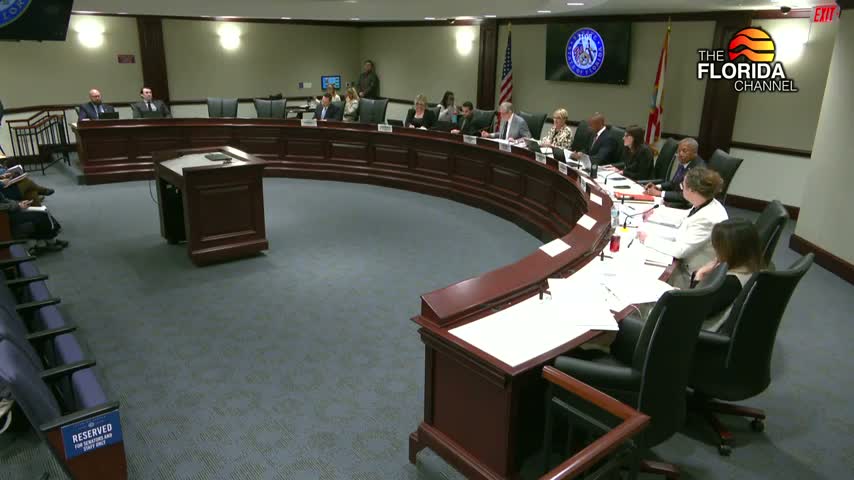
The Senate Committee on Ethics and Elections voted to advance SB 1334 after the sponsor said the measure would standardize how the state verifies U.S. citizenship for voter registration and rely on existing Department of Highway Safety and Motor Vehicles (DHSMV) records and the SAVE database. The strike-all amendment, adopted in committee, would prioritize paper ballots as the default, allow DHSMV Real ID flags to be used in verification, clarify canvassing timeframes and require an identifying feature on state ID for people who are U.S. citizens by July 1, 2027.
Supporters said the bill closes gaps in verification and reduces duplication across agencies. Sponsor Senator Grahl said the changes would “streamline and allow us to use a system that works,” noting a high Real ID uptake and emphasizing that provisional ballots and time to cure would remain available. Grahl also said supervisors of elections would remain the constitutional officers who add or remove voters from the rolls and that the Department of State would assist with eligibility determinations.
Opponents contested the bill’s practical effects and timing. Testifying organizations including Common Cause, the Southern Poverty Law Center, the League of Women Voters, the ACLU of Florida, Latino Justice and the NAACP urged rejection. Amy Keith of Common Cause said SB 1334 "will kick eligible US citizens off the voter rolls," emphasizing the out-of-pocket costs many residents could face to obtain Real ID-compliant documents. Jonathan Weber of the Southern Poverty Law Center told the committee his personal story of losing documents in a house fire, warning that the bill’s requirements could disenfranchise people recovering from emergencies.
Public commenters also pointed to litigation in other states. Leticia Harmon of Florida Rising recalled being prevented from registering in Kansas under a similar law and cited Fish v. Kobach, where Kansas’s documentary proof of citizenship requirement was found to violate federal law. Several witnesses raised concerns specifically about acceptance of Puerto Rican birth certificates and the cost and delay involved in obtaining certified documents or passports.
Committee members pressed sponsors for implementation details. Senators asked whether the online voter registration system would be able to pull citizenship fields from DHSMV, how supervisors would record submitted documents, whether expired passports should qualify as proof of citizenship, and what remedies would exist for voters flagged close to an election. Sponsor Grahl and other proponents said DHSMV maintains citizenship information for Real ID-compliant licenses and that the SAVE database and Department of State processes would be used for cross-checking, while acknowledging the need to clarify certain operational details.
Senator Sarah Polsky opposed the measure on constitutional and practical grounds, warning of the Kansas precedent and potential for widespread administrative confusion and litigation. "We've come up with new ways to make it harder to vote," Polsky said during closing remarks, urging the committee to listen to constituents. Vice Chair Bernard said the bill seeks to protect citizens' votes but acknowledged concerns over implementation and offered to continue conversations with stakeholders.
By roll call, the committee adopted the strike-all as amended and reported the bill favorably to the next committee. Recorded votes included Senators Avila (yes), Bradley (yes), Garcia (yes), Groll (yes), Polsky (no), Vice Chair Bernard (no) and Chair Gates (yes). The bill’s proponents said they will continue to work with supervisors and the Department of State to address operational questions before subsequent committees.
SB 1334 now moves to the next committee for further consideration; supporters and critics alike said they expect amendments and continued debate on the technical verification steps and the bill’s effective date.
Supporters said the bill closes gaps in verification and reduces duplication across agencies. Sponsor Senator Grahl said the changes would “streamline and allow us to use a system that works,” noting a high Real ID uptake and emphasizing that provisional ballots and time to cure would remain available. Grahl also said supervisors of elections would remain the constitutional officers who add or remove voters from the rolls and that the Department of State would assist with eligibility determinations.
Opponents contested the bill’s practical effects and timing. Testifying organizations including Common Cause, the Southern Poverty Law Center, the League of Women Voters, the ACLU of Florida, Latino Justice and the NAACP urged rejection. Amy Keith of Common Cause said SB 1334 "will kick eligible US citizens off the voter rolls," emphasizing the out-of-pocket costs many residents could face to obtain Real ID-compliant documents. Jonathan Weber of the Southern Poverty Law Center told the committee his personal story of losing documents in a house fire, warning that the bill’s requirements could disenfranchise people recovering from emergencies.
Public commenters also pointed to litigation in other states. Leticia Harmon of Florida Rising recalled being prevented from registering in Kansas under a similar law and cited Fish v. Kobach, where Kansas’s documentary proof of citizenship requirement was found to violate federal law. Several witnesses raised concerns specifically about acceptance of Puerto Rican birth certificates and the cost and delay involved in obtaining certified documents or passports.
Committee members pressed sponsors for implementation details. Senators asked whether the online voter registration system would be able to pull citizenship fields from DHSMV, how supervisors would record submitted documents, whether expired passports should qualify as proof of citizenship, and what remedies would exist for voters flagged close to an election. Sponsor Grahl and other proponents said DHSMV maintains citizenship information for Real ID-compliant licenses and that the SAVE database and Department of State processes would be used for cross-checking, while acknowledging the need to clarify certain operational details.
Senator Sarah Polsky opposed the measure on constitutional and practical grounds, warning of the Kansas precedent and potential for widespread administrative confusion and litigation. "We've come up with new ways to make it harder to vote," Polsky said during closing remarks, urging the committee to listen to constituents. Vice Chair Bernard said the bill seeks to protect citizens' votes but acknowledged concerns over implementation and offered to continue conversations with stakeholders.
By roll call, the committee adopted the strike-all as amended and reported the bill favorably to the next committee. Recorded votes included Senators Avila (yes), Bradley (yes), Garcia (yes), Groll (yes), Polsky (no), Vice Chair Bernard (no) and Chair Gates (yes). The bill’s proponents said they will continue to work with supervisors and the Department of State to address operational questions before subsequent committees.
SB 1334 now moves to the next committee for further consideration; supporters and critics alike said they expect amendments and continued debate on the technical verification steps and the bill’s effective date.
View the Full Meeting & All Its Details
This article offers just a summary. Unlock complete video, transcripts, and insights as a Founder Member.
✓
Watch full, unedited meeting videos
✓
Search every word spoken in unlimited transcripts
✓
AI summaries & real-time alerts (all government levels)
✓
Permanent access to expanding government content
30-day money-back guarantee
