Senate committee advances bill to integrate technology and AI training into postsecondary general education
February 04, 2026 | 2026 Legislature FL, Florida
This article was created by AI summarizing key points discussed. AI makes mistakes, so for full details and context, please refer to the video of the full meeting. Please report any errors so we can fix them. Report an error »
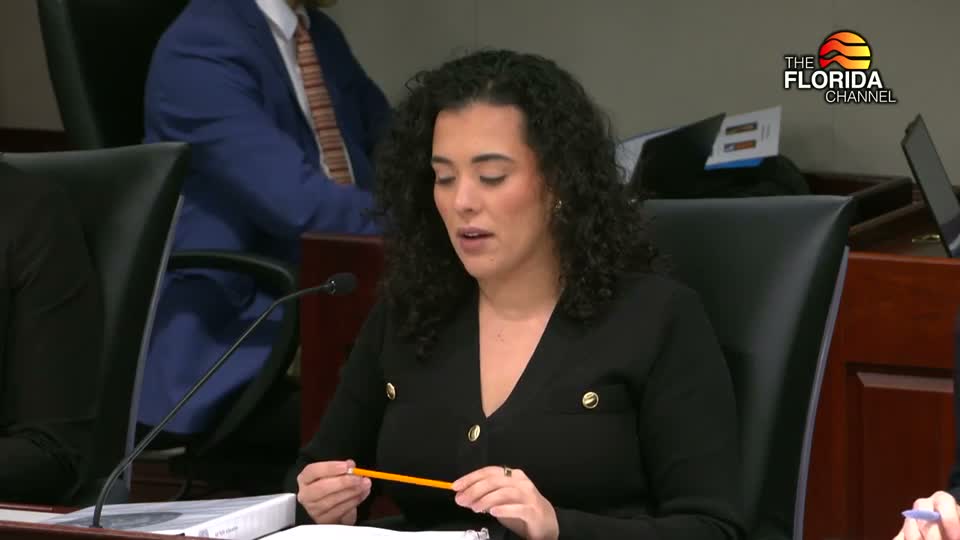
Sen. Avila, sponsor of SB 16 94, told the Senate Committee on Education Postsecondary that the bill revises general education core standards for public postsecondary institutions to add technology as part of the core course area and to require technology courses to give students an understanding of computer science and artificial intelligence applications.
The sponsor explained an adopted amendment (referred to in committee as Amendment 7 9 4 3 8 4) that requires any general education core course that integrates technology to include opportunities to improve digital literacy and competency and to add instruction on the application of artificial intelligence tools. The amendment also requires related instruction in software engineering, computer networks, database systems and cybersecurity “as applicable to the course,” the sponsor said. For high school computer science courses, the amendment does not mandate AI instruction but states that if AI is taught it must include “a critical evaluation of artificial intelligence data results, the limitations of artificial intelligence, and the ethical use of artificial intelligence in school and at home,” Sen. Avila said.
Sen. Berman asked whether the original bill would have created a sixth general education core area. Avila said the amendment avoids creating a separate sixth core and instead directs integration of technology into the existing five areas (English, mathematics, natural science, social science and humanities). Avila told the committee the total general education requirement remains a 36‑credit‑hour structure and the change is intended to make sure students are “digitally competent” across disciplines.
The amendment was adopted by voice vote. In a subsequent roll call on the committee substitute for SB 16 94, all recorded committee members voted in favor and the committee reported CS/SB 16 94 favorably.
The committee provided no immediate fiscal analysis in the hearing; the sponsor said digital integration is an access and workforce‑readiness measure. The next procedural step is committee reporting; the bill was reported favorably to the next Senate stage.
The sponsor explained an adopted amendment (referred to in committee as Amendment 7 9 4 3 8 4) that requires any general education core course that integrates technology to include opportunities to improve digital literacy and competency and to add instruction on the application of artificial intelligence tools. The amendment also requires related instruction in software engineering, computer networks, database systems and cybersecurity “as applicable to the course,” the sponsor said. For high school computer science courses, the amendment does not mandate AI instruction but states that if AI is taught it must include “a critical evaluation of artificial intelligence data results, the limitations of artificial intelligence, and the ethical use of artificial intelligence in school and at home,” Sen. Avila said.
Sen. Berman asked whether the original bill would have created a sixth general education core area. Avila said the amendment avoids creating a separate sixth core and instead directs integration of technology into the existing five areas (English, mathematics, natural science, social science and humanities). Avila told the committee the total general education requirement remains a 36‑credit‑hour structure and the change is intended to make sure students are “digitally competent” across disciplines.
The amendment was adopted by voice vote. In a subsequent roll call on the committee substitute for SB 16 94, all recorded committee members voted in favor and the committee reported CS/SB 16 94 favorably.
The committee provided no immediate fiscal analysis in the hearing; the sponsor said digital integration is an access and workforce‑readiness measure. The next procedural step is committee reporting; the bill was reported favorably to the next Senate stage.
Don't Miss a Word: See the Full Meeting!
Go beyond summaries. Unlock every video, transcript, and key insight with a Founder Membership.
✓
Get instant access to full meeting videos
✓
Search and clip any phrase from complete transcripts
✓
Receive AI-powered summaries & custom alerts
✓
Enjoy lifetime, unrestricted access to government data
30-day money-back guarantee
