Committee backs bill to loosen certification barriers amid counselor shortages
February 04, 2026 | 2026 Legislature FL, Florida
This article was created by AI summarizing key points discussed. AI makes mistakes, so for full details and context, please refer to the video of the full meeting. Please report any errors so we can fix them. Report an error »
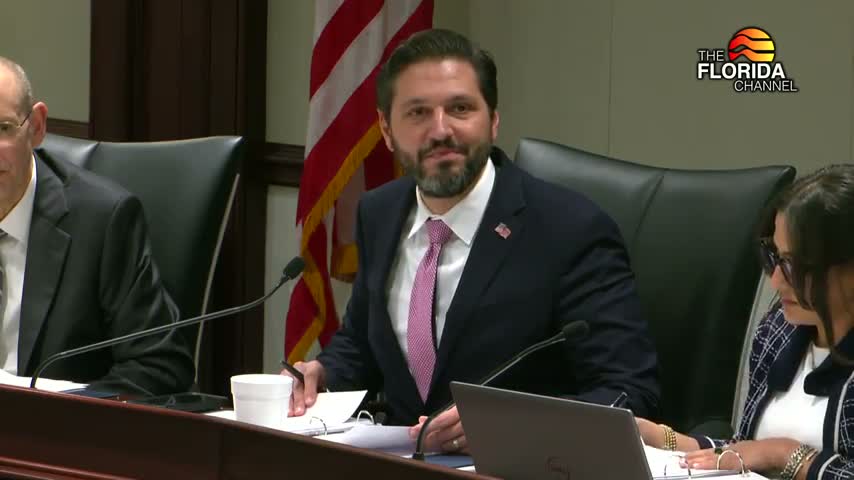
Senator Kalatiud presented CS for SB 10 36 to the Appropriations Committee as a measure to address shortages of school counselors by removing requirements that tie counselor qualification to classroom teacher certification, which she said limits the pool of applicants.
"School counselors are required to adhere to practices that are connected to a classroom teacher certification, limiting the pool of applicants," Kalatiud said, describing recruitment and retention challenges across K–12 settings and saying the bill is one vehicle to increase the eligible pool.
Vice Chair Pizzo and other senators asked how counselor shortages affect students directly; Pizzo recounted his experience having multiple college counselors available in his high school and asked whether high-school students today can access counselors when needed. Kalatiud said the state lacks a readily available, consistent ratio figure at the hearing and described the bill’s intent to widen eligibility and reduce barriers to hiring counseling professionals.
Students from MAS testified in support. Akish Bonhomme, a senior representing MAS at FIU, spoke about mental-health support gaps and the way students sometimes feel reporting to parents prevents them from seeking help. Florencio Jose Munoz Lagare, MAS student and incoming Duke freshman, said his school had one counselor for 500 students and one trust counselor serving about 1,600 students and described frequent turnover among trust counselors.
A veteran teacher, Chris Pagel of Nassau County, said counselors are often overloaded and assigned administrative duties that keep them from counseling work; at his elementary school he cited two counselors for roughly 1,300 K–5 students. Senator Osgood suggested the committee consider additional roles, such as brace advisers, and broader efficiencies to make counseling staff time more available for students.
After sponsor closing remarks noting this is an ongoing effort to remove barriers for direct-services professionals, the clerk called the roll and the committee reported CS for SB 10 36 favorably.
What happens next: The committee’s favorable report advances CS for SB 10 36 to subsequent legislative steps; the hearing did not set appropriations or district-level ratios and did not produce a state-wide counselor ratio figure.
"School counselors are required to adhere to practices that are connected to a classroom teacher certification, limiting the pool of applicants," Kalatiud said, describing recruitment and retention challenges across K–12 settings and saying the bill is one vehicle to increase the eligible pool.
Vice Chair Pizzo and other senators asked how counselor shortages affect students directly; Pizzo recounted his experience having multiple college counselors available in his high school and asked whether high-school students today can access counselors when needed. Kalatiud said the state lacks a readily available, consistent ratio figure at the hearing and described the bill’s intent to widen eligibility and reduce barriers to hiring counseling professionals.
Students from MAS testified in support. Akish Bonhomme, a senior representing MAS at FIU, spoke about mental-health support gaps and the way students sometimes feel reporting to parents prevents them from seeking help. Florencio Jose Munoz Lagare, MAS student and incoming Duke freshman, said his school had one counselor for 500 students and one trust counselor serving about 1,600 students and described frequent turnover among trust counselors.
A veteran teacher, Chris Pagel of Nassau County, said counselors are often overloaded and assigned administrative duties that keep them from counseling work; at his elementary school he cited two counselors for roughly 1,300 K–5 students. Senator Osgood suggested the committee consider additional roles, such as brace advisers, and broader efficiencies to make counseling staff time more available for students.
After sponsor closing remarks noting this is an ongoing effort to remove barriers for direct-services professionals, the clerk called the roll and the committee reported CS for SB 10 36 favorably.
What happens next: The committee’s favorable report advances CS for SB 10 36 to subsequent legislative steps; the hearing did not set appropriations or district-level ratios and did not produce a state-wide counselor ratio figure.
View the Full Meeting & All Its Details
This article offers just a summary. Unlock complete video, transcripts, and insights as a Founder Member.
✓
Watch full, unedited meeting videos
✓
Search every word spoken in unlimited transcripts
✓
AI summaries & real-time alerts (all government levels)
✓
Permanent access to expanding government content
30-day money-back guarantee
