House passes dental‑therapy bill to create mid‑level providers amid debate over training and patient safety
February 04, 2026 | 2026 Legislature FL, Florida
This article was created by AI summarizing key points discussed. AI makes mistakes, so for full details and context, please refer to the video of the full meeting. Please report any errors so we can fix them. Report an error »
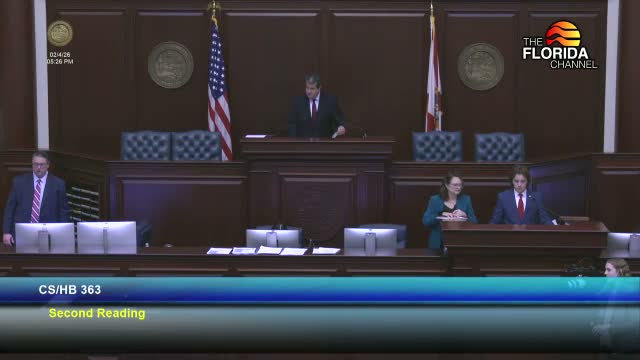
The Florida House voted to pass CS for HB 363 on Feb. 4, a bill that creates a licensed dental‑therapy profession intended to expand access to basic dental care in underserved areas.
Representative Cheney, sponsor of the measure, said dental therapy would create a mid‑level provider regulated by the Florida Department of Health and the Board of Dentistry. He cited a shortage of dentists, saying 66 of Florida’s 67 counties are federally designated health‑professional shortage areas and that dental therapy programs and colleges in the state are ready to train providers.
Opponents urged caution. Representative Campbell described dental procedures as delicate and warned that extractions, restorations and anesthesia carry risks; she urged alternatives such as expanded loan repayment, higher Medicaid rates and residency support for dentists. Representative Tantt and others echoed safety concerns about anesthesia, malignant hyperthermia and whether newly trained therapists would be prepared for complications.
Supporters noted program safeguards cited in the bill analysis: dental therapists would be licensed by the same board that oversees dentists; training standards and curricular recognition were described as extensive in the legislative analysis. Sponsor Cheney said dental therapists would not provide sedation beyond local anesthesia and that the legislation included reporting requirements and a progress report to the Legislature by July 2029.
After structured debate and a motion to waive rules for third reading, the clerk reported a recorded vote of 80 yeas and 29 nays; the House showed the bill passed.
The bill includes licensing standards, an optional collaborative agreement with a dentist, and a reporting requirement to evaluate implementation. Advocates said the measure will reduce emergency‑room dental visits and hospital admissions for dental infections; critics said the Legislature should instead invest in training and incentives to increase the dentist workforce.
Representative Cheney, sponsor of the measure, said dental therapy would create a mid‑level provider regulated by the Florida Department of Health and the Board of Dentistry. He cited a shortage of dentists, saying 66 of Florida’s 67 counties are federally designated health‑professional shortage areas and that dental therapy programs and colleges in the state are ready to train providers.
Opponents urged caution. Representative Campbell described dental procedures as delicate and warned that extractions, restorations and anesthesia carry risks; she urged alternatives such as expanded loan repayment, higher Medicaid rates and residency support for dentists. Representative Tantt and others echoed safety concerns about anesthesia, malignant hyperthermia and whether newly trained therapists would be prepared for complications.
Supporters noted program safeguards cited in the bill analysis: dental therapists would be licensed by the same board that oversees dentists; training standards and curricular recognition were described as extensive in the legislative analysis. Sponsor Cheney said dental therapists would not provide sedation beyond local anesthesia and that the legislation included reporting requirements and a progress report to the Legislature by July 2029.
After structured debate and a motion to waive rules for third reading, the clerk reported a recorded vote of 80 yeas and 29 nays; the House showed the bill passed.
The bill includes licensing standards, an optional collaborative agreement with a dentist, and a reporting requirement to evaluate implementation. Advocates said the measure will reduce emergency‑room dental visits and hospital admissions for dental infections; critics said the Legislature should instead invest in training and incentives to increase the dentist workforce.
View the Full Meeting & All Its Details
This article offers just a summary. Unlock complete video, transcripts, and insights as a Founder Member.
✓
Watch full, unedited meeting videos
✓
Search every word spoken in unlimited transcripts
✓
AI summaries & real-time alerts (all government levels)
✓
Permanent access to expanding government content
30-day money-back guarantee
