Committee advances emergency funding for assigned counsel, approves amended bill to address PDS shortfall
February 04, 2026 | 2026 Legislature ME, Maine
This article was created by AI summarizing key points discussed. AI makes mistakes, so for full details and context, please refer to the video of the full meeting. Please report any errors so we can fix them. Report an error »
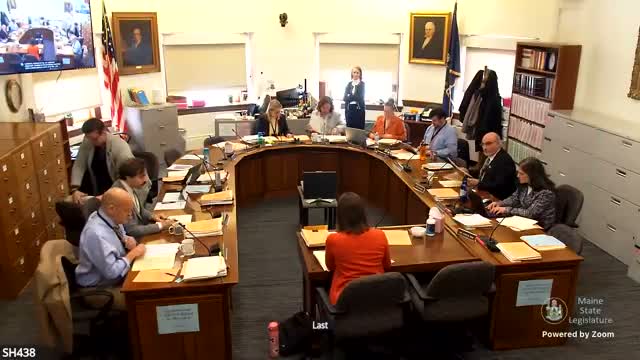
The Judiciary Committee on Thursday voted 7–4 to report LD 2059 "ought to pass as amended," retaining one‑time emergency funding to reimburse assigned (contract) counsel for work already performed and removing provisions for creating specific Cumberland County public defender positions.
Representative Rachel Henderson, sponsor of a yellow amendment, said the amendment preserves emergency funding while proposing to reclassify certain public defender staff from classified to unclassified state employment. "What this amendment does is it attempts to address that, to shift them from classified positions to unclassified position under the definition of state employee," Henderson told the committee.
Members who opposed the amendment said the classification change had not been publicly noticed in connection with this bill and that staff should have an opportunity to weigh in. Senator Carney and others argued the urgent funding request — to pay assigned counsel invoices submitted as of April 1 — justified narrowing the bill to the immediate fiscal need. "This emergency funding would simply fill in the gaps that we created in prior decisions of this legislature that have led to an inability to pay the assigned counsel at this time," the chair said.
Representative Lee and others warned against combining a major labor classification change with an emergency funding bill because of potential collateral effects on assigned counsel availability. Representative Poirier and others emphasized the urgent necessity to pay private-appointed counsel who have provided services and face delayed payments.
The committee adopted an "ought to pass as amended" report by recorded vote: 7 in favor, 4 opposed and 3 absent. The amendment keeps one‑time emergency funding (identified in testimony as approximately $13,000,000 for one year and $9,000,000 for the next) for assigned counsel while removing provisions for certain new Cumberland County positions.
What’s next: Staff will prepare amended bill text and members may register votes before the deadline; the committee’s action advances funding to address unpaid assigned counsel invoices.
Representative Rachel Henderson, sponsor of a yellow amendment, said the amendment preserves emergency funding while proposing to reclassify certain public defender staff from classified to unclassified state employment. "What this amendment does is it attempts to address that, to shift them from classified positions to unclassified position under the definition of state employee," Henderson told the committee.
Members who opposed the amendment said the classification change had not been publicly noticed in connection with this bill and that staff should have an opportunity to weigh in. Senator Carney and others argued the urgent funding request — to pay assigned counsel invoices submitted as of April 1 — justified narrowing the bill to the immediate fiscal need. "This emergency funding would simply fill in the gaps that we created in prior decisions of this legislature that have led to an inability to pay the assigned counsel at this time," the chair said.
Representative Lee and others warned against combining a major labor classification change with an emergency funding bill because of potential collateral effects on assigned counsel availability. Representative Poirier and others emphasized the urgent necessity to pay private-appointed counsel who have provided services and face delayed payments.
The committee adopted an "ought to pass as amended" report by recorded vote: 7 in favor, 4 opposed and 3 absent. The amendment keeps one‑time emergency funding (identified in testimony as approximately $13,000,000 for one year and $9,000,000 for the next) for assigned counsel while removing provisions for certain new Cumberland County positions.
What’s next: Staff will prepare amended bill text and members may register votes before the deadline; the committee’s action advances funding to address unpaid assigned counsel invoices.
View the Full Meeting & All Its Details
This article offers just a summary. Unlock complete video, transcripts, and insights as a Founder Member.
✓
Watch full, unedited meeting videos
✓
Search every word spoken in unlimited transcripts
✓
AI summaries & real-time alerts (all government levels)
✓
Permanent access to expanding government content
30-day money-back guarantee
