Fairfax County’s Ready Fairfax to launch COAD, recruit nonprofits and volunteers ahead of disasters
February 05, 2026 | Fairfax County, Virginia
This article was created by AI summarizing key points discussed. AI makes mistakes, so for full details and context, please refer to the video of the full meeting. Please report any errors so we can fix them. Report an error »
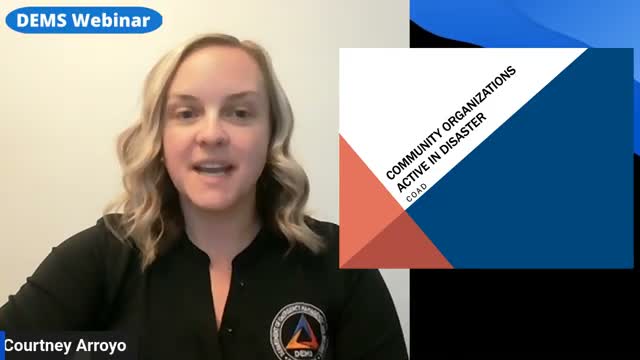
A Ready Fairfax presenter announced on a February webinar that Fairfax County will launch a Community Organizations Active in Disaster (COAD) initiative to pre-identify local nonprofits, community-based organizations, houses of worship and businesses that could assist during emergencies.
“Ready Fairfax is our preparedness program,” the presenter said, adding that the county will begin outreach to organizations that can provide services such as feeding, debris removal, donations distribution or case management. “We are going to be launching, a COAD, which is community organizations active in disaster,” the presenter said, describing the effort as a way to build relationships “before disaster happens.”
The county plans to build the COAD through a four-step, geographically focused process: map where organizations and offices are located and which neighborhoods they serve; catalog services provided; identify populations served (including limited-English and culturally specific communities); and assess each organization’s realistic capacity and resources. The presenter asked interested organizations to sign up through the county’s volunteer management system and complete a follow-up survey that will collect the mapping and capacity details.
The webinar also described volunteer options for individuals and groups. The Fairfax County Volunteer Emergency Team (VET) was presented as a low-commitment roster that requires an application and yields a welcome email with details on potential deployment. VET leaders — volunteers who take additional training and administrative duties — were described as personnel who could staff and run volunteer reception centers for spontaneous or unaffiliated volunteers during incidents.
The presenter urged residents and organizations to use county tools that support emergency response. Recommendations included signing up for Fairfax Alerts for emergency, weather and transportation notifications; creating a Community Connect profile (address-based information that is available to first responders dispatched to an address); and completing an emergency health profile so dispatchers have health and mental-health information when a 911 or non-emergency call is placed.
The presenter used a recent snowstorm in the region as an example of local needs — such as requests for shoveling — and said the county had used Community Connect to message residents who indicated a disability or access and functional need before the storm. The webinar closed with a reminder to follow Ready Fairfax on social media and to join a March 4 webinar that will cover the Volunteer Emergency Team in more depth.
The county did not announce specific COAD partners, exact scout-day dates beyond “one in February and one in March,” or an exact date for the in-person COAD meeting beyond “later this year.” Those details, the presenter said, will be provided to organizations that register through the volunteer management system.
“Ready Fairfax is our preparedness program,” the presenter said, adding that the county will begin outreach to organizations that can provide services such as feeding, debris removal, donations distribution or case management. “We are going to be launching, a COAD, which is community organizations active in disaster,” the presenter said, describing the effort as a way to build relationships “before disaster happens.”
The county plans to build the COAD through a four-step, geographically focused process: map where organizations and offices are located and which neighborhoods they serve; catalog services provided; identify populations served (including limited-English and culturally specific communities); and assess each organization’s realistic capacity and resources. The presenter asked interested organizations to sign up through the county’s volunteer management system and complete a follow-up survey that will collect the mapping and capacity details.
The webinar also described volunteer options for individuals and groups. The Fairfax County Volunteer Emergency Team (VET) was presented as a low-commitment roster that requires an application and yields a welcome email with details on potential deployment. VET leaders — volunteers who take additional training and administrative duties — were described as personnel who could staff and run volunteer reception centers for spontaneous or unaffiliated volunteers during incidents.
The presenter urged residents and organizations to use county tools that support emergency response. Recommendations included signing up for Fairfax Alerts for emergency, weather and transportation notifications; creating a Community Connect profile (address-based information that is available to first responders dispatched to an address); and completing an emergency health profile so dispatchers have health and mental-health information when a 911 or non-emergency call is placed.
The presenter used a recent snowstorm in the region as an example of local needs — such as requests for shoveling — and said the county had used Community Connect to message residents who indicated a disability or access and functional need before the storm. The webinar closed with a reminder to follow Ready Fairfax on social media and to join a March 4 webinar that will cover the Volunteer Emergency Team in more depth.
The county did not announce specific COAD partners, exact scout-day dates beyond “one in February and one in March,” or an exact date for the in-person COAD meeting beyond “later this year.” Those details, the presenter said, will be provided to organizations that register through the volunteer management system.
Don't Miss a Word: See the Full Meeting!
Go beyond summaries. Unlock every video, transcript, and key insight with a Founder Membership.
✓
Get instant access to full meeting videos
✓
Search and clip any phrase from complete transcripts
✓
Receive AI-powered summaries & custom alerts
✓
Enjoy lifetime, unrestricted access to government data
30-day money-back guarantee
