Developer and engineers present sewer feasibility for Anderson Villas; board asks for refinements
February 03, 2026 | St. Joseph County, Indiana
This article was created by AI summarizing key points discussed. AI makes mistakes, so for full details and context, please refer to the video of the full meeting. Please report any errors so we can fix them. Report an error »
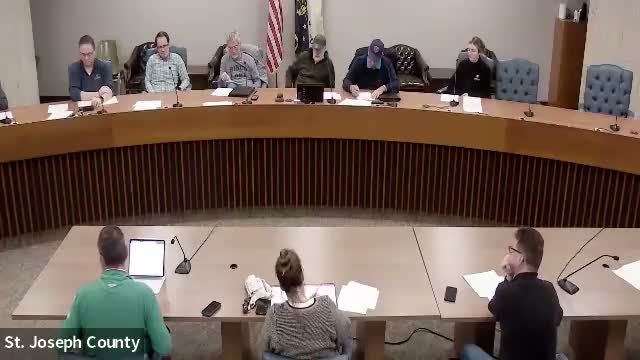
Tim Sailor, a development consultant for the property owner, told the Saint Joe Water and Sewer District on the Anderson Villas site and its sewer needs, saying the project is now expected to deliver about 100 housing units phased over five years and that the parcel’s floodplain exclusions reduced the previously planned unit count.
The developer described the product as “empty‑nester” villa homes on roughly 6,000‑square‑foot lots (about four units per acre) and said the site’s high seasonal groundwater makes conventional septic or mound systems impractical. “Unless we can get the total cost for the sewer down significantly, the project just isn’t viable from the get go,” Sailor said.
Board members and JPR engineers focused on several technical and contractual constraints. JPR said the feasibility draft uses a design flow value of 210 per EDU because that is the number specified in the executed donation agreement for the area, although the firm and the board have used 150 in recent practice. JPR also noted average measured flows in the Granger subdistrict that are substantially lower than the design number and asked the board to confirm which value the district will apply for planning.
Members raised questions about whether the parcel lies inside the Granger service area and whether the project can tie into an existing 3‑inch gravity line rather than constructing a long new force main. One board member said routing flow into the existing 3‑inch line would be preferable for long‑term operation and could reduce upfront reimbursement obligations tied to the donor of the Hills infrastructure.
The board also discussed right‑of‑way constraints, potential pretreatment requirements by Mishawaka if flows go to that city, and the practical differences between a developer‑built gravity system donated to the district and a low‑pressure grinder network that the district must operate and maintain. JPR cautioned that some capacity ceilings exist in interlocal or contract arrangements and that a future treatment upgrade may be needed if growth exceeds those ceilings.
Next steps: JPR agreed to return next month with a refined feasibility report that incorporates the board’s requested clarifications — including a revised flow estimate after the developer reduced the unit count, a count of customers on the 3‑inch line for capacity analysis, and installer cost opinions to test whether a gravity solution or alternate approaches can make the pro forma feasible. Sailor said the developer hopes to begin initial work in the fall or fourth quarter of the year, subject to financing and permitting.
The developer described the product as “empty‑nester” villa homes on roughly 6,000‑square‑foot lots (about four units per acre) and said the site’s high seasonal groundwater makes conventional septic or mound systems impractical. “Unless we can get the total cost for the sewer down significantly, the project just isn’t viable from the get go,” Sailor said.
Board members and JPR engineers focused on several technical and contractual constraints. JPR said the feasibility draft uses a design flow value of 210 per EDU because that is the number specified in the executed donation agreement for the area, although the firm and the board have used 150 in recent practice. JPR also noted average measured flows in the Granger subdistrict that are substantially lower than the design number and asked the board to confirm which value the district will apply for planning.
Members raised questions about whether the parcel lies inside the Granger service area and whether the project can tie into an existing 3‑inch gravity line rather than constructing a long new force main. One board member said routing flow into the existing 3‑inch line would be preferable for long‑term operation and could reduce upfront reimbursement obligations tied to the donor of the Hills infrastructure.
The board also discussed right‑of‑way constraints, potential pretreatment requirements by Mishawaka if flows go to that city, and the practical differences between a developer‑built gravity system donated to the district and a low‑pressure grinder network that the district must operate and maintain. JPR cautioned that some capacity ceilings exist in interlocal or contract arrangements and that a future treatment upgrade may be needed if growth exceeds those ceilings.
Next steps: JPR agreed to return next month with a refined feasibility report that incorporates the board’s requested clarifications — including a revised flow estimate after the developer reduced the unit count, a count of customers on the 3‑inch line for capacity analysis, and installer cost opinions to test whether a gravity solution or alternate approaches can make the pro forma feasible. Sailor said the developer hopes to begin initial work in the fall or fourth quarter of the year, subject to financing and permitting.
Don't Miss a Word: See the Full Meeting!
Go beyond summaries. Unlock every video, transcript, and key insight with a Founder Membership.
✓
Get instant access to full meeting videos
✓
Search and clip any phrase from complete transcripts
✓
Receive AI-powered summaries & custom alerts
✓
Enjoy lifetime, unrestricted access to government data
30-day money-back guarantee
