Appropriations committee advances H.611 altering Medicaid reporting, raising funeral‑account limit and delaying doula coverage
February 04, 2026 | Appropriations, HOUSE OF REPRESENTATIVES, Committees, Legislative , Vermont
This article was created by AI summarizing key points discussed. AI makes mistakes, so for full details and context, please refer to the video of the full meeting. Please report any errors so we can fix them. Report an error »
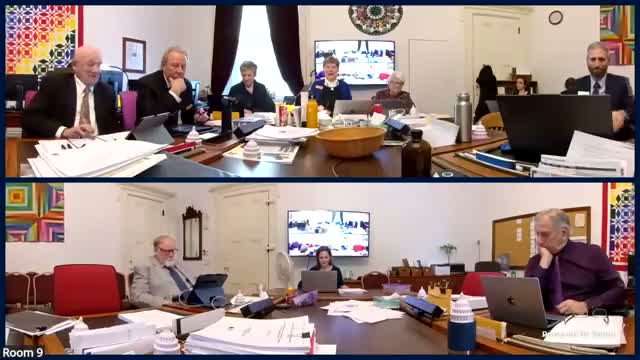
At a meeting of the House Appropriations Committee on Feb. 3, members voted to report H.611, a miscellaneous bill affecting the Department of Vermont Health Access (DVHA) that lawmakers described as largely housekeeping.
“For the record, Jen Kirby from the Office of Legislative Counsel,” said the bill’s introducer, and added, “This is H.611 as recommended by the House Healthcare Committee.” Kirby told the committee the measure contains several discrete changes, including striking Medicaid from a state prescription‑drug transparency reporting requirement and adjusting rules tied to the 340B/covered‑entity protections that have generated litigation in other states.
Kirby said including Medicaid in the prescription‑pricing reports had not produced useful information for the attorney general’s investigations and had been difficult to implement. She explained that Section 2 would remove the contested 340B‑related provision from state law following court challenges in other jurisdictions and a preliminary injunction in Vermont that currently prevents enforcement.
The bill also makes technical and membership clarifications to the combined Medicaid and Exchange Advisory Committee and updates the Clinical Utilization Review Board’s statutes so the existing 10‑member size is a minimum rather than a hard cap.
A notable policy change in Section 7 would, subject to Centers for Medicare & Medicaid Services approval, allow Medicaid applicants and recipients to place up to $15,000 (previously $10,000) in an irrevocable prepaid funeral contract without that amount counting against program eligibility. Kirby said the bill would also require prepaid‑funeral contracts to include language preserving Vermont Medicaid’s right to estate recovery on unused balances up to the total Medicaid amount paid on a person’s behalf.
Members questioned whether the higher limit would move people onto Medicaid earlier (by letting them shield more assets in a prepaid burial account) and whether the state would ultimately recoup more through estate recovery. Committee discussion concluded the net fiscal effect was uncertain and likely de minimis. As Kirby summarized: the accounts use applicants’ private funds, not Medicaid payments, and any leftover funds could still be subject to estate recovery.
Sections 8 and 9 shift the deadline for DVHA to seek a state plan amendment to cover doula services from July 1, 2026, to July 1, 2027, meaning any Medicaid coverage for doulas would take effect no earlier than July 1, 2027, or the later date of CMS approval. Kirby said the delay makes it difficult to quantify immediate fiscal impact but would move any budget effects from fiscal 2027 to fiscal 2028 if CMS approval followed the later timeline.
After brief discussion characterizing the bill as noncontroversial, the chair asked for a motion to approve H.611 as recommended by the House Healthcare Committee. Representative Dave moved to approve the bill and Representative McWane seconded the motion. The clerk called the roll; a majority recorded affirmative votes and some members were recorded absent or out. The committee agreed to report the bill and Representative Dave was named the bill reporter.
The committee chair told members to forward materials to the calendar clerk; the bill was expected to appear on the House floor later in the week (Thursday or Friday).
The committee closed the item and previewed the next day’s schedule, including a visit from the University of Vermont president and DVHA at 9:30 a.m.
What’s next: H.611 was reported out of the Appropriations Committee and is expected to be placed on the House calendar for consideration on the floor this week. Any changes made on the floor or further fiscal analyses will be recorded in subsequent legislative minutes and fiscal notes.
“For the record, Jen Kirby from the Office of Legislative Counsel,” said the bill’s introducer, and added, “This is H.611 as recommended by the House Healthcare Committee.” Kirby told the committee the measure contains several discrete changes, including striking Medicaid from a state prescription‑drug transparency reporting requirement and adjusting rules tied to the 340B/covered‑entity protections that have generated litigation in other states.
Kirby said including Medicaid in the prescription‑pricing reports had not produced useful information for the attorney general’s investigations and had been difficult to implement. She explained that Section 2 would remove the contested 340B‑related provision from state law following court challenges in other jurisdictions and a preliminary injunction in Vermont that currently prevents enforcement.
The bill also makes technical and membership clarifications to the combined Medicaid and Exchange Advisory Committee and updates the Clinical Utilization Review Board’s statutes so the existing 10‑member size is a minimum rather than a hard cap.
A notable policy change in Section 7 would, subject to Centers for Medicare & Medicaid Services approval, allow Medicaid applicants and recipients to place up to $15,000 (previously $10,000) in an irrevocable prepaid funeral contract without that amount counting against program eligibility. Kirby said the bill would also require prepaid‑funeral contracts to include language preserving Vermont Medicaid’s right to estate recovery on unused balances up to the total Medicaid amount paid on a person’s behalf.
Members questioned whether the higher limit would move people onto Medicaid earlier (by letting them shield more assets in a prepaid burial account) and whether the state would ultimately recoup more through estate recovery. Committee discussion concluded the net fiscal effect was uncertain and likely de minimis. As Kirby summarized: the accounts use applicants’ private funds, not Medicaid payments, and any leftover funds could still be subject to estate recovery.
Sections 8 and 9 shift the deadline for DVHA to seek a state plan amendment to cover doula services from July 1, 2026, to July 1, 2027, meaning any Medicaid coverage for doulas would take effect no earlier than July 1, 2027, or the later date of CMS approval. Kirby said the delay makes it difficult to quantify immediate fiscal impact but would move any budget effects from fiscal 2027 to fiscal 2028 if CMS approval followed the later timeline.
After brief discussion characterizing the bill as noncontroversial, the chair asked for a motion to approve H.611 as recommended by the House Healthcare Committee. Representative Dave moved to approve the bill and Representative McWane seconded the motion. The clerk called the roll; a majority recorded affirmative votes and some members were recorded absent or out. The committee agreed to report the bill and Representative Dave was named the bill reporter.
The committee chair told members to forward materials to the calendar clerk; the bill was expected to appear on the House floor later in the week (Thursday or Friday).
The committee closed the item and previewed the next day’s schedule, including a visit from the University of Vermont president and DVHA at 9:30 a.m.
What’s next: H.611 was reported out of the Appropriations Committee and is expected to be placed on the House calendar for consideration on the floor this week. Any changes made on the floor or further fiscal analyses will be recorded in subsequent legislative minutes and fiscal notes.
Don't Miss a Word: See the Full Meeting!
Go beyond summaries. Unlock every video, transcript, and key insight with a Founder Membership.
✓
Get instant access to full meeting videos
✓
Search and clip any phrase from complete transcripts
✓
Receive AI-powered summaries & custom alerts
✓
Enjoy lifetime, unrestricted access to government data
30-day money-back guarantee
