Lawmakers press judiciary on transport costs and limits of remote hearings
February 04, 2026 | Appropriations, HOUSE OF REPRESENTATIVES, Committees, Legislative , Vermont
This article was created by AI summarizing key points discussed. AI makes mistakes, so for full details and context, please refer to the video of the full meeting. Please report any errors so we can fix them. Report an error »
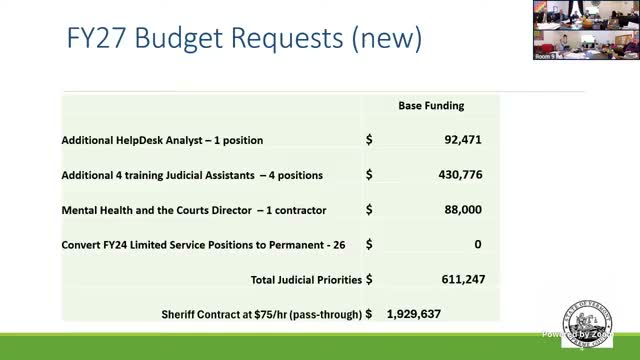
Legislators pressed the judiciary on Feb. 3 about rising transport costs and whether expanded use of remote hearings could reduce spending and the burden on sheriff transports.
State Court Administrator Terry Corson said judges ultimately have discretion to order remote hearings but noted either party may request an in-person hearing. "Ultimately the judge has discretion as to whether the hearing will be that or not," Corson said, adding that certain critical proceedings — such as presenting evidence or confronting witnesses — are generally considered integral to in-person appearances.
Committee members raised the example of lengthy transports that require two deputies and overnight stays for long-distance transfers. Corson described efforts to reduce waiting times for transported inmates through scheduling protocols developed with trial-court operations staff and presiding judges; she said the Chittenden accountability-court pilot showed benefits when local transports and provider presence reduced case delays.
Corson said the judiciary supports transport resources where necessary to preserve in-person hearings and due process, and described administrative steps to improve efficiency so transport officers are not left waiting for long periods.
The committee requested additional information on transport volumes and scheduling outcomes to assess whether additional investments in transport or remote-hearing infrastructure would be more cost-effective. No votes were taken at the hearing.
State Court Administrator Terry Corson said judges ultimately have discretion to order remote hearings but noted either party may request an in-person hearing. "Ultimately the judge has discretion as to whether the hearing will be that or not," Corson said, adding that certain critical proceedings — such as presenting evidence or confronting witnesses — are generally considered integral to in-person appearances.
Committee members raised the example of lengthy transports that require two deputies and overnight stays for long-distance transfers. Corson described efforts to reduce waiting times for transported inmates through scheduling protocols developed with trial-court operations staff and presiding judges; she said the Chittenden accountability-court pilot showed benefits when local transports and provider presence reduced case delays.
Corson said the judiciary supports transport resources where necessary to preserve in-person hearings and due process, and described administrative steps to improve efficiency so transport officers are not left waiting for long periods.
The committee requested additional information on transport volumes and scheduling outcomes to assess whether additional investments in transport or remote-hearing infrastructure would be more cost-effective. No votes were taken at the hearing.
Don't Miss a Word: See the Full Meeting!
Go beyond summaries. Unlock every video, transcript, and key insight with a Founder Membership.
✓
Get instant access to full meeting videos
✓
Search and clip any phrase from complete transcripts
✓
Receive AI-powered summaries & custom alerts
✓
Enjoy lifetime, unrestricted access to government data
30-day money-back guarantee
