Criminal Justice Council asks Appropriations for language-access funds and curriculum completion money
February 04, 2026 | Appropriations, HOUSE OF REPRESENTATIVES, Committees, Legislative , Vermont
This article was created by AI summarizing key points discussed. AI makes mistakes, so for full details and context, please refer to the video of the full meeting. Please report any errors so we can fix them. Report an error »
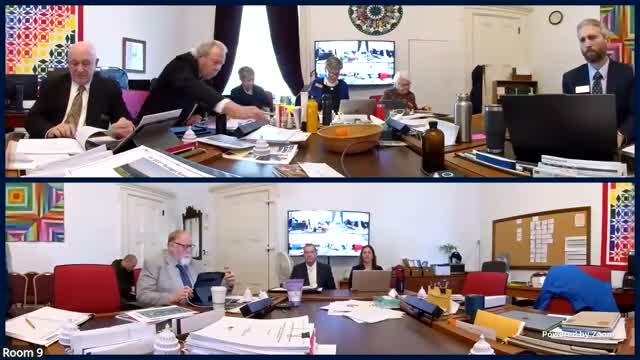
Christopher Bridal, executive director of the Criminal Justice Council, told the House Appropriations Committee on Feb. 3 that the council’s FY2027 budget includes modest general-fund growth and several targeted requests to complete ongoing training and outreach work.
Bridal said the council’s general-fund request shows a relatively small increase (noted in committee material as about $71,443) and that the IDT fund is showing a larger increase (stated as $43,527,411). He asked the committee to consider two specific near-term items: a one-time $30,000 appropriation for language-access services and a budget adjustment of approximately $3,300,000 to complete the council’s curriculum update.
The language-access request is intended to fund translation of statewide policies and documents so non-English-speaking communities and people using American Sign Language can read or view key law-enforcement policies. “We translated our fair and impartial policing policy and our statement to communities to 13 languages in an ASL video,” Bridal said, adding the one-time $30,000 would extend that work to other mandated policies. Bridal said the Office of Racial Equity had helped secure vendors and pricing previously but that the council could not rely on that assistance as a recurring resource.
Bridal described the curriculum effort as a multi-topic rewrite: the council has updated more than 21 topics and over 220 hours of content and seeks the budget adjustment to finish the work. He told the committee the $3.3 million line is intended to complete that curriculum effort; the Chair noted the adjustment appears separately in the committee’s packet.
Beyond funding requests, Bridal outlined program activity and future pressures. He said the council operates with 16 staff (two exempt, 14 classified) and reported vacancy-savings rates of 10.7% for 2025 and 12.5% so far this fiscal year; the council currently listed two open positions and said one was recently filled. Bridal warned that the council relies heavily on volunteer instructors from employing agencies and that many initiatives are currently unfunded at the staff level.
On training, Bridal gave a per-student cost of $6,700 and described a recent basic recruit class that began with about 54 registered applicants at orientation and declined to approximately 43 after early attrition and resignations. He said the council has put greater emphasis on pre-orientation and scenario-based ‘‘stress inoculation’’ to reduce wasted employer training costs and attrition.
Bridal reported certification and oversight statistics: he said there are 1,070 level‑3 certified officers and 456 level‑2 officers in the system, and that the council has 74 active complaints of unprofessional conduct (which Bridal emphasized are intake figures, not a count of sustained charges). He also described governance and system improvements: adoption of a written entrance test option, an RMS scheduling and records system, and a review of professional-regulation procedures.
The council has broadened training and outreach, Bridal said, citing a women’s leadership institute, a naturalization ceremony with federal partners, career-fair participation, a fair-and-impartial-policing (FIP) instructor hire and mandatory FIP training that includes neurodivergence modules. He said the council has translated FIP materials into 14 languages and maintained a wellness contract with O2X to reduce recruit injuries and workers’-compensation costs.
Bridal flagged two policy and cost issues the committee may see later: (1) canine standards and certification — he said there is currently no statewide statutory certification requirement for police canines and emphasized the importance of getting training and standards right; and (2) changes to the complaint process that now require additional hearings or stipulated agreements for some categories of offenses, which Bridal warned will raise legal and hearing costs.
On de-escalation training, Bridal said the council was awarded a grant to develop curriculum but cannot accept it yet pending state approval of the council’s grant-acceptance status. He also said the council prefers competency-based measures of de-escalation skill instead of an hourly mandate in pending legislation, arguing hourly mandates would increase costs and extend academy time. “We push back against mandated hourly requirement because we want to be able to make sure that we're showing competency-based learning objectives,” Bridal said.
Committee members asked questions about cost timing and oversight. A member identified as Mike asked whether a mental-health training bill would increase costs; Bridal answered that mandates tied to hours rather than competency would raise expenses and offered to participate in drafting discussions. Another member, Jim, asked whether the pressures are immediate budget-adjustment items or future-year requests; Bridal said some items are preparation for future needs and some will require budget adjustments while other activities remain unfunded and supported by volunteer agency contributions.
The committee thanked the council and said follow-up questions would be routed through council staff; Bridal said he would confirm with finance whether the $30,000 language-access item appears as a one-time item in the governor’s budget. The committee then moved on to scheduled appearances by the Attorney General’s Office.
Notes on ambiguous transcript details: the transcript contains a few inconsistent or unclear numeric references (for example a line transcribed as “27 5 44” when discussing meals); where numbers were unclear in the record this article states the facts as the presenter described them and, where necessary, notes that the transcript wording was ambiguous or that a figure was described as an intake/estimate rather than a finalized count.
Next steps: the council requested committee follow-up on the two funding items and offered further technical briefings on competency-based training if the committee wishes to consult while legislation is considered.
Bridal said the council’s general-fund request shows a relatively small increase (noted in committee material as about $71,443) and that the IDT fund is showing a larger increase (stated as $43,527,411). He asked the committee to consider two specific near-term items: a one-time $30,000 appropriation for language-access services and a budget adjustment of approximately $3,300,000 to complete the council’s curriculum update.
The language-access request is intended to fund translation of statewide policies and documents so non-English-speaking communities and people using American Sign Language can read or view key law-enforcement policies. “We translated our fair and impartial policing policy and our statement to communities to 13 languages in an ASL video,” Bridal said, adding the one-time $30,000 would extend that work to other mandated policies. Bridal said the Office of Racial Equity had helped secure vendors and pricing previously but that the council could not rely on that assistance as a recurring resource.
Bridal described the curriculum effort as a multi-topic rewrite: the council has updated more than 21 topics and over 220 hours of content and seeks the budget adjustment to finish the work. He told the committee the $3.3 million line is intended to complete that curriculum effort; the Chair noted the adjustment appears separately in the committee’s packet.
Beyond funding requests, Bridal outlined program activity and future pressures. He said the council operates with 16 staff (two exempt, 14 classified) and reported vacancy-savings rates of 10.7% for 2025 and 12.5% so far this fiscal year; the council currently listed two open positions and said one was recently filled. Bridal warned that the council relies heavily on volunteer instructors from employing agencies and that many initiatives are currently unfunded at the staff level.
On training, Bridal gave a per-student cost of $6,700 and described a recent basic recruit class that began with about 54 registered applicants at orientation and declined to approximately 43 after early attrition and resignations. He said the council has put greater emphasis on pre-orientation and scenario-based ‘‘stress inoculation’’ to reduce wasted employer training costs and attrition.
Bridal reported certification and oversight statistics: he said there are 1,070 level‑3 certified officers and 456 level‑2 officers in the system, and that the council has 74 active complaints of unprofessional conduct (which Bridal emphasized are intake figures, not a count of sustained charges). He also described governance and system improvements: adoption of a written entrance test option, an RMS scheduling and records system, and a review of professional-regulation procedures.
The council has broadened training and outreach, Bridal said, citing a women’s leadership institute, a naturalization ceremony with federal partners, career-fair participation, a fair-and-impartial-policing (FIP) instructor hire and mandatory FIP training that includes neurodivergence modules. He said the council has translated FIP materials into 14 languages and maintained a wellness contract with O2X to reduce recruit injuries and workers’-compensation costs.
Bridal flagged two policy and cost issues the committee may see later: (1) canine standards and certification — he said there is currently no statewide statutory certification requirement for police canines and emphasized the importance of getting training and standards right; and (2) changes to the complaint process that now require additional hearings or stipulated agreements for some categories of offenses, which Bridal warned will raise legal and hearing costs.
On de-escalation training, Bridal said the council was awarded a grant to develop curriculum but cannot accept it yet pending state approval of the council’s grant-acceptance status. He also said the council prefers competency-based measures of de-escalation skill instead of an hourly mandate in pending legislation, arguing hourly mandates would increase costs and extend academy time. “We push back against mandated hourly requirement because we want to be able to make sure that we're showing competency-based learning objectives,” Bridal said.
Committee members asked questions about cost timing and oversight. A member identified as Mike asked whether a mental-health training bill would increase costs; Bridal answered that mandates tied to hours rather than competency would raise expenses and offered to participate in drafting discussions. Another member, Jim, asked whether the pressures are immediate budget-adjustment items or future-year requests; Bridal said some items are preparation for future needs and some will require budget adjustments while other activities remain unfunded and supported by volunteer agency contributions.
The committee thanked the council and said follow-up questions would be routed through council staff; Bridal said he would confirm with finance whether the $30,000 language-access item appears as a one-time item in the governor’s budget. The committee then moved on to scheduled appearances by the Attorney General’s Office.
Notes on ambiguous transcript details: the transcript contains a few inconsistent or unclear numeric references (for example a line transcribed as “27 5 44” when discussing meals); where numbers were unclear in the record this article states the facts as the presenter described them and, where necessary, notes that the transcript wording was ambiguous or that a figure was described as an intake/estimate rather than a finalized count.
Next steps: the council requested committee follow-up on the two funding items and offered further technical briefings on competency-based training if the committee wishes to consult while legislation is considered.
View the Full Meeting & All Its Details
This article offers just a summary. Unlock complete video, transcripts, and insights as a Founder Member.
✓
Watch full, unedited meeting videos
✓
Search every word spoken in unlimited transcripts
✓
AI summaries & real-time alerts (all government levels)
✓
Permanent access to expanding government content
30-day money-back guarantee
