Experts urge narrowly tailored safe harbors to curb defensive medicine and unnecessary imaging
February 04, 2026 | 2026 Legislature TN, Tennessee
This article was created by AI summarizing key points discussed. AI makes mistakes, so for full details and context, please refer to the video of the full meeting. Please report any errors so we can fix them. Report an error »
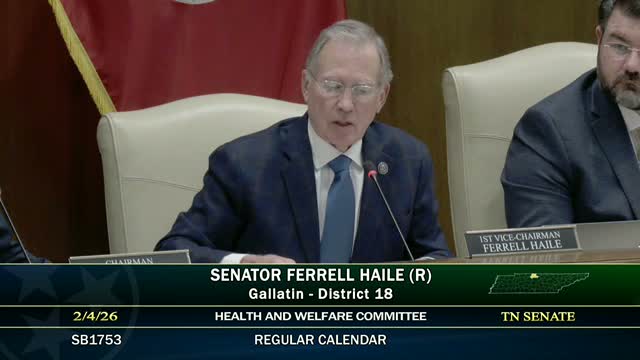
Two Vanderbilt experts urged the committee to consider narrowly defined statutory safe harbors for specific clinical circumstances to reduce defensive medicine and unnecessary imaging.
Jim Blumstein, a Vanderbilt law and health-policy professor, said federally funded research and clinical panels concluded that uncertainty about legally enforceable standards drives physicians to overuse tests and procedures. "No wonder then that faced with the ever increasing prospect of legal action, doctors are incentivized to go overboard in treating patients," Blumstein said, and cited the Dartmouth Atlas and the Choosing Wisely campaign as evidence of wide practice variation.
Dr. Alan Storrow, an emergency-medicine physician at Vanderbilt, said the emergency department is particularly prone to over-imaging because clinicians often lack detailed prior records and face time pressure: "We way over order films and it seemed to fit very the best into the emergency care space," he said, and argued modest reductions in imaging for carefully selected conditions could lower radiation exposure for patients.
Blumstein described the teams work to identify three initial candidate conditions — lower back pain, headache, and mild head injury — and argued safe harbors must be "prescriptive and precise" and available only where clinical consensus exists. He proposed leveraging Quality Improvement Organizations (QIOs) to adopt standards and suggested legislation to require QIOs that do business in Tennessee to exercise standards-setting authority for narrowly targeted safe harbors.
Both witnesses said safe harbors would not eliminate patients' ability to seek damages where negligence is shown but would provide clinicians with advance certainty about acceptable care in clearly defined situations. The witnesses offered to provide drafts and further detail to staff as the committee considers legislative pathways.
Jim Blumstein, a Vanderbilt law and health-policy professor, said federally funded research and clinical panels concluded that uncertainty about legally enforceable standards drives physicians to overuse tests and procedures. "No wonder then that faced with the ever increasing prospect of legal action, doctors are incentivized to go overboard in treating patients," Blumstein said, and cited the Dartmouth Atlas and the Choosing Wisely campaign as evidence of wide practice variation.
Dr. Alan Storrow, an emergency-medicine physician at Vanderbilt, said the emergency department is particularly prone to over-imaging because clinicians often lack detailed prior records and face time pressure: "We way over order films and it seemed to fit very the best into the emergency care space," he said, and argued modest reductions in imaging for carefully selected conditions could lower radiation exposure for patients.
Blumstein described the teams work to identify three initial candidate conditions — lower back pain, headache, and mild head injury — and argued safe harbors must be "prescriptive and precise" and available only where clinical consensus exists. He proposed leveraging Quality Improvement Organizations (QIOs) to adopt standards and suggested legislation to require QIOs that do business in Tennessee to exercise standards-setting authority for narrowly targeted safe harbors.
Both witnesses said safe harbors would not eliminate patients' ability to seek damages where negligence is shown but would provide clinicians with advance certainty about acceptable care in clearly defined situations. The witnesses offered to provide drafts and further detail to staff as the committee considers legislative pathways.
View the Full Meeting & All Its Details
This article offers just a summary. Unlock complete video, transcripts, and insights as a Founder Member.
✓
Watch full, unedited meeting videos
✓
Search every word spoken in unlimited transcripts
✓
AI summaries & real-time alerts (all government levels)
✓
Permanent access to expanding government content
30-day money-back guarantee
