Resident warns lawmakers Bitcoin mines bring noise, pollution and little local benefit
February 04, 2026 | 2026 Legislature TN, Tennessee
This article was created by AI summarizing key points discussed. AI makes mistakes, so for full details and context, please refer to the video of the full meeting. Please report any errors so we can fix them. Report an error »
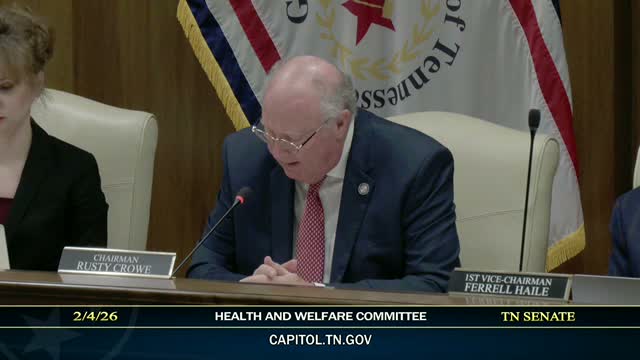
A Jonesboro resident and community activist told a Senate committee that Bitcoin mining operations pose environmental, noise and economic concerns for Tennessee communities and urged the legislature to consider statewide standards.
Kevin Hendricks described local fights over mining sites and presented data and local examples. He said mining operations cluster where power is cheapest and regulations are weak, and claimed a typical plant can use about "75 megawatts of power," which he compared to powering roughly 20,000 homes. Hendricks said equipment lifespan is short (about two years), creating substantial electronic waste, and argued that mines provide relatively few permanent jobs while much of the profit flows out of state.
Hendricks flagged multiple environmental concerns: noise in rural jurisdictions that lack ordinances, potential air and water pollution depending on generation source and cooling methods, and CO2 emissions tied to large-scale mining. He cited a UN estimate that Bitcoin's global electricity use is comparable to a medium-size country and referenced a working paper estimating significant local electricity-cost impacts in other states.
Hendricks also described the industry's market dynamics, noting Bitcoin's 21-million-coin cap and that roughly 93% of coins had been mined by mid-2025; he argued that as mining demand falls or demand stabilizes, some facilities could be abandoned, leaving cleanup liabilities. He pointed to local examples (Limestone, Mountain City, Johnson City, Unicoi County) where citizens and local governments have imposed moratoria, rejected permits, or studied mining impacts.
Committee members asked basic questions about Bitcoin and discussed the tradeoffs of attracting power-intensive industry. Hendricks recommended the legislature consider statewide electrical oversight and asked TVA and local utilities to provide clearer data on whether mining yields consumer savings. "Tennessee should really consider creating electrical power oversight authority to help protect citizens and gain some control over operations such as Bitcoin," he said.
The committee did not take immediate legislative action on the testimony but heard several members acknowledge the need to study the issue further.
Kevin Hendricks described local fights over mining sites and presented data and local examples. He said mining operations cluster where power is cheapest and regulations are weak, and claimed a typical plant can use about "75 megawatts of power," which he compared to powering roughly 20,000 homes. Hendricks said equipment lifespan is short (about two years), creating substantial electronic waste, and argued that mines provide relatively few permanent jobs while much of the profit flows out of state.
Hendricks flagged multiple environmental concerns: noise in rural jurisdictions that lack ordinances, potential air and water pollution depending on generation source and cooling methods, and CO2 emissions tied to large-scale mining. He cited a UN estimate that Bitcoin's global electricity use is comparable to a medium-size country and referenced a working paper estimating significant local electricity-cost impacts in other states.
Hendricks also described the industry's market dynamics, noting Bitcoin's 21-million-coin cap and that roughly 93% of coins had been mined by mid-2025; he argued that as mining demand falls or demand stabilizes, some facilities could be abandoned, leaving cleanup liabilities. He pointed to local examples (Limestone, Mountain City, Johnson City, Unicoi County) where citizens and local governments have imposed moratoria, rejected permits, or studied mining impacts.
Committee members asked basic questions about Bitcoin and discussed the tradeoffs of attracting power-intensive industry. Hendricks recommended the legislature consider statewide electrical oversight and asked TVA and local utilities to provide clearer data on whether mining yields consumer savings. "Tennessee should really consider creating electrical power oversight authority to help protect citizens and gain some control over operations such as Bitcoin," he said.
The committee did not take immediate legislative action on the testimony but heard several members acknowledge the need to study the issue further.
View the Full Meeting & All Its Details
This article offers just a summary. Unlock complete video, transcripts, and insights as a Founder Member.
✓
Watch full, unedited meeting videos
✓
Search every word spoken in unlimited transcripts
✓
AI summaries & real-time alerts (all government levels)
✓
Permanent access to expanding government content
30-day money-back guarantee
