Spokane council approves eviction-diversion ordinance after hours of testimony, 5–2
February 03, 2026 | Spokane, Spokane County, Washington
This article was created by AI summarizing key points discussed. AI makes mistakes, so for full details and context, please refer to the video of the full meeting. Please report any errors so we can fix them. Report an error »
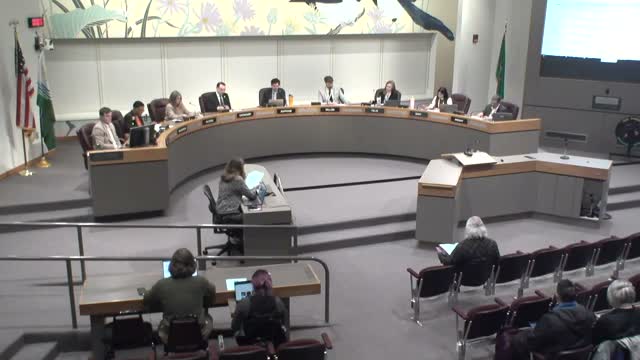
Spokane City Council voted to adopt Ordinance C-36-808, dubbed the Pathways to Eviction Prevention ordinance, following extensive public testimony and a multi-hour council debate. The ordinance formalizes a process to provide tenants facing nonpayment of rent with referral information and a 30-day window intended to connect households to rental-assistance programs before an eviction filing proceeds. The council approved the measure 5–2.
Supporters told the council the ordinance would prevent homelessness and reduce legal costs by connecting tenants to assistance and legal counsel earlier in the eviction timeline. "This ordinance will prevent evictions. It will expedite resolution, and that helps our entire community, landlords and tenants alike," said Hannah Swenson, managing attorney of the Housing Justice Project, who described frequent cases in which late assistance arrived too late to prevent an eviction. Tenant attorneys and advocates described clients who lost housing after missing a single form or deadline; one right-to-counsel attorney said earlier intervention can prevent the legal fees and back rent that make recovery impossible.
Opponents — including small landlords and representatives of the Rental Housing Association of Washington — warned the ordinance could increase costs for small property owners, slow property-level remedies and push owners out of the rental market absent guaranteed rental-assistance funding. "The current legal timeline in Spokane is already extensive," said Daniel Clemmy, speaking for RHAW, who argued that adding another mandatory diversion step risks sending tenants to services that lack capacity. Several landlord speakers also raised concerns about administrative burden given roughly 23,000 registered units in the city and questioned whether program partners have the staff and funds to meet increased demand.
Council members debated both operational details and the ordinance’s intent. Supporters pointed to local case examples and research showing that diversion programs can reduce eviction filings and shelter usage; Councilmember Dylan cited a Philadelphia program where evictions dropped substantially after adoption. Detractors urged the council to identify steady funding, operational staffing and a housing navigator position to ensure referrals lead to timely assistance, not delay. Council discussion repeatedly referenced Community, Housing and Human Services (CHHS) staff involvement and past code provisions that authorized a housing navigator position that has not yet been staffed.
The ordinance requires landlords to provide standardized eviction-prevention resource information at specific points in a tenancy and, in covered nonpayment cases, to refer tenants to an eviction-diversion program that can facilitate rental assistance or mediation. The measure contains exemptions for conduct-related evictions; council members noted the ordinance is targeted at nonpayment matters. Many commenters asked for clearer language on program timelines, funding sources and administrative responsibilities; a number of council members said they would continue working with stakeholders on implementation details.
The council vote concluded the hearing. The ordinance passed 5–2; the clerk announced the result at the close of deliberations. Council members and staff indicated implementation will involve CHHS and that additional work remains to staff and fund the program components (including an often-discussed housing navigator). The council did not specify a local funding source in the meeting record; multiple speakers and council members urged the city to secure recurring rental-assistance funds to make the diversion program operational.
The council meeting record indicates the city will now move from ordinance adoption to implementation planning with CHHS and partner organizations; several council members urged an expedited effort to establish clear application forms, staffing and a public-facing resource page.
Supporters told the council the ordinance would prevent homelessness and reduce legal costs by connecting tenants to assistance and legal counsel earlier in the eviction timeline. "This ordinance will prevent evictions. It will expedite resolution, and that helps our entire community, landlords and tenants alike," said Hannah Swenson, managing attorney of the Housing Justice Project, who described frequent cases in which late assistance arrived too late to prevent an eviction. Tenant attorneys and advocates described clients who lost housing after missing a single form or deadline; one right-to-counsel attorney said earlier intervention can prevent the legal fees and back rent that make recovery impossible.
Opponents — including small landlords and representatives of the Rental Housing Association of Washington — warned the ordinance could increase costs for small property owners, slow property-level remedies and push owners out of the rental market absent guaranteed rental-assistance funding. "The current legal timeline in Spokane is already extensive," said Daniel Clemmy, speaking for RHAW, who argued that adding another mandatory diversion step risks sending tenants to services that lack capacity. Several landlord speakers also raised concerns about administrative burden given roughly 23,000 registered units in the city and questioned whether program partners have the staff and funds to meet increased demand.
Council members debated both operational details and the ordinance’s intent. Supporters pointed to local case examples and research showing that diversion programs can reduce eviction filings and shelter usage; Councilmember Dylan cited a Philadelphia program where evictions dropped substantially after adoption. Detractors urged the council to identify steady funding, operational staffing and a housing navigator position to ensure referrals lead to timely assistance, not delay. Council discussion repeatedly referenced Community, Housing and Human Services (CHHS) staff involvement and past code provisions that authorized a housing navigator position that has not yet been staffed.
The ordinance requires landlords to provide standardized eviction-prevention resource information at specific points in a tenancy and, in covered nonpayment cases, to refer tenants to an eviction-diversion program that can facilitate rental assistance or mediation. The measure contains exemptions for conduct-related evictions; council members noted the ordinance is targeted at nonpayment matters. Many commenters asked for clearer language on program timelines, funding sources and administrative responsibilities; a number of council members said they would continue working with stakeholders on implementation details.
The council vote concluded the hearing. The ordinance passed 5–2; the clerk announced the result at the close of deliberations. Council members and staff indicated implementation will involve CHHS and that additional work remains to staff and fund the program components (including an often-discussed housing navigator). The council did not specify a local funding source in the meeting record; multiple speakers and council members urged the city to secure recurring rental-assistance funds to make the diversion program operational.
The council meeting record indicates the city will now move from ordinance adoption to implementation planning with CHHS and partner organizations; several council members urged an expedited effort to establish clear application forms, staffing and a public-facing resource page.
View the Full Meeting & All Its Details
This article offers just a summary. Unlock complete video, transcripts, and insights as a Founder Member.
✓
Watch full, unedited meeting videos
✓
Search every word spoken in unlimited transcripts
✓
AI summaries & real-time alerts (all government levels)
✓
Permanent access to expanding government content
30-day money-back guarantee
