Clinton planning board hears Shore Farm townhome proposal; hearing left open after zoning, soils questions
February 04, 2026 | Clinton, Oneida County, New York
This article was created by AI summarizing key points discussed. AI makes mistakes, so for full details and context, please refer to the video of the full meeting. Please report any errors so we can fix them. Report an error »
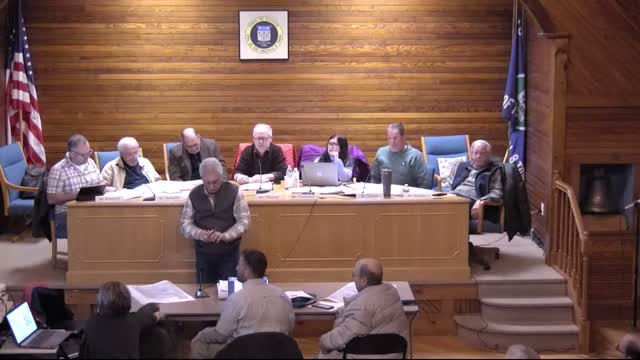
Sam Shore, who identified himself as the property owner, told the Town of Clinton Planning Board the Shore Farm proposal would place three buildings of four units each on a 70-acre parcel off Clinton Corners Road, with a total disturbed area of about 4 acres and 28 acres to be protected in perpetuity. "Our hope is to be able to build 12 unit multifamily residential units and keep the land mostly agricultural," Shore said during an applicant presentation.
The board opened a public hearing on the site-plan and special-use-permit application and invited comments. Several residents spoke in support of preserving open land while providing the owner with additional revenue. "I applaud the zoning board for coming up with the hybrid solution of enabling him to have another, source of income," said Paula Vincent, who identified herself as a lifelong Clinton resident and president of the Lance McHale Trail Association.
But a nearby property owner, Kevin Magus, challenged key aspects of the application, raising legal and technical objections tied to district rules and soil quality. Magus said the development "is sitting on 4 acres of the most viable soil on the property" and argued that the CR-1 district's cluster-development provisions (cited in the record as 2 50 12 and 02/5042) require a development plan for the entire parcel and limit cluster developments to owner-occupied dwellings unless a documented waiver is granted. He asked whether any waiver or formal documentation existed to allow rental units in that district.
Planning staff and consultants responded with site-specific clarifications. A staff member summarized the soil worksheet, saying the area proposed for work includes roughly 2.77 acres of class 3b soils, plus 4 acres in class 4b and nearly 18.8 acres in class 8, and noted that some of the parcel is wooded and not well suited to modern agricultural equipment. Staff said the applicant selected a location they believed was less farmable and that those soil-class details inform the board’s review of agricultural impacts.
Board members focused much of the discussion on how the project's open space would be defined and protected. The applicant said they plan to set aside 4.8 acres of contiguous usable open space for tenants, provide walking trails to a creek and a small community garden, and place 28 acres under a deed restriction "in perpetuity" to prevent development. Planning staff told the board they will prepare the deed-restriction language and that the town lawyer will review and record the formal meets-and-bounds description required for any recorded restriction.
The planning board also asked the applicant to provide clearer exterior elevations, color and material samples, and a revised site plan that depicts the contiguous usable open space that will be attributable to tenants. The board emphasized that usable open space should be clearly delineated from the larger protected area so rights of access, maintenance and trespass are unambiguous.
Because the board received a newly configured open-space plan during the meeting, a member moved to nullify the earlier motion to close the public hearing. The board approved leaving the hearing open; a member stated, "The hearing's still open and will remain open till the next meeting." The board set expectations for the next submittal: a revised site plan showing the tenant-usable area, exterior elevations or color/material palettes, the short environmental assessment (EAF)/Part 2 materials and draft deed-restriction language. The applicant indicated they would return; the board asked whether the applicant could come back on March 3 for further review, but board members noted conditional approval might be more likely in April pending completion of the requested materials.
What happens next: the planning board will review the revised site plan, elevations, EAF materials and deed restriction language at the next scheduled meeting; public comment will remain open for those items. If the board is satisfied with the revised submittal and conditions, it may consider conditional approval in a future meeting.
The board opened a public hearing on the site-plan and special-use-permit application and invited comments. Several residents spoke in support of preserving open land while providing the owner with additional revenue. "I applaud the zoning board for coming up with the hybrid solution of enabling him to have another, source of income," said Paula Vincent, who identified herself as a lifelong Clinton resident and president of the Lance McHale Trail Association.
But a nearby property owner, Kevin Magus, challenged key aspects of the application, raising legal and technical objections tied to district rules and soil quality. Magus said the development "is sitting on 4 acres of the most viable soil on the property" and argued that the CR-1 district's cluster-development provisions (cited in the record as 2 50 12 and 02/5042) require a development plan for the entire parcel and limit cluster developments to owner-occupied dwellings unless a documented waiver is granted. He asked whether any waiver or formal documentation existed to allow rental units in that district.
Planning staff and consultants responded with site-specific clarifications. A staff member summarized the soil worksheet, saying the area proposed for work includes roughly 2.77 acres of class 3b soils, plus 4 acres in class 4b and nearly 18.8 acres in class 8, and noted that some of the parcel is wooded and not well suited to modern agricultural equipment. Staff said the applicant selected a location they believed was less farmable and that those soil-class details inform the board’s review of agricultural impacts.
Board members focused much of the discussion on how the project's open space would be defined and protected. The applicant said they plan to set aside 4.8 acres of contiguous usable open space for tenants, provide walking trails to a creek and a small community garden, and place 28 acres under a deed restriction "in perpetuity" to prevent development. Planning staff told the board they will prepare the deed-restriction language and that the town lawyer will review and record the formal meets-and-bounds description required for any recorded restriction.
The planning board also asked the applicant to provide clearer exterior elevations, color and material samples, and a revised site plan that depicts the contiguous usable open space that will be attributable to tenants. The board emphasized that usable open space should be clearly delineated from the larger protected area so rights of access, maintenance and trespass are unambiguous.
Because the board received a newly configured open-space plan during the meeting, a member moved to nullify the earlier motion to close the public hearing. The board approved leaving the hearing open; a member stated, "The hearing's still open and will remain open till the next meeting." The board set expectations for the next submittal: a revised site plan showing the tenant-usable area, exterior elevations or color/material palettes, the short environmental assessment (EAF)/Part 2 materials and draft deed-restriction language. The applicant indicated they would return; the board asked whether the applicant could come back on March 3 for further review, but board members noted conditional approval might be more likely in April pending completion of the requested materials.
What happens next: the planning board will review the revised site plan, elevations, EAF materials and deed restriction language at the next scheduled meeting; public comment will remain open for those items. If the board is satisfied with the revised submittal and conditions, it may consider conditional approval in a future meeting.
Don't Miss a Word: See the Full Meeting!
Go beyond summaries. Unlock every video, transcript, and key insight with a Founder Membership.
✓
Get instant access to full meeting videos
✓
Search and clip any phrase from complete transcripts
✓
Receive AI-powered summaries & custom alerts
✓
Enjoy lifetime, unrestricted access to government data
30-day money-back guarantee
