Committee carries over bill to classify solar as an agricultural use amid zoning concerns
February 04, 2026 | 2026 Legislature VA, Virginia
This article was created by AI summarizing key points discussed. AI makes mistakes, so for full details and context, please refer to the video of the full meeting. Please report any errors so we can fix them. Report an error »
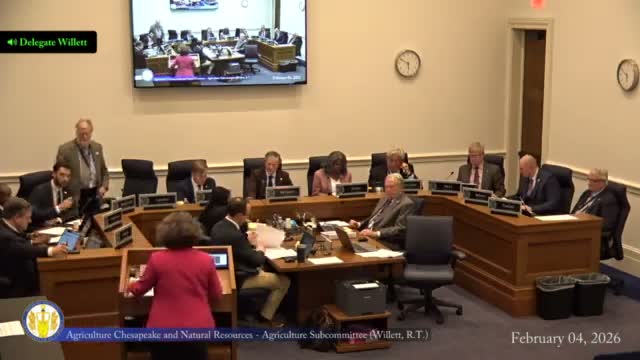
Delegate Laufer presented HB 10‑91 to allow farmers to generate solar energy concurrently with traditional agricultural practices, arguing the change would help families keep farms in production. The measure would add solar to the code definition of ‘‘Right to Farm,’’ enabling certain solar uses to be treated as agricultural operations.
Supporters — including environmental groups and some farmers — said small‑scale agrivoltaic projects can preserve farmland and produce income without displacing crops. Opponents, including the Virginia Association of Counties, the Virginia Agribusiness Council and conservation groups, urged caution: they said placing solar under the Right to Farm protections risks preempting local land‑use oversight, lacks limits on project size and could create opportunities for developers to transform agricultural land.
Committee members and stakeholders discussed a concurrent work group and a related definition bill that would further refine agrivoltaic standards. The patron agreed to collaborate on additional study and agreed the concept needs more nuance; the subcommittee voted to carry the bill over for further work rather than advancing it this session.
Supporters — including environmental groups and some farmers — said small‑scale agrivoltaic projects can preserve farmland and produce income without displacing crops. Opponents, including the Virginia Association of Counties, the Virginia Agribusiness Council and conservation groups, urged caution: they said placing solar under the Right to Farm protections risks preempting local land‑use oversight, lacks limits on project size and could create opportunities for developers to transform agricultural land.
Committee members and stakeholders discussed a concurrent work group and a related definition bill that would further refine agrivoltaic standards. The patron agreed to collaborate on additional study and agreed the concept needs more nuance; the subcommittee voted to carry the bill over for further work rather than advancing it this session.
Don't Miss a Word: See the Full Meeting!
Go beyond summaries. Unlock every video, transcript, and key insight with a Founder Membership.
✓
Get instant access to full meeting videos
✓
Search and clip any phrase from complete transcripts
✓
Receive AI-powered summaries & custom alerts
✓
Enjoy lifetime, unrestricted access to government data
30-day money-back guarantee
