House Finance panel advances slate of tax measures, including corporate NOL change and state free-file plan
February 04, 2026 | 2026 Legislature VA, Virginia
This article was created by AI summarizing key points discussed. AI makes mistakes, so for full details and context, please refer to the video of the full meeting. Please report any errors so we can fix them. Report an error »
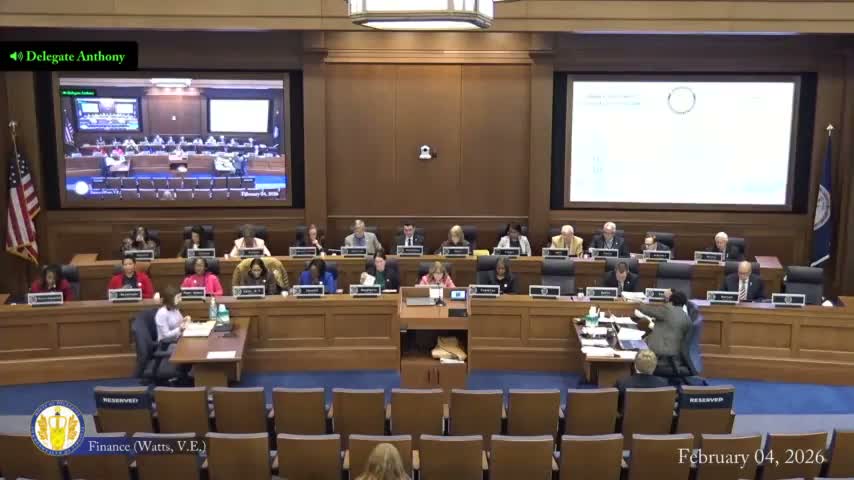
The Virginia House Finance Committee’s subcommittees advanced a package of tax bills Tuesday, sending each measure on for further consideration after brief presentations and roll-call votes.
Delegate David Hernandez, reporting Subcommittee 1, summarized several measures that the panel moved to report. “The committee recommended reporting 9 to 0 and I so move,” Hernandez said when presenting HB 958, which would set corporate Virginia taxable income beginning in tax year 2027 to align with federal taxable income (excluding federal NOL deductions) and would create a Virginia corporate net operating loss deduction beginning the same year, with preliminary implementation guidelines directed to the Department of Taxation.
Why it matters: HB 958 changes how corporations compute Virginia taxable income and establishes a Virginia NOL deduction. That alters state tax liabilities for corporations and directs a state agency to issue guidance for implementation.
Other measures advanced by Subcommittee 1 included:
- HB 1180 (Pope Adams): Directs the tax commissioner to develop and offer a free individual state income tax filing program effective taxable year 2028 modeled on the IRS Direct File program as it existed for the 2025 filing season; reported with an amendment (transcript roll recorded as 22–0).
- HB 1454 (Boulevard): For taxable years beginning Jan. 1, 2026, subtracts amounts received under the Segal AmeriCorps Education Award from an individual’s Virginia taxable income; reported and referred to the Appropriations Committee (transcript shows final roll 21–0).
Subcommittee 2, chaired in the session by Delegate Anthony, reported five bills including:
- HB 167 (Askew): Removes carved-out tax exemptions for confederacy organizations; committee reported (roll recorded 15–6).
- HB 557 (listed in the transcript as introduced by “delegate research”): Grants localities authority to create targeted tax incentives for businesses adopting electric landscaping equipment; committee reported (roll recorded 15–6). The transcript lists the sponsor name as written; that name was not verified in the record.
- HB 915: Allows localities to offer personal property tax exemptions for furloughed or affected federal employees during federal shutdowns; the committee adopted committee amendments clarifying eligibility and reported the bill as amended (transcript roll recorded 19–2).
- HB 1341 (Boulevard): Amends the City of Fairfax charter to allow the city to set its own transient occupancy tax rate; reported (21–0).
- HB 1358 (Runyon): Replaces a locality-level mandatory real estate disclosure requirement with a statewide "buyers beware" statement, clarifies settlement agent notice obligations for properties under special assessment, and adds civil penalties for willful failures to provide notice; reported as substituted (21–0).
Votes at a glance (as recorded in the transcript):
- HB 958 (Watts): Committee recommended reporting 9–0; recorded as reported unanimously on the roll.
- HB 1180 (Pope Adams, with amendment): Reported with amendment (transcript roll recorded as 22–0).
- HB 1454 (Boulevard): Recommended reporting and referred to Appropriations; transcript shows final roll as 21–0.
- HB 167 (Askew): Reported (roll recorded 15–6).
- HB 557 (listed sponsor: 'Research' in transcript): Reported (roll recorded 15–6).
- HB 915: Reported as amended (roll recorded 19–2).
- HB 1341 (Boulevard): Reported (21–0).
- HB 1358 (Runyon): Reported with substitute (21–0).
The meeting concluded with the Chair thanking members and adjourning the committee. No substantive floor debate or public testimony on these measures was recorded in the transcript; the session consisted of subcommittee reports, motions to report, and roll-call votes.
What’s next: These bills will move to the next committee steps indicated in the actions listed on the record — either to full committee consideration or to Appropriations for funding review.
Delegate David Hernandez, reporting Subcommittee 1, summarized several measures that the panel moved to report. “The committee recommended reporting 9 to 0 and I so move,” Hernandez said when presenting HB 958, which would set corporate Virginia taxable income beginning in tax year 2027 to align with federal taxable income (excluding federal NOL deductions) and would create a Virginia corporate net operating loss deduction beginning the same year, with preliminary implementation guidelines directed to the Department of Taxation.
Why it matters: HB 958 changes how corporations compute Virginia taxable income and establishes a Virginia NOL deduction. That alters state tax liabilities for corporations and directs a state agency to issue guidance for implementation.
Other measures advanced by Subcommittee 1 included:
- HB 1180 (Pope Adams): Directs the tax commissioner to develop and offer a free individual state income tax filing program effective taxable year 2028 modeled on the IRS Direct File program as it existed for the 2025 filing season; reported with an amendment (transcript roll recorded as 22–0).
- HB 1454 (Boulevard): For taxable years beginning Jan. 1, 2026, subtracts amounts received under the Segal AmeriCorps Education Award from an individual’s Virginia taxable income; reported and referred to the Appropriations Committee (transcript shows final roll 21–0).
Subcommittee 2, chaired in the session by Delegate Anthony, reported five bills including:
- HB 167 (Askew): Removes carved-out tax exemptions for confederacy organizations; committee reported (roll recorded 15–6).
- HB 557 (listed in the transcript as introduced by “delegate research”): Grants localities authority to create targeted tax incentives for businesses adopting electric landscaping equipment; committee reported (roll recorded 15–6). The transcript lists the sponsor name as written; that name was not verified in the record.
- HB 915: Allows localities to offer personal property tax exemptions for furloughed or affected federal employees during federal shutdowns; the committee adopted committee amendments clarifying eligibility and reported the bill as amended (transcript roll recorded 19–2).
- HB 1341 (Boulevard): Amends the City of Fairfax charter to allow the city to set its own transient occupancy tax rate; reported (21–0).
- HB 1358 (Runyon): Replaces a locality-level mandatory real estate disclosure requirement with a statewide "buyers beware" statement, clarifies settlement agent notice obligations for properties under special assessment, and adds civil penalties for willful failures to provide notice; reported as substituted (21–0).
Votes at a glance (as recorded in the transcript):
- HB 958 (Watts): Committee recommended reporting 9–0; recorded as reported unanimously on the roll.
- HB 1180 (Pope Adams, with amendment): Reported with amendment (transcript roll recorded as 22–0).
- HB 1454 (Boulevard): Recommended reporting and referred to Appropriations; transcript shows final roll as 21–0.
- HB 167 (Askew): Reported (roll recorded 15–6).
- HB 557 (listed sponsor: 'Research' in transcript): Reported (roll recorded 15–6).
- HB 915: Reported as amended (roll recorded 19–2).
- HB 1341 (Boulevard): Reported (21–0).
- HB 1358 (Runyon): Reported with substitute (21–0).
The meeting concluded with the Chair thanking members and adjourning the committee. No substantive floor debate or public testimony on these measures was recorded in the transcript; the session consisted of subcommittee reports, motions to report, and roll-call votes.
What’s next: These bills will move to the next committee steps indicated in the actions listed on the record — either to full committee consideration or to Appropriations for funding review.
View the Full Meeting & All Its Details
This article offers just a summary. Unlock complete video, transcripts, and insights as a Founder Member.
✓
Watch full, unedited meeting videos
✓
Search every word spoken in unlimited transcripts
✓
AI summaries & real-time alerts (all government levels)
✓
Permanent access to expanding government content
30-day money-back guarantee
