Subcommittee tables facial‑biometric privacy bill amid industry and legal questions
February 04, 2026 | 2026 Legislature VA, Virginia
This article was created by AI summarizing key points discussed. AI makes mistakes, so for full details and context, please refer to the video of the full meeting. Please report any errors so we can fix them. Report an error »
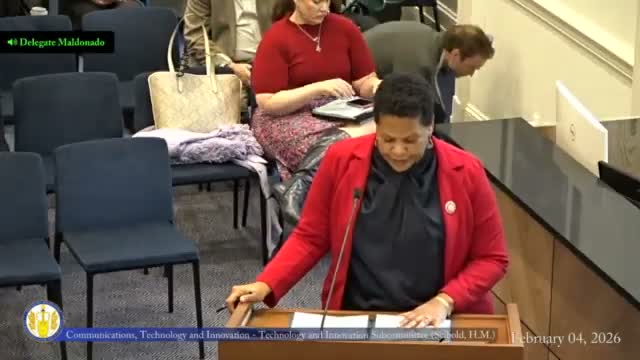
A substitute bill to require informed consent for collection of facial and iris biometric data was tabled by the subcommittee after mixed witness testimony and committee questions about how the measure would interact with existing law.
Delegate Maldonado said the substitute focused narrowly on facial features, irises and retinal scans to ensure Virginians know when biometric data is being taken, citing recent commercial pilots and concerns that devices such as doorbell cameras collect biometric information without explicit consent.
Supporters including Freedom Virginia and the Transparency Coalition urged consent requirements for highly sensitive biometric data and raised concerns about surveillance and the creeping use of biometric profiling. Opponents—representing retail, security and IT industry groups—warned the substitute’s biometric definition is broader than the current CDPA framework and could disrupt commonly used security and retail loss‑prevention systems. The Information Technology Industry Council and the Security Industry Association argued the substitute would treat ubiquitous photos and video as biometric data in some cases and would be impractical to implement.
A representative from the Future Privacy Forum offered educational context, noting that most U.S. biometric privacy laws focus on identification uses of biometric data and that expanding the framework could have unintended consequences.
After debate, the committee tabled the measure 7–3; the patron and industry representatives said they will continue to work on definitions and exemptions to reconcile privacy goals with operational realities.
Delegate Maldonado said the substitute focused narrowly on facial features, irises and retinal scans to ensure Virginians know when biometric data is being taken, citing recent commercial pilots and concerns that devices such as doorbell cameras collect biometric information without explicit consent.
Supporters including Freedom Virginia and the Transparency Coalition urged consent requirements for highly sensitive biometric data and raised concerns about surveillance and the creeping use of biometric profiling. Opponents—representing retail, security and IT industry groups—warned the substitute’s biometric definition is broader than the current CDPA framework and could disrupt commonly used security and retail loss‑prevention systems. The Information Technology Industry Council and the Security Industry Association argued the substitute would treat ubiquitous photos and video as biometric data in some cases and would be impractical to implement.
A representative from the Future Privacy Forum offered educational context, noting that most U.S. biometric privacy laws focus on identification uses of biometric data and that expanding the framework could have unintended consequences.
After debate, the committee tabled the measure 7–3; the patron and industry representatives said they will continue to work on definitions and exemptions to reconcile privacy goals with operational realities.
View the Full Meeting & All Its Details
This article offers just a summary. Unlock complete video, transcripts, and insights as a Founder Member.
✓
Watch full, unedited meeting videos
✓
Search every word spoken in unlimited transcripts
✓
AI summaries & real-time alerts (all government levels)
✓
Permanent access to expanding government content
30-day money-back guarantee
